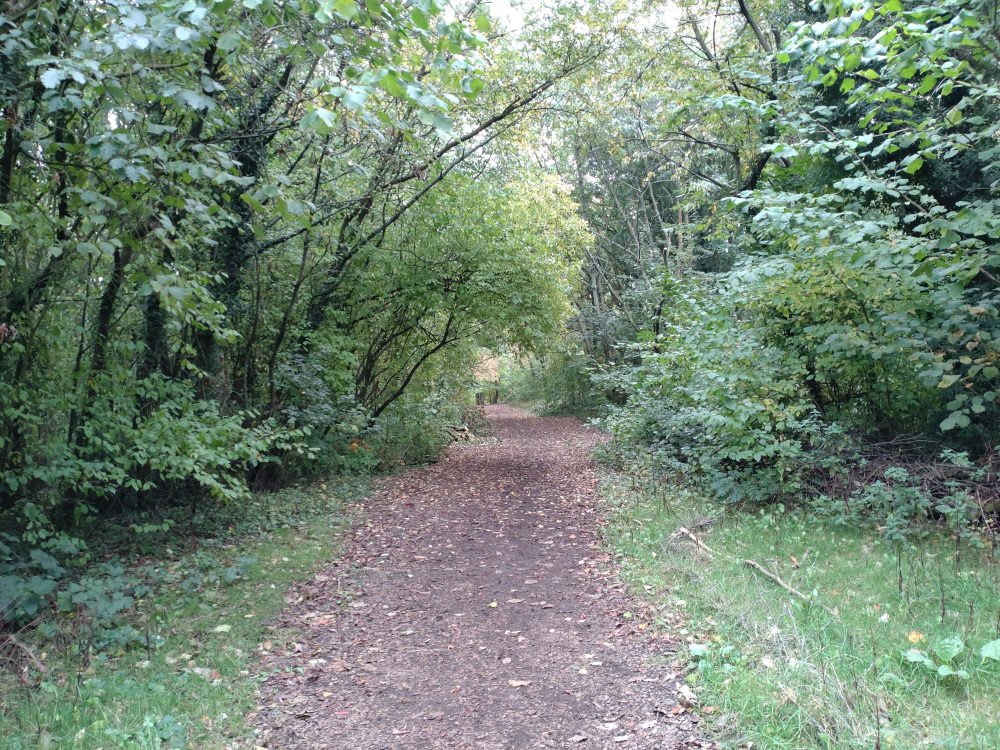
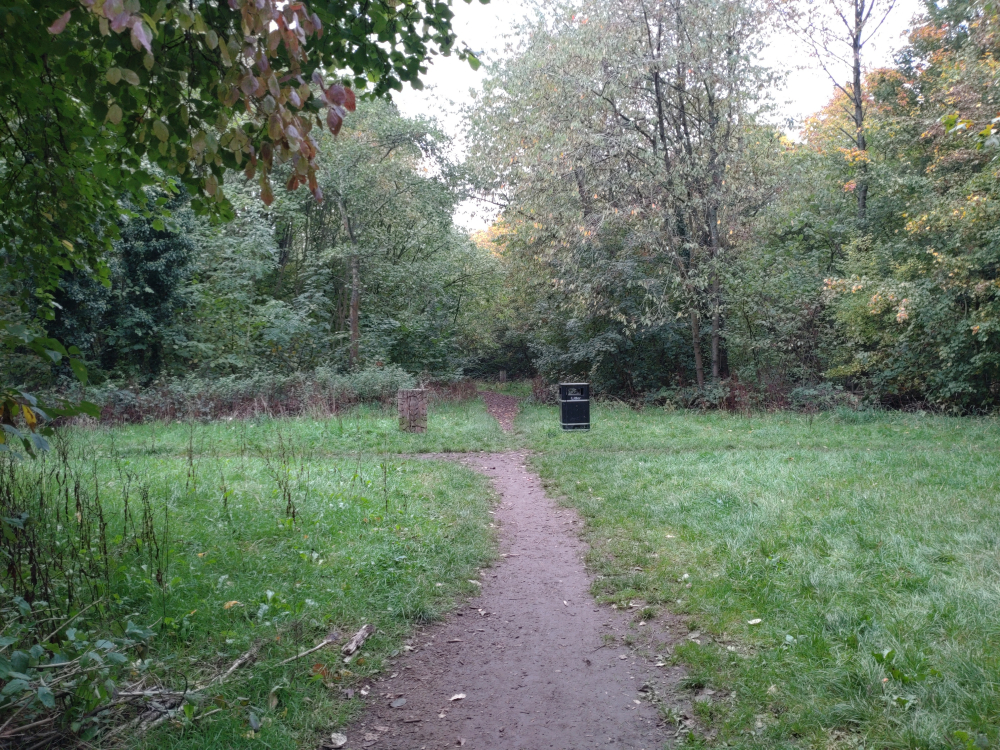
Last One Before The Christmas Break

Yes, you guessed it. I let them have Christmas off…

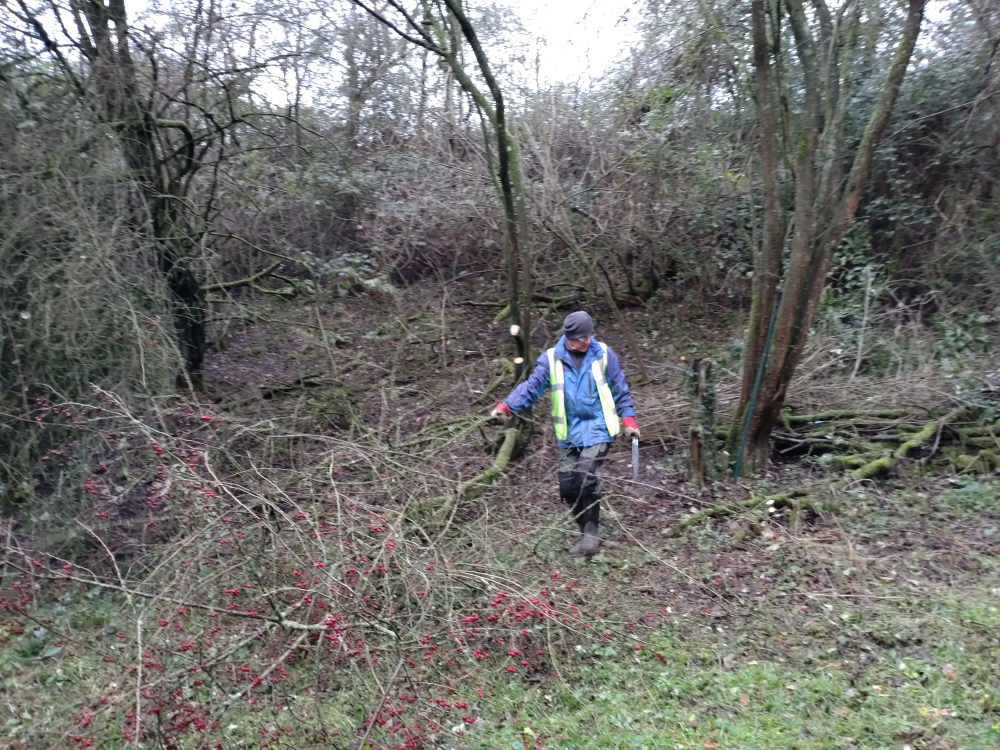
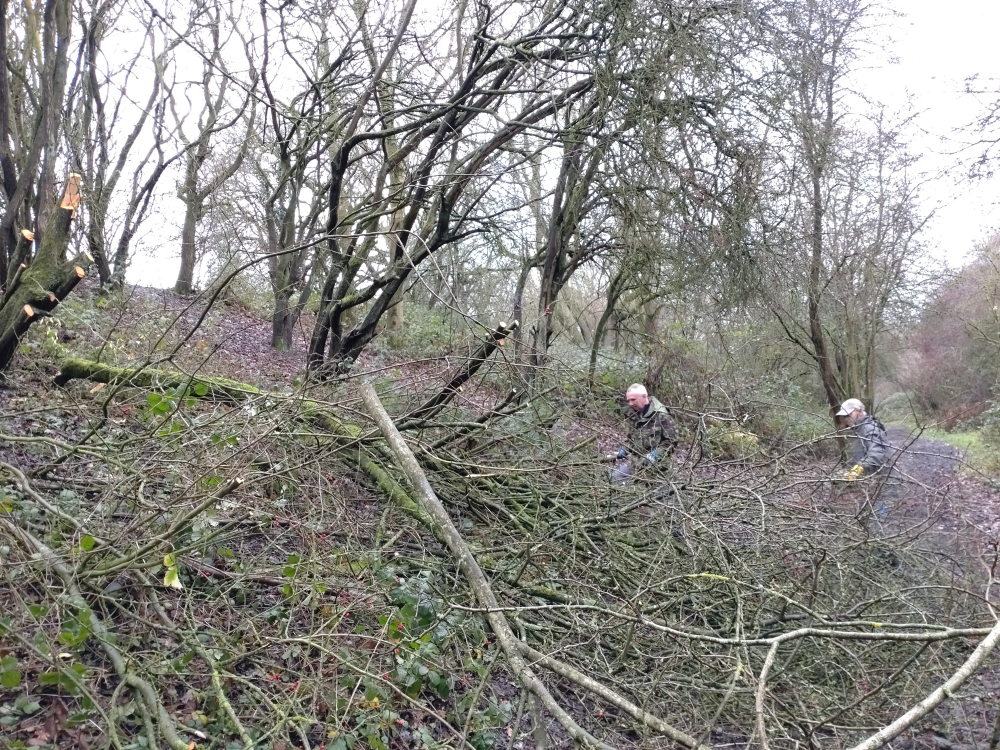
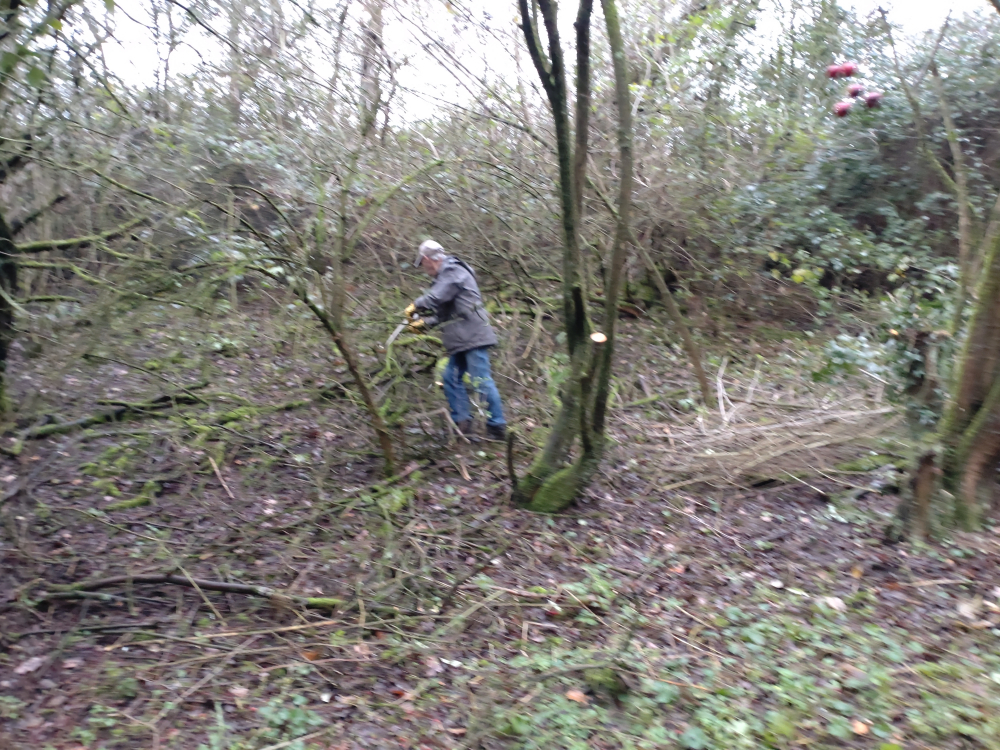
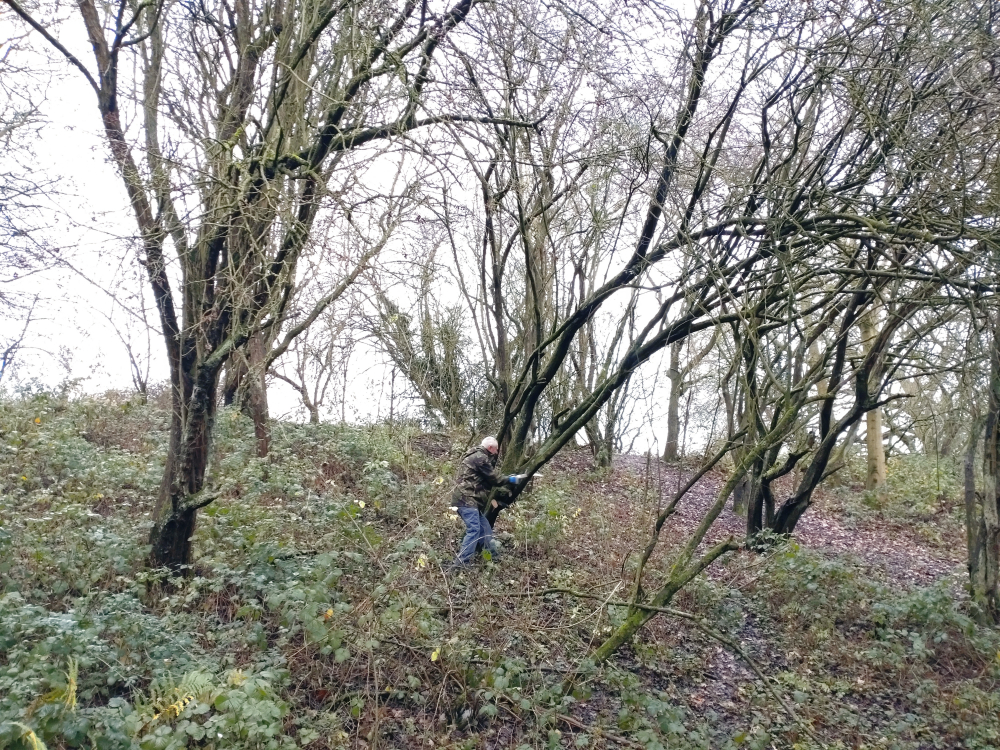
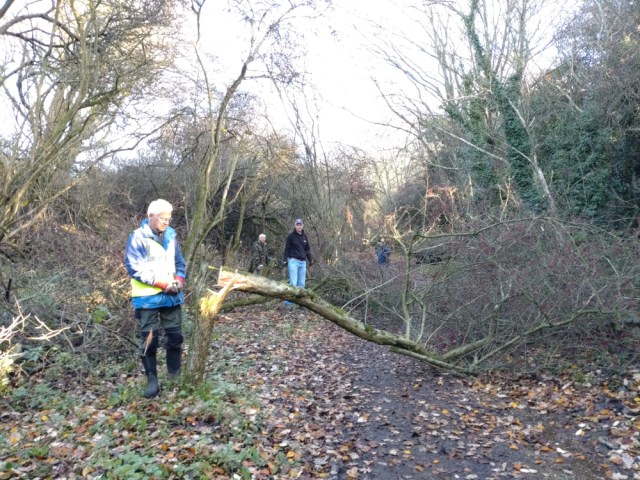
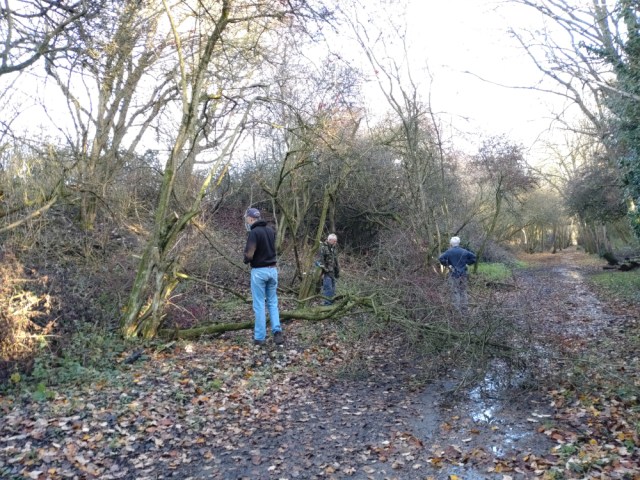
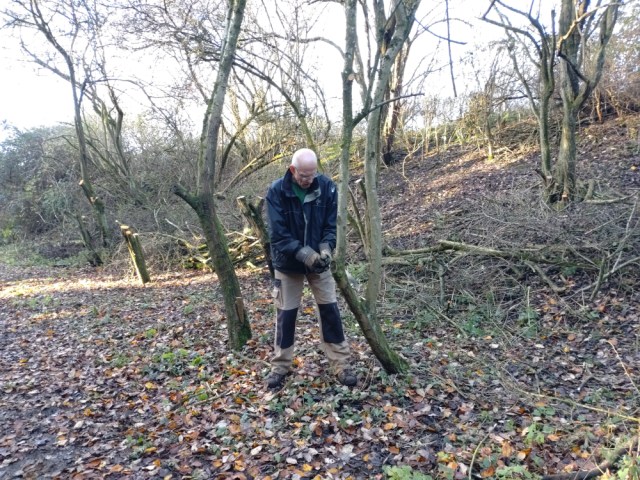
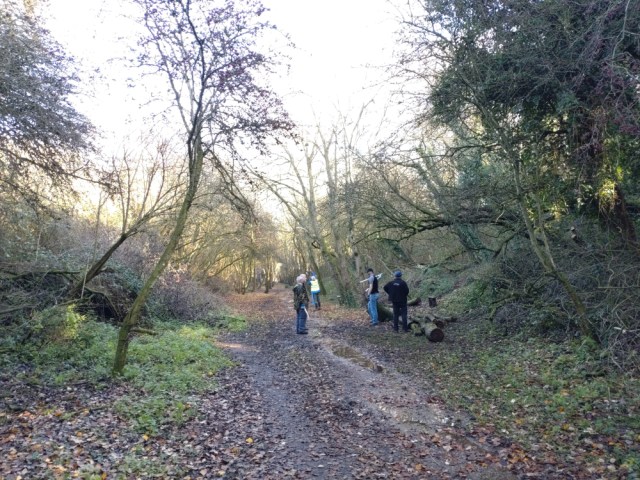
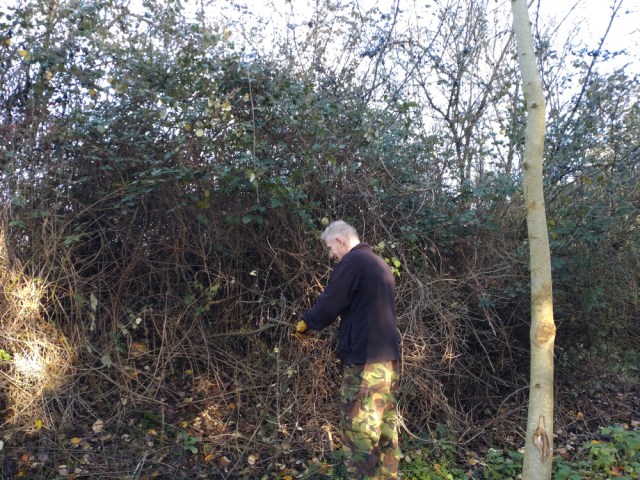
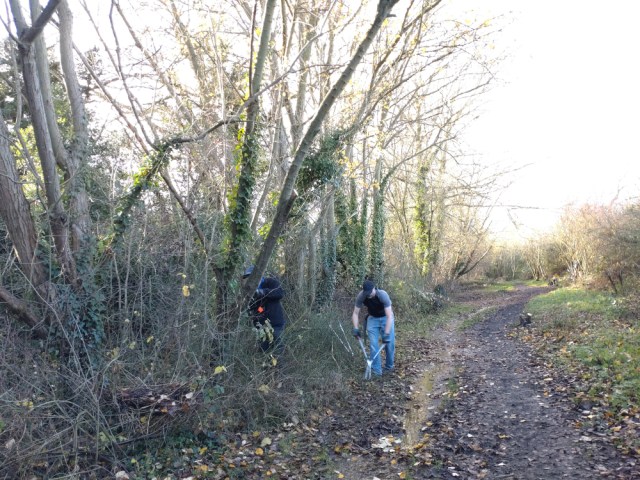
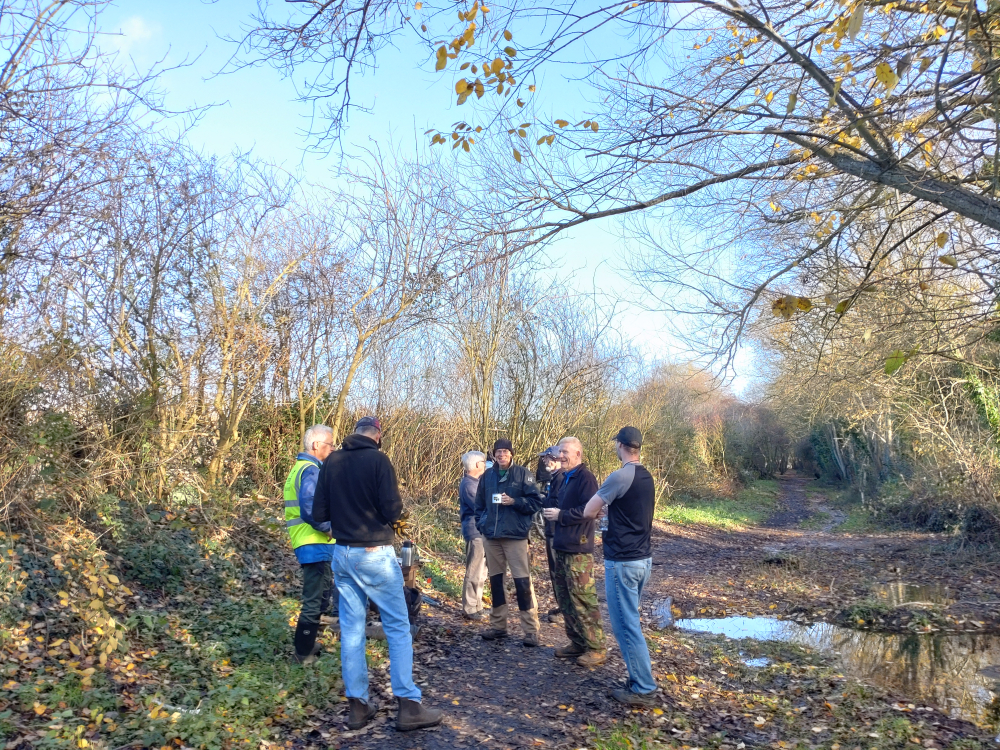
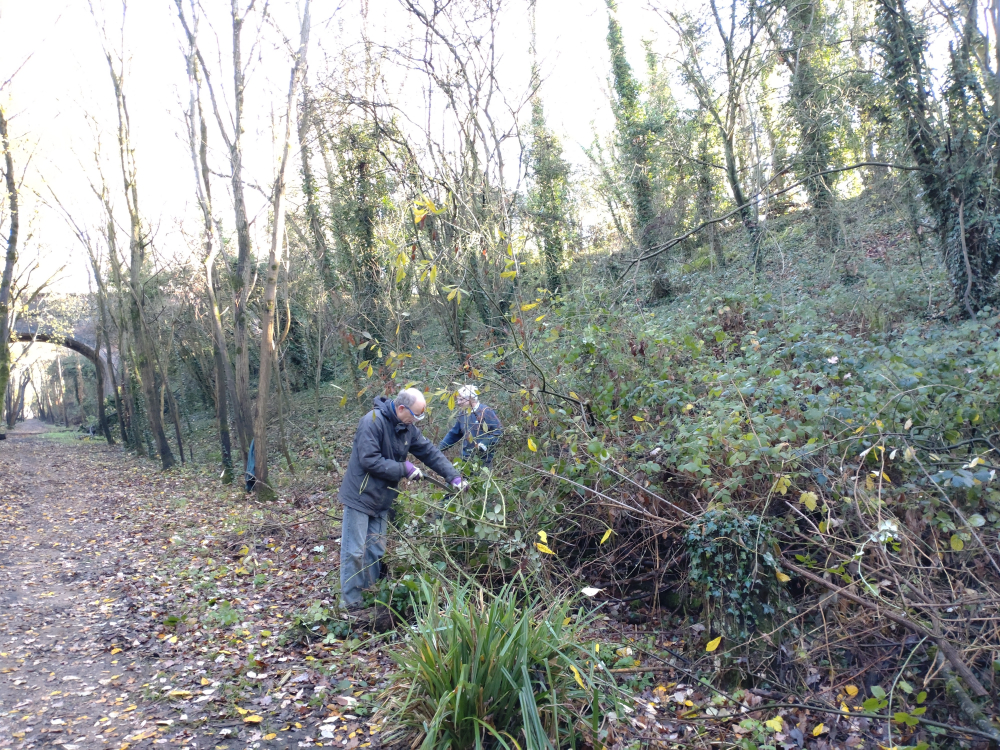
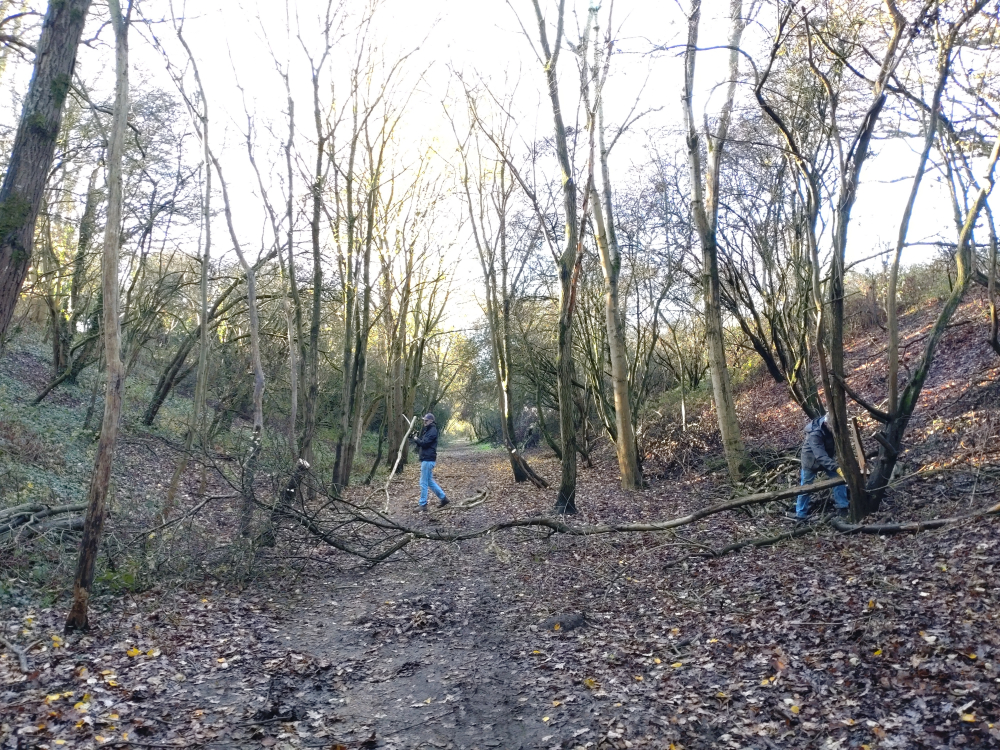
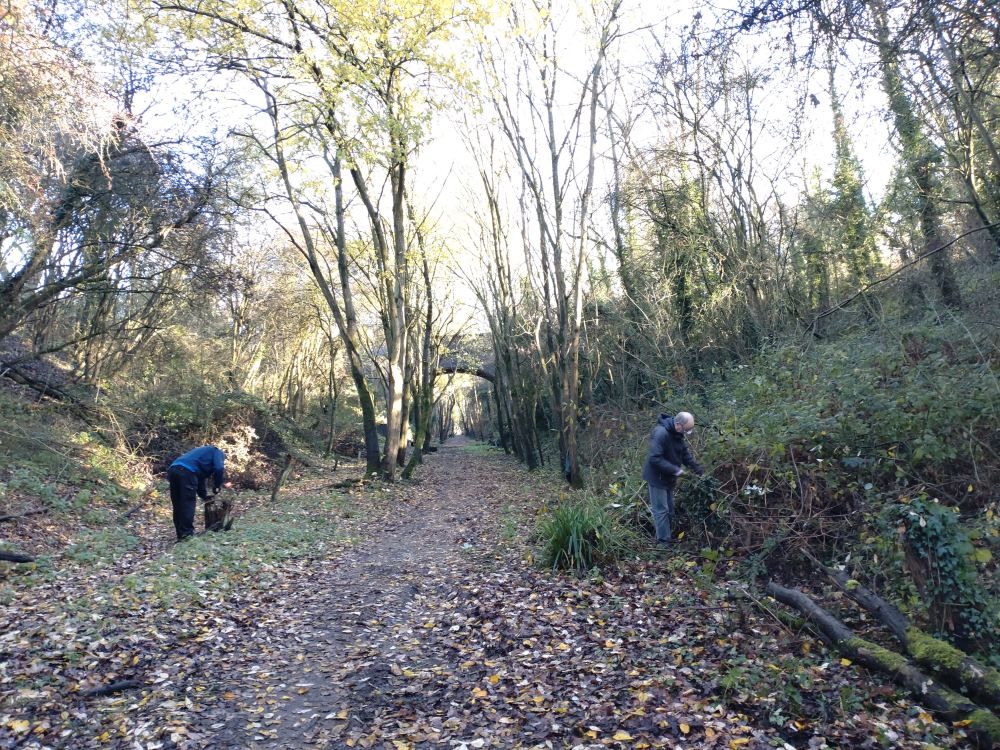
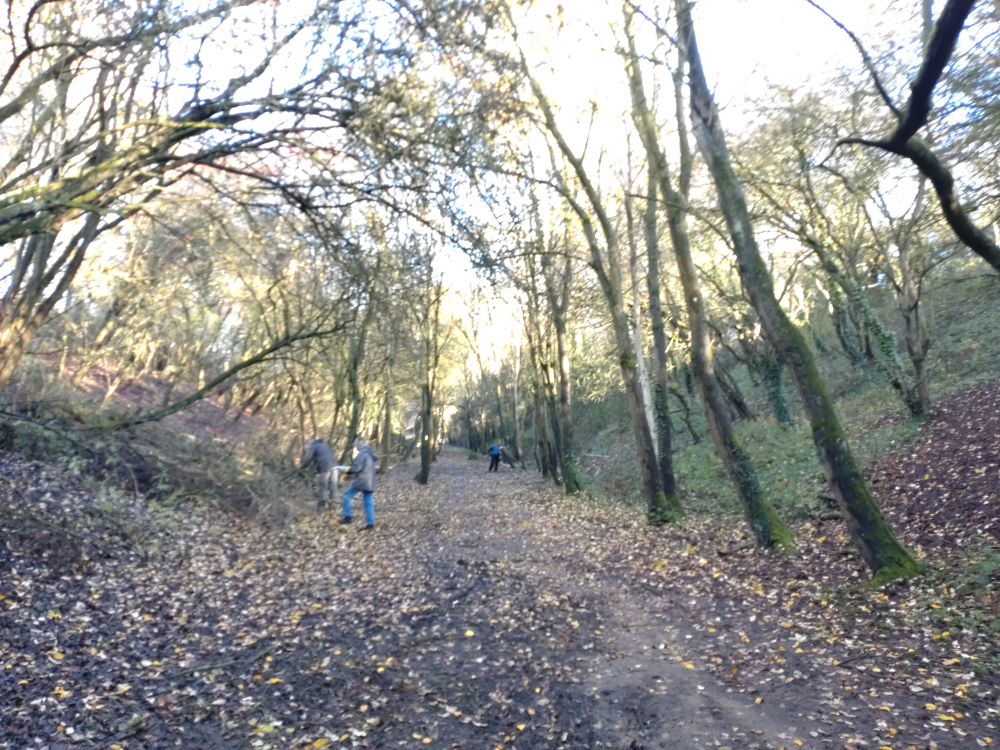
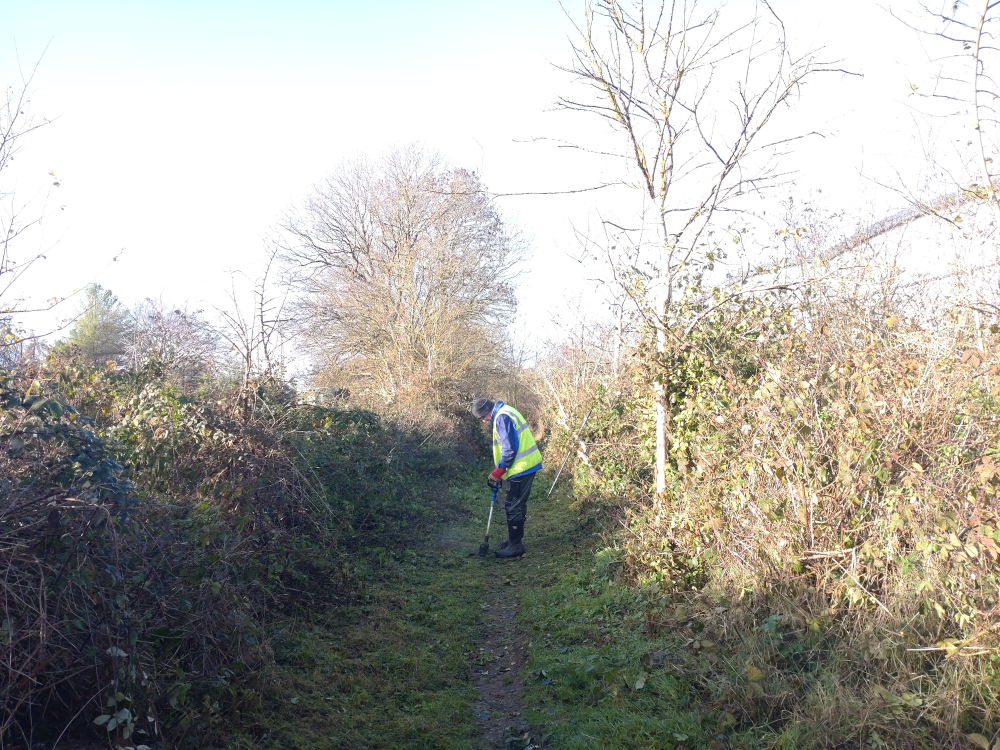
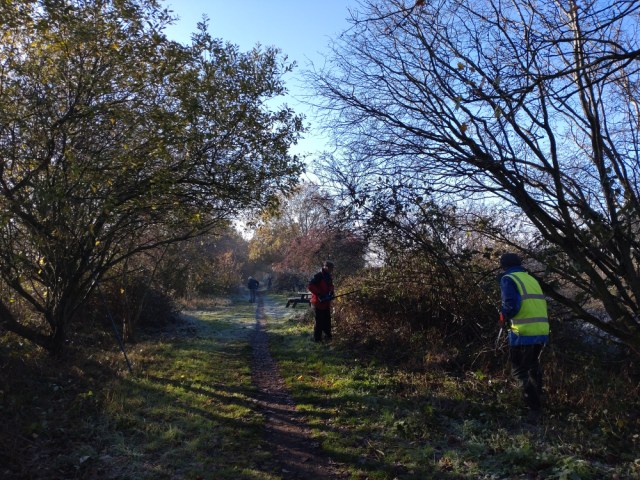
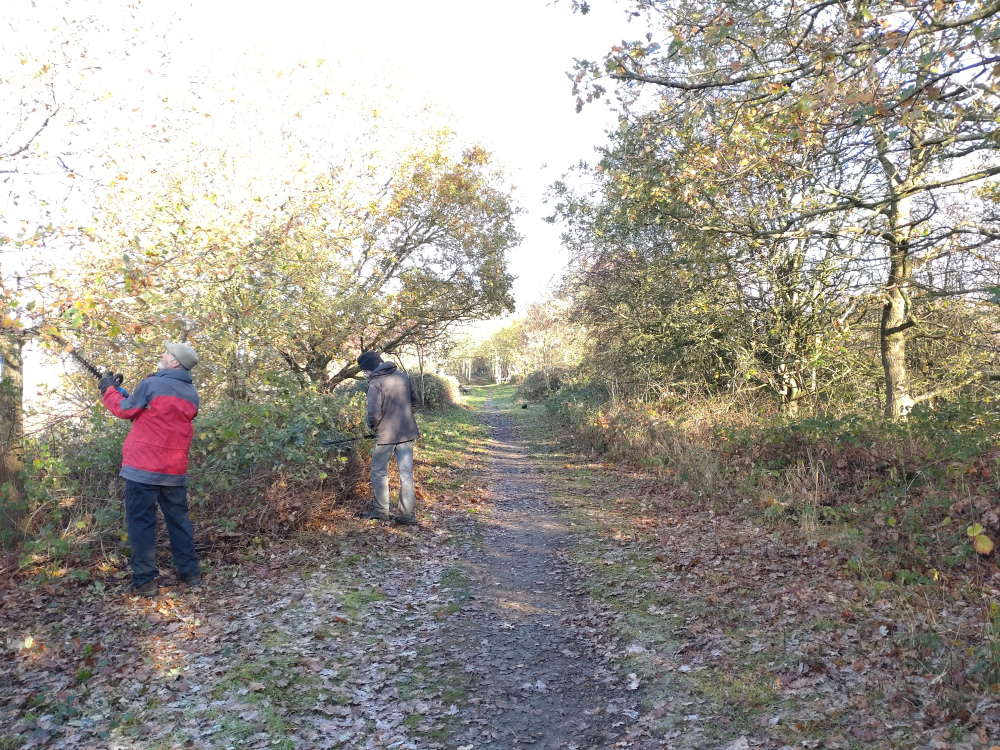
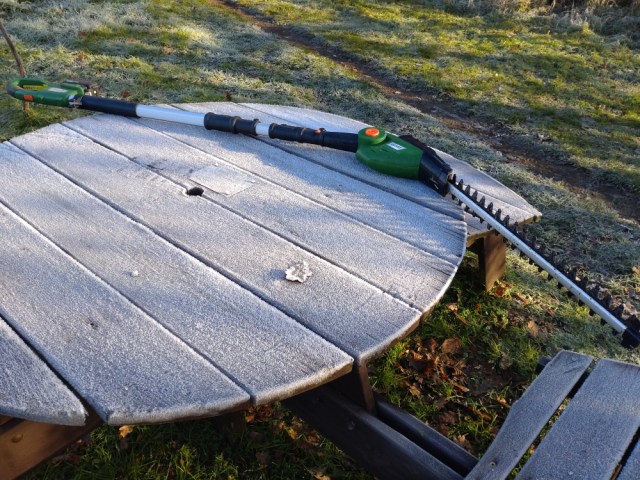
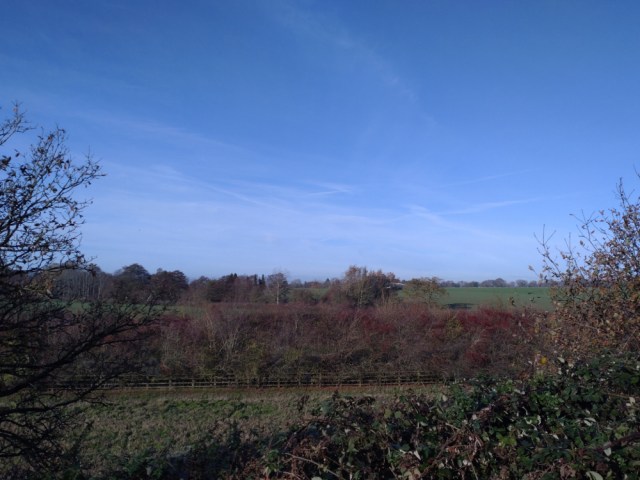
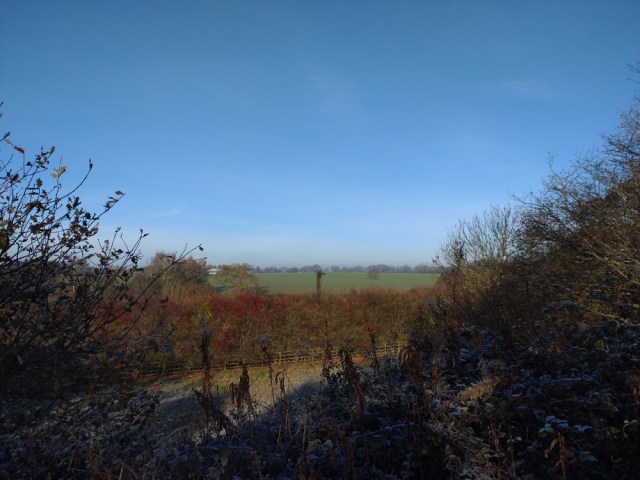
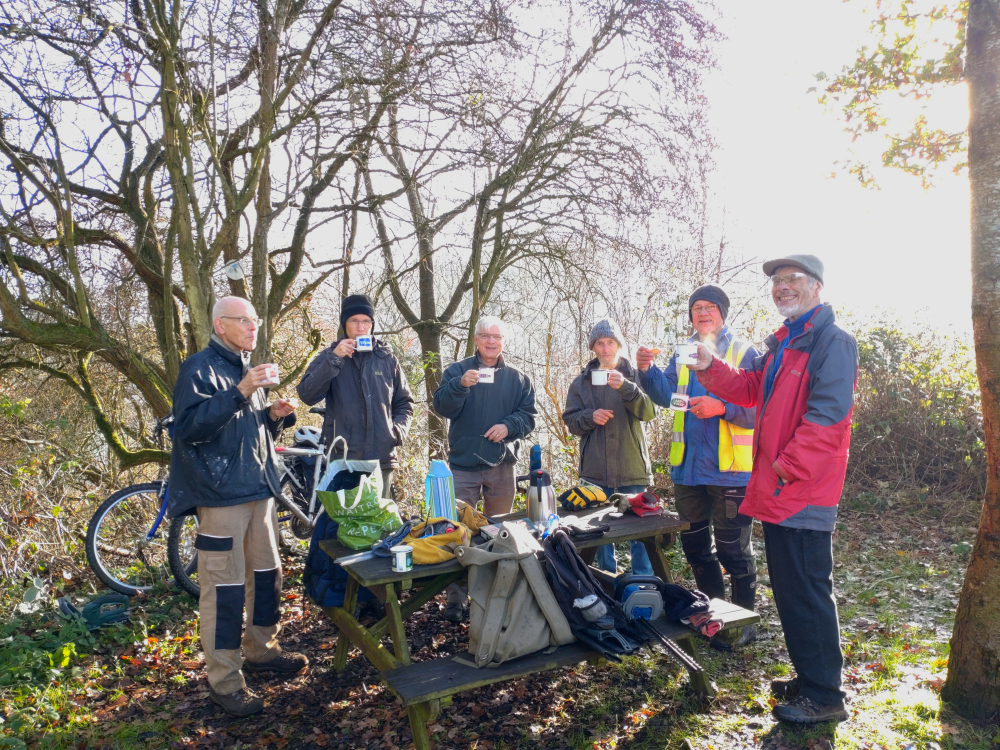
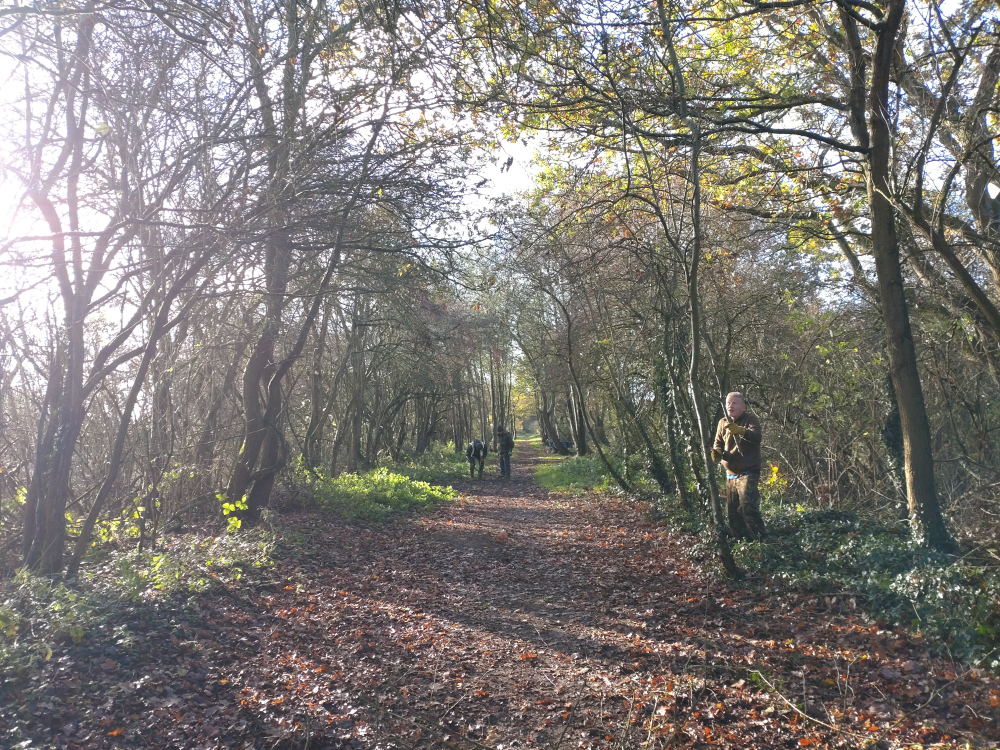
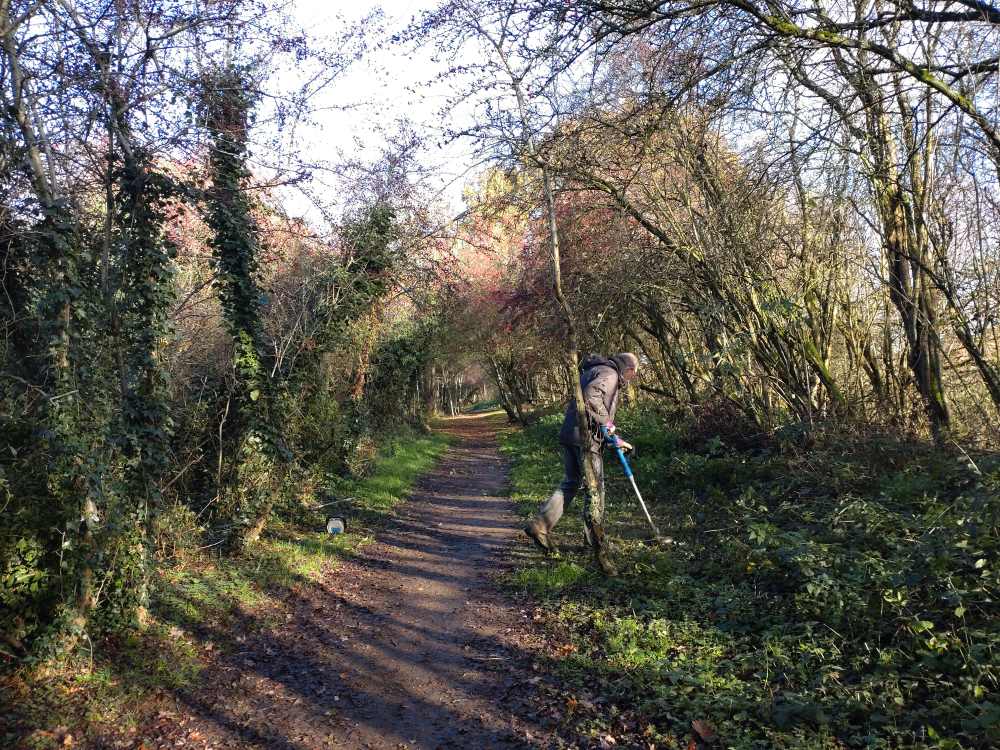
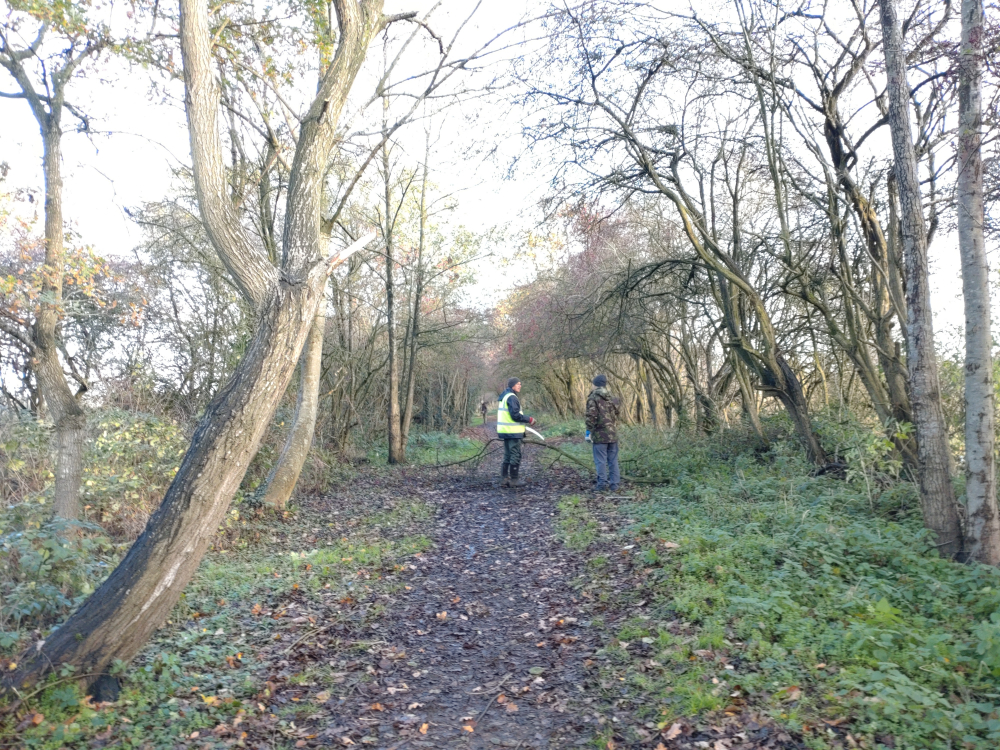
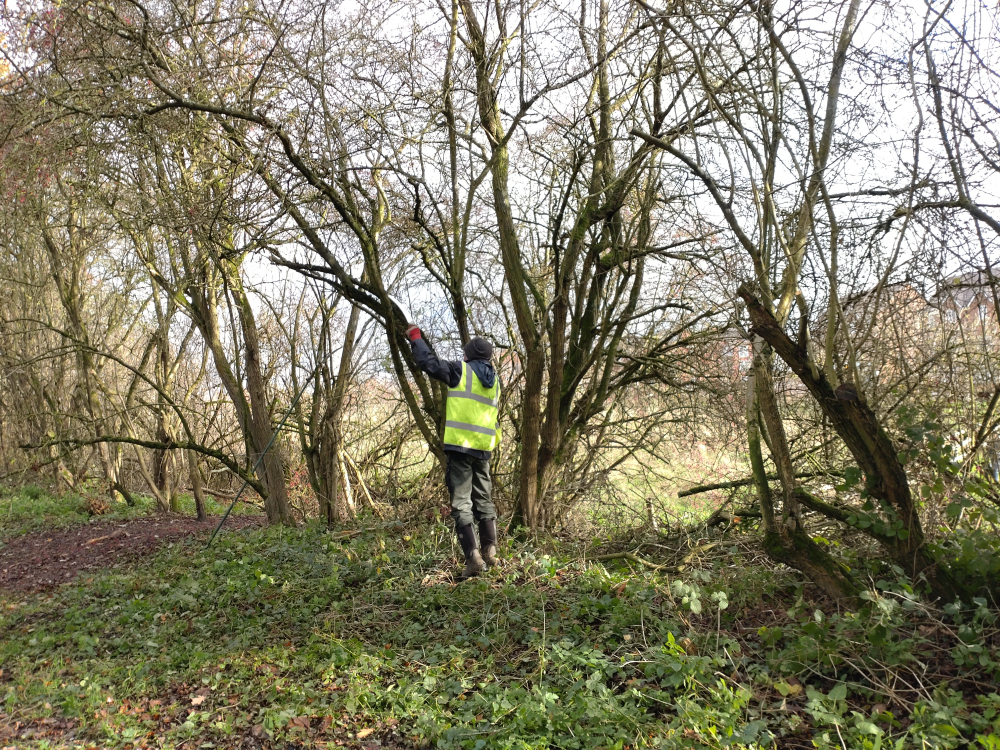
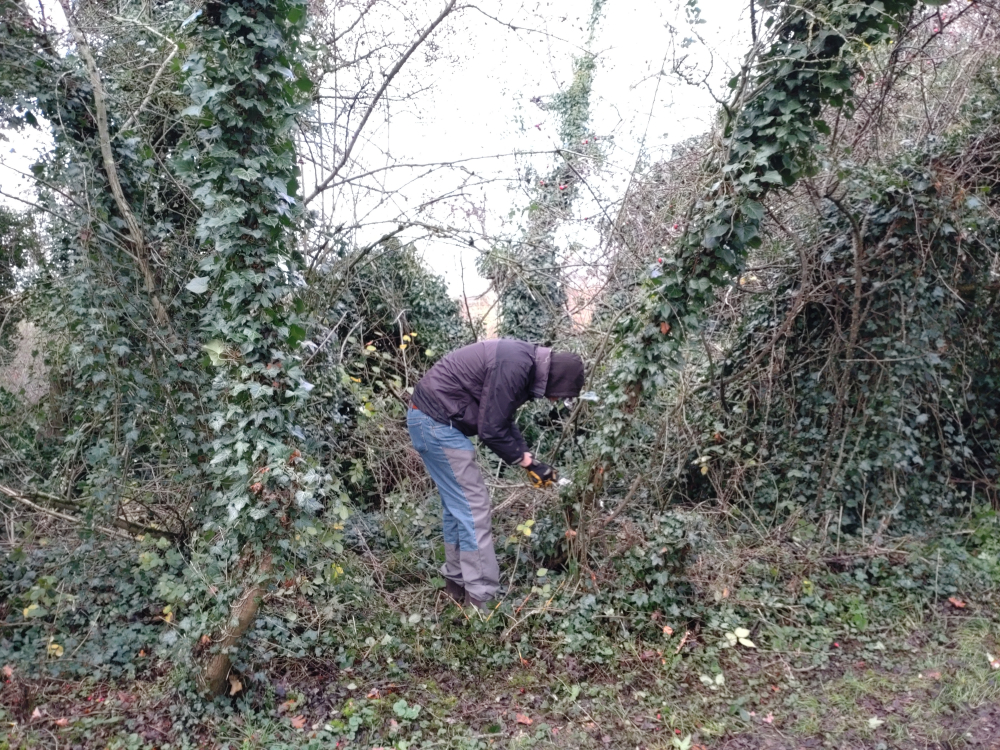
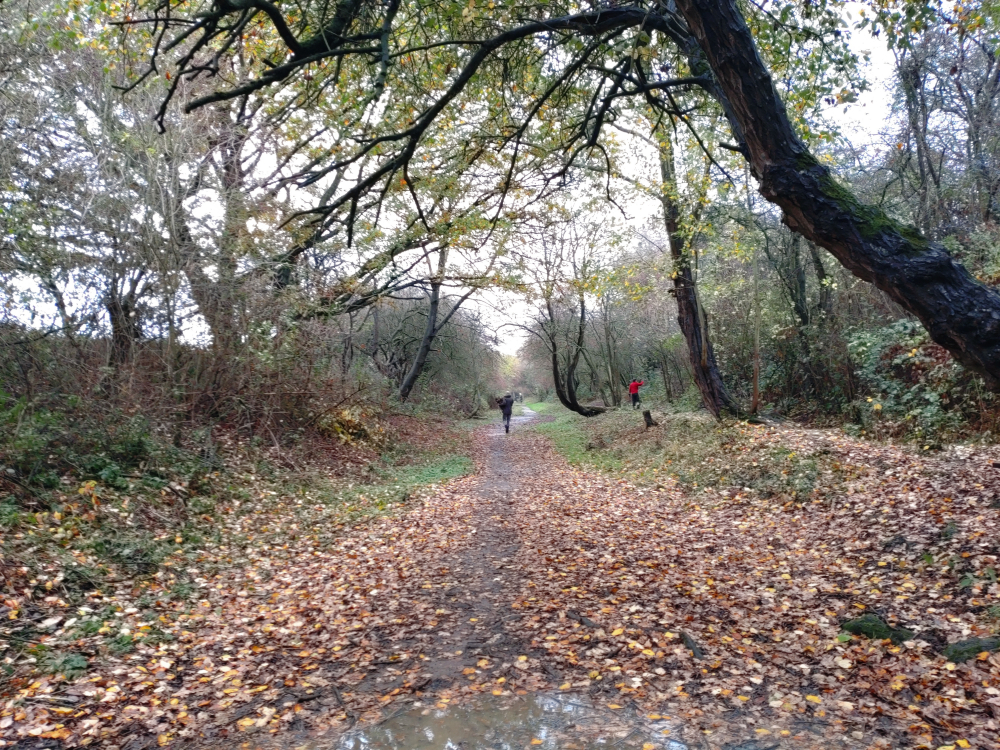
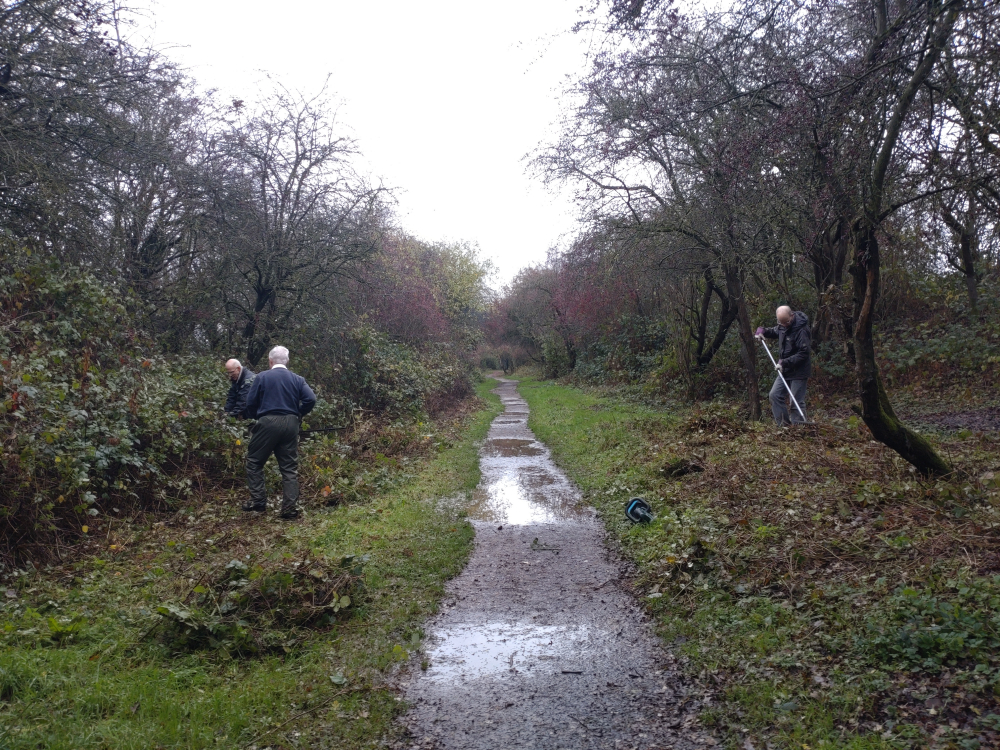
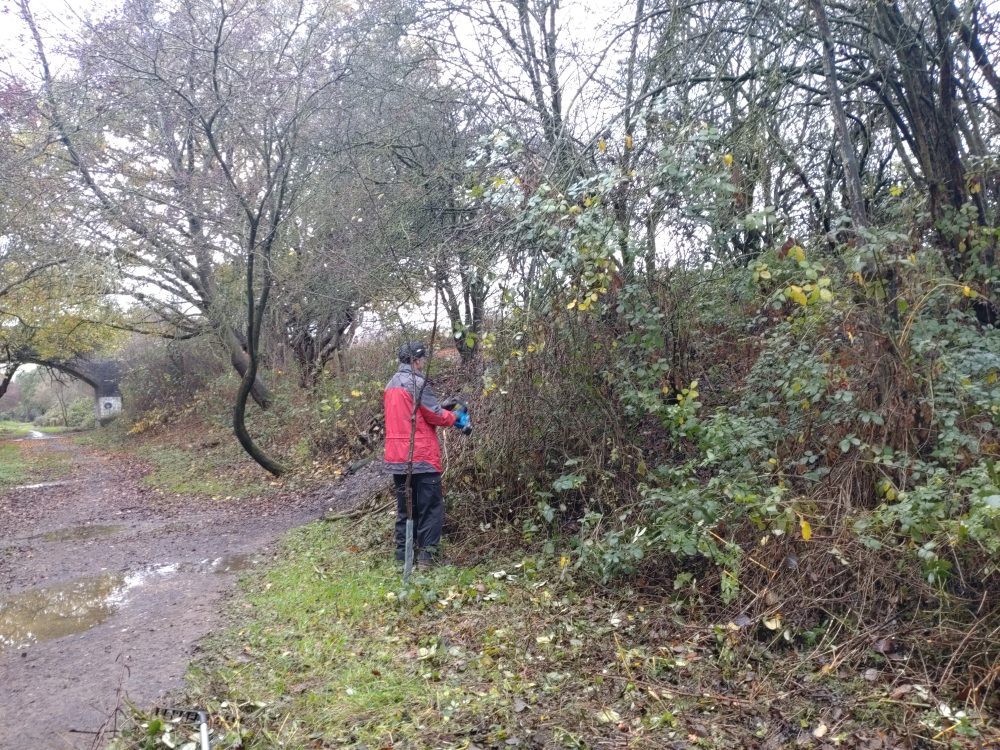
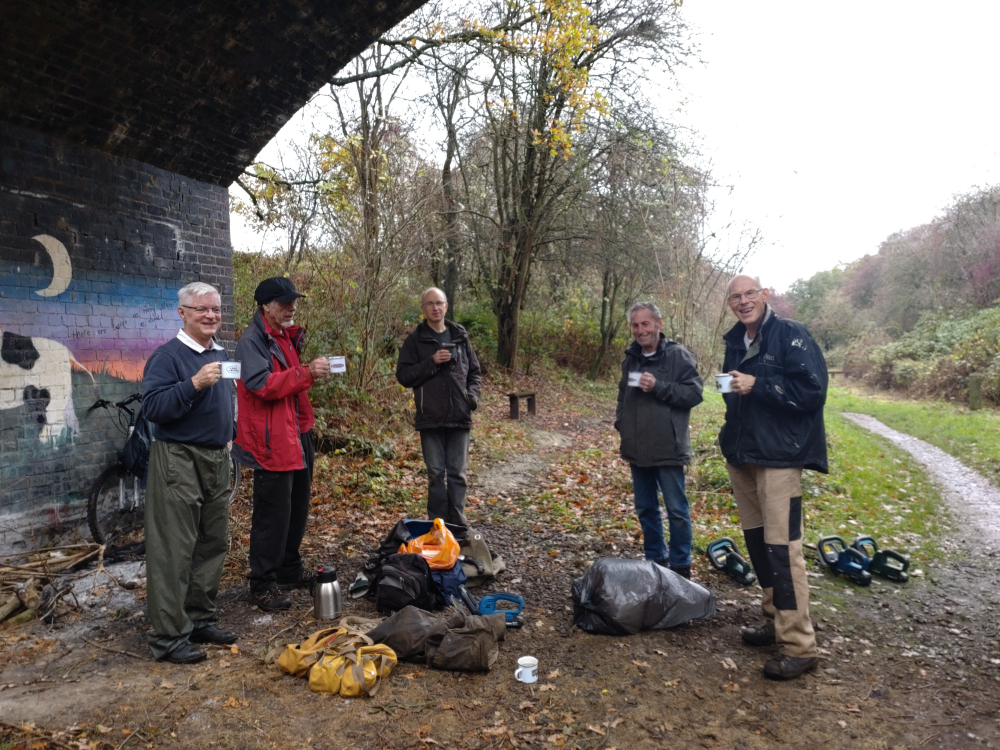
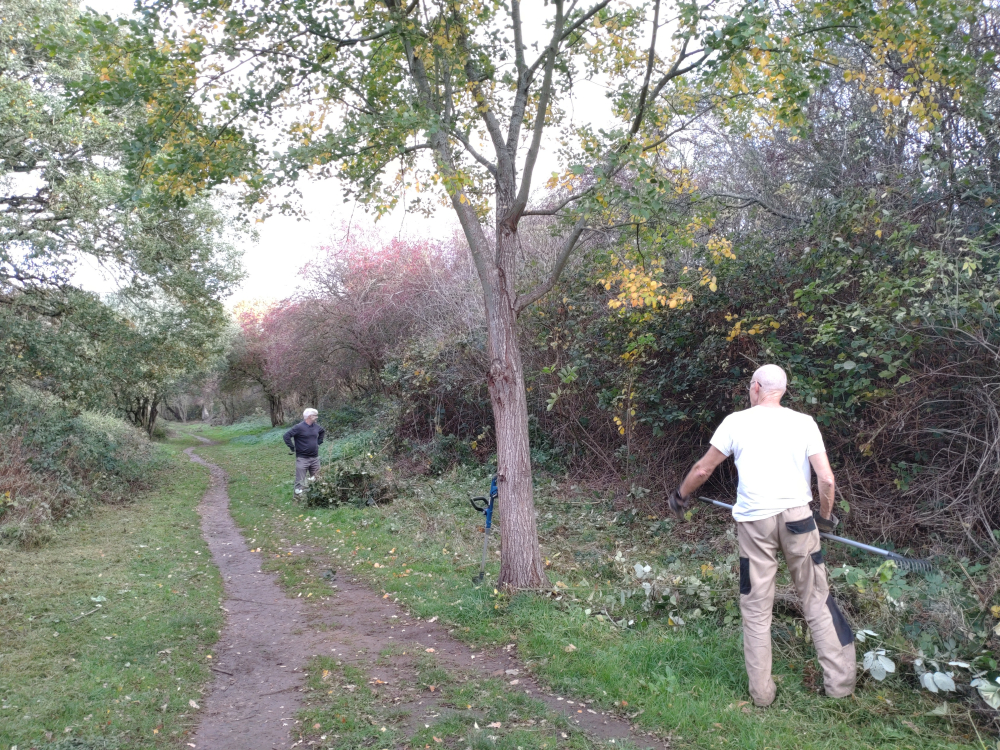
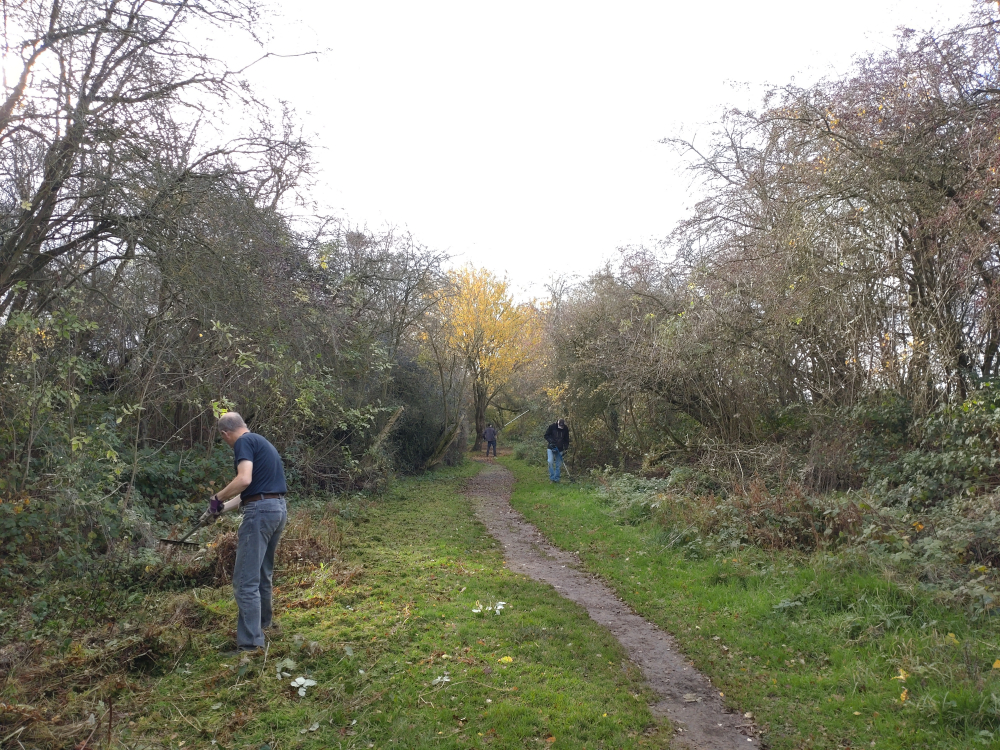
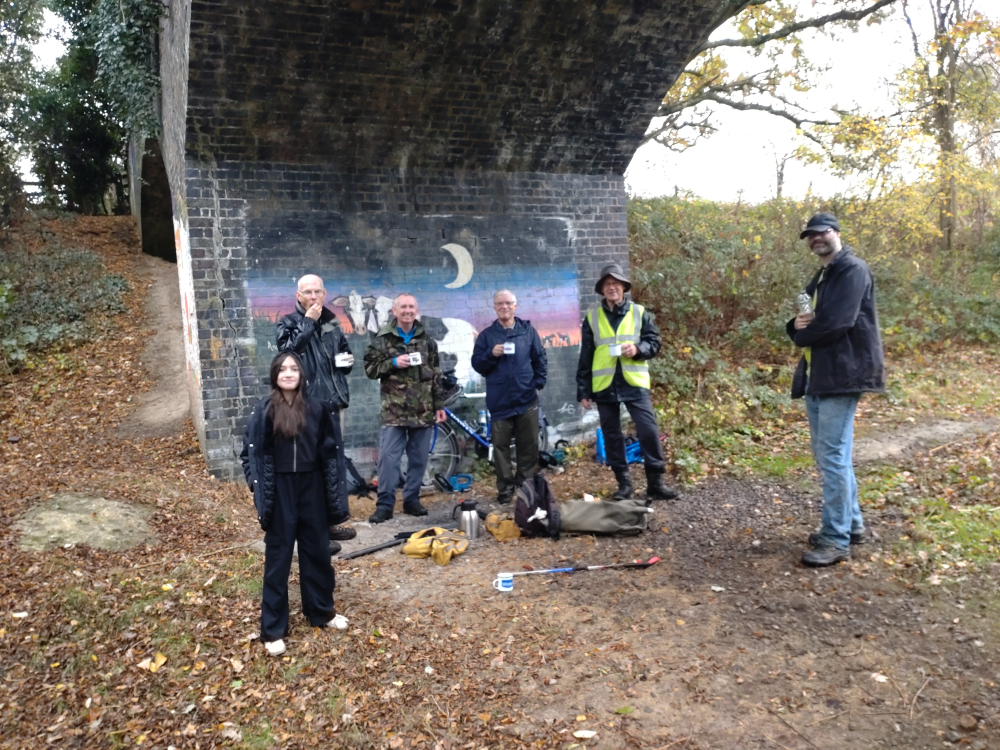
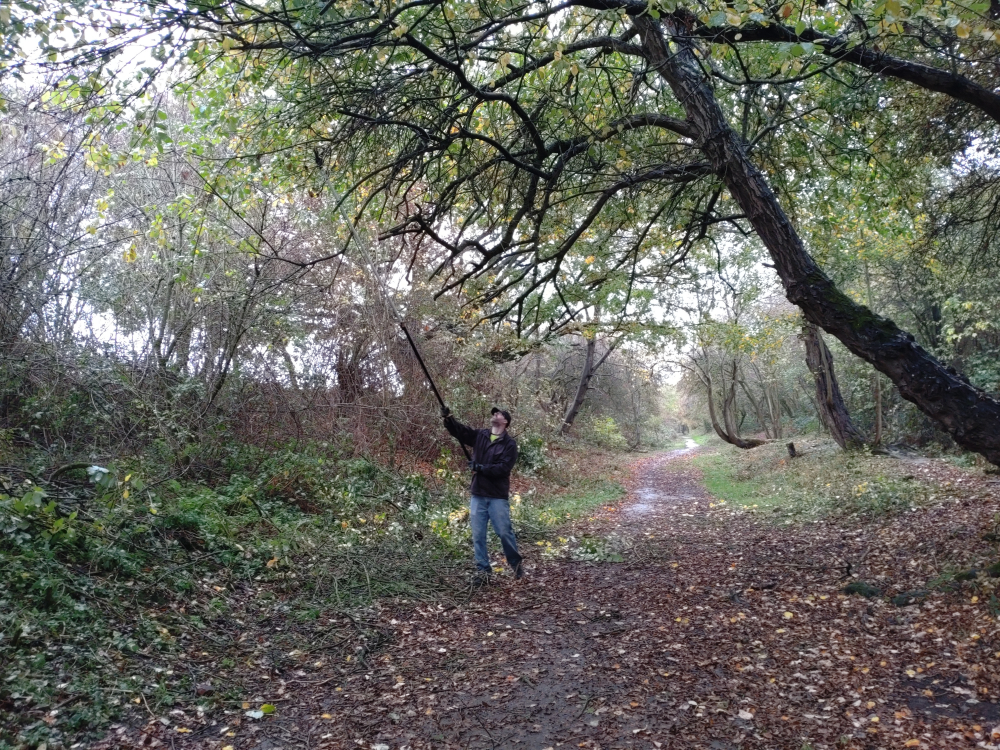
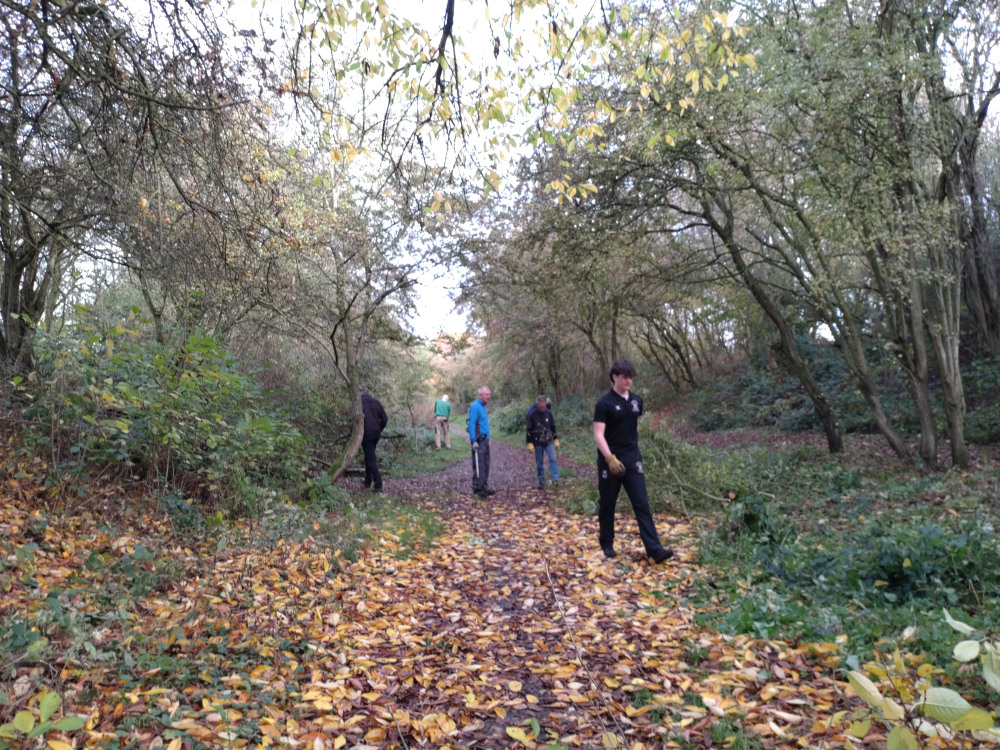
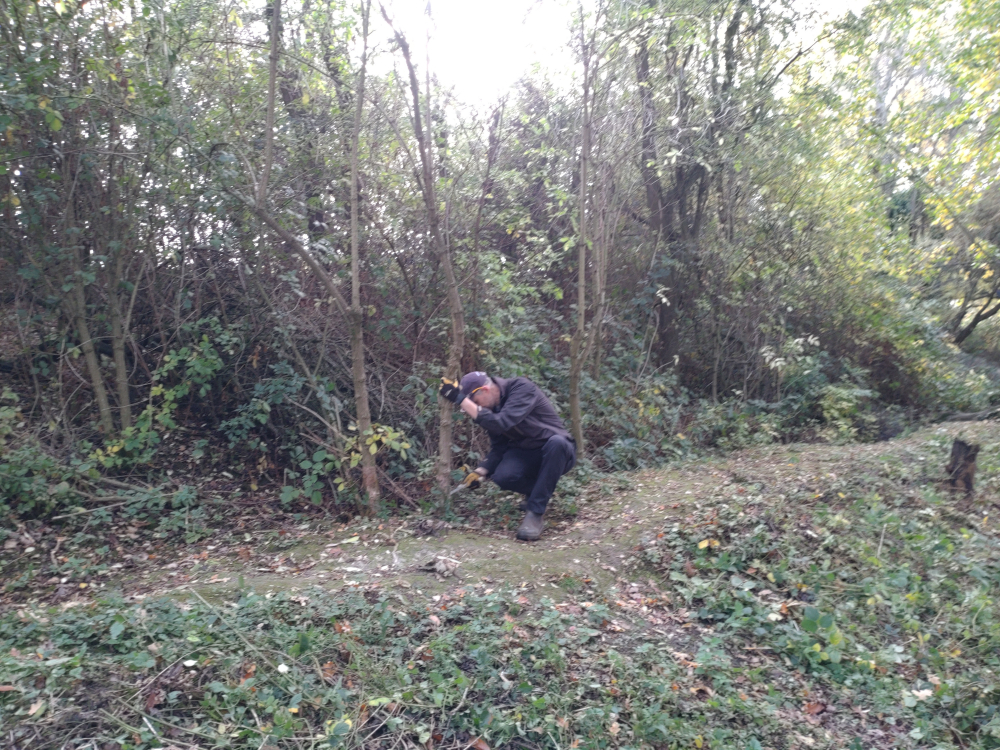
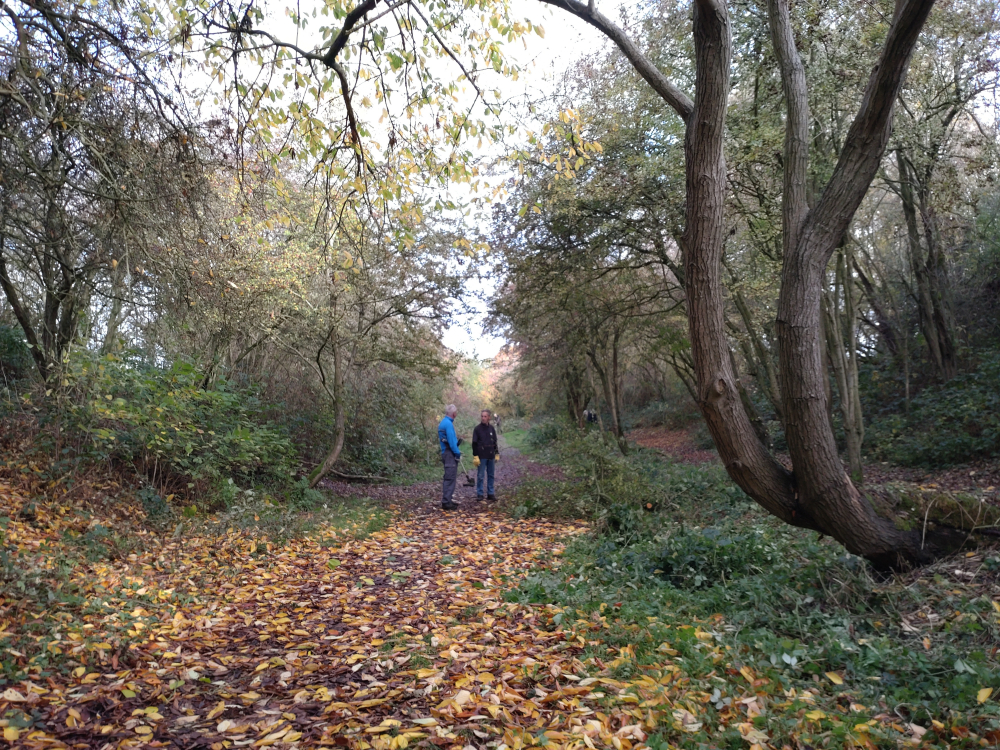
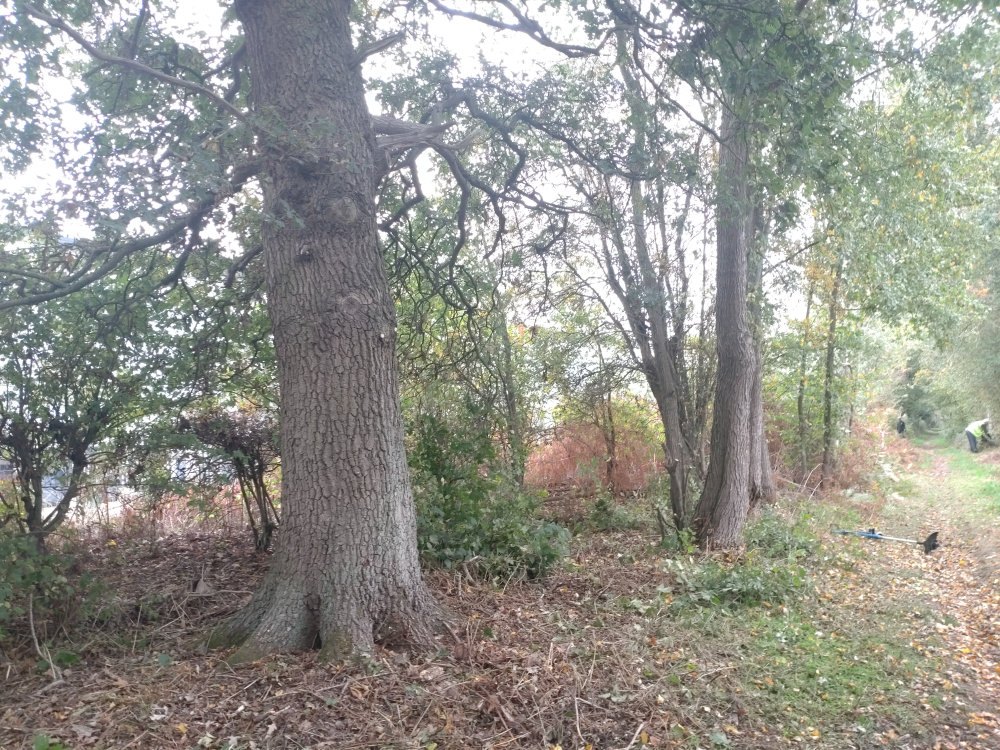
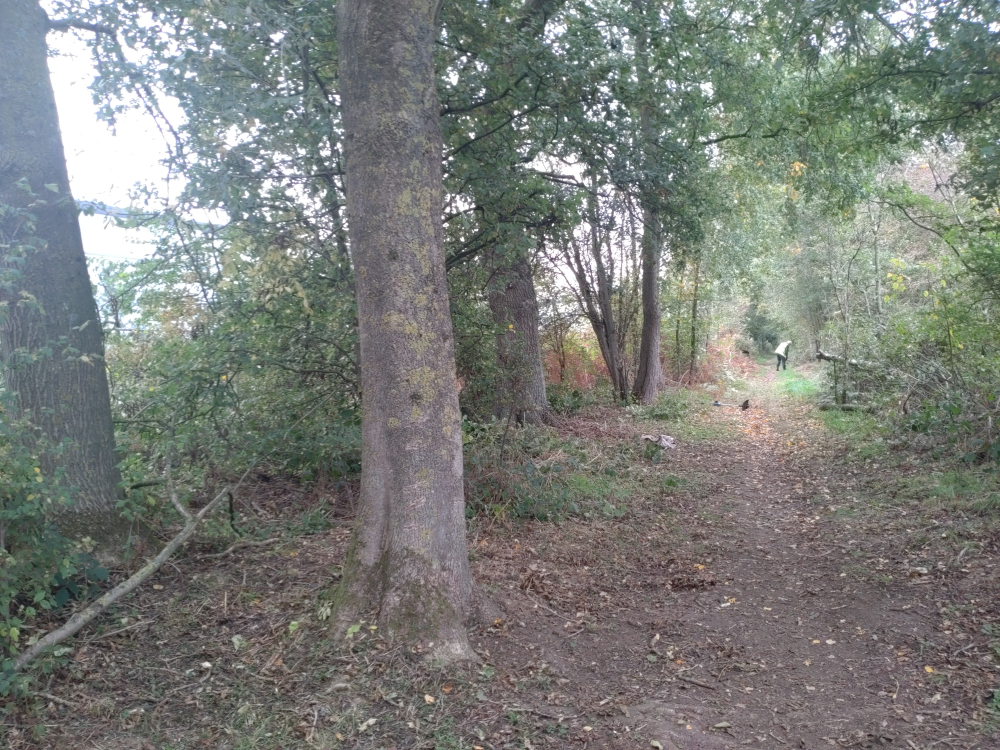
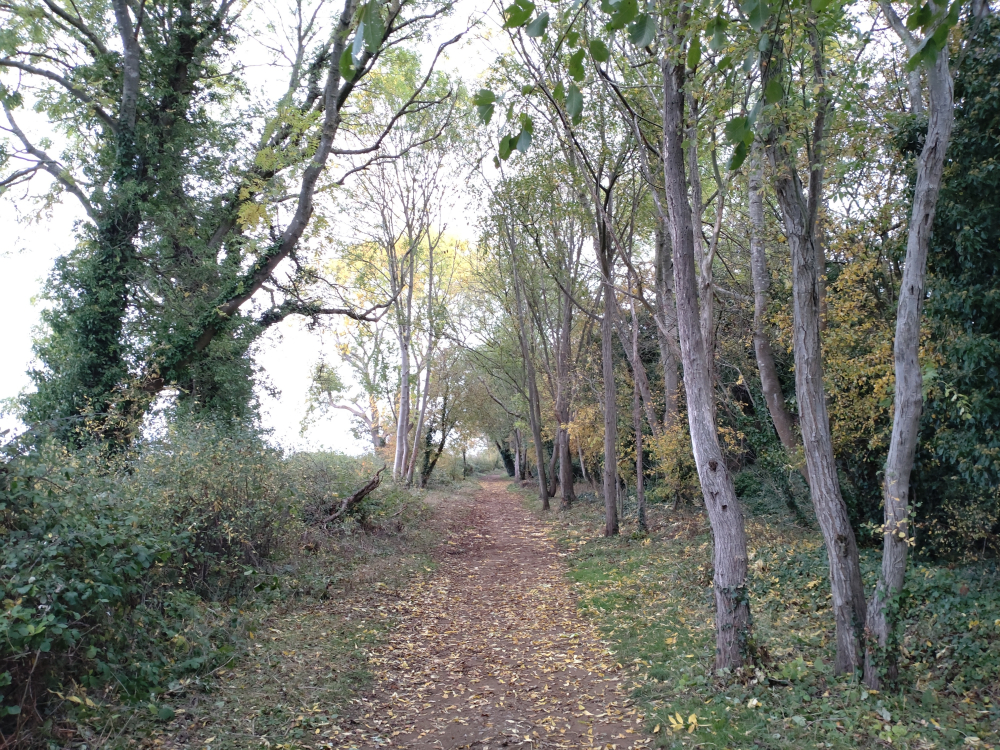
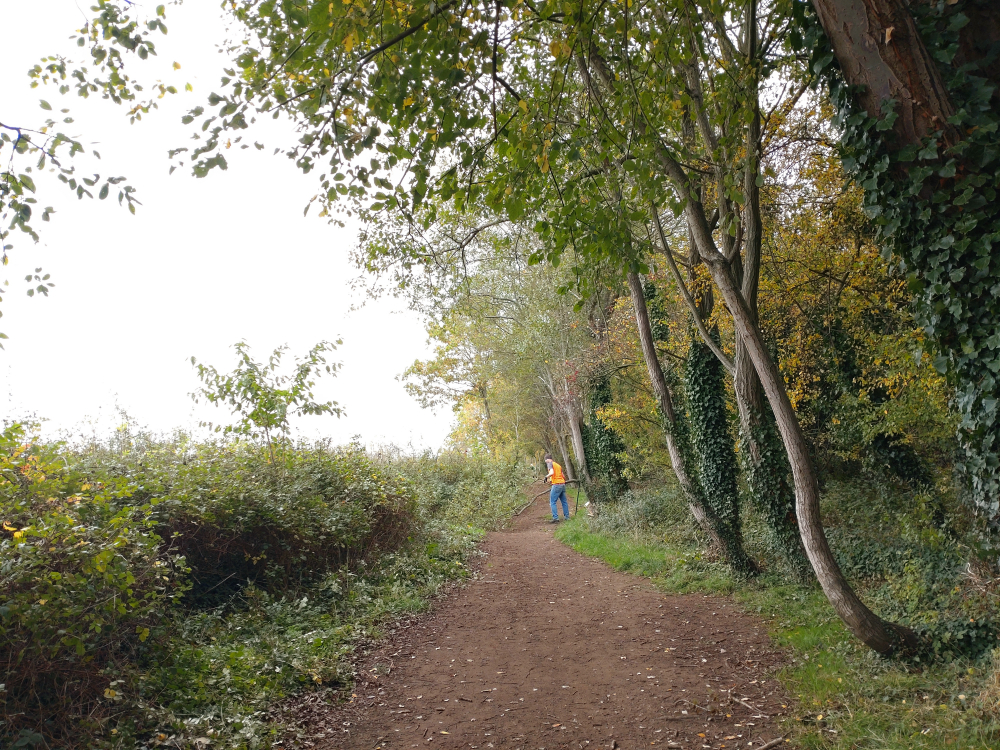
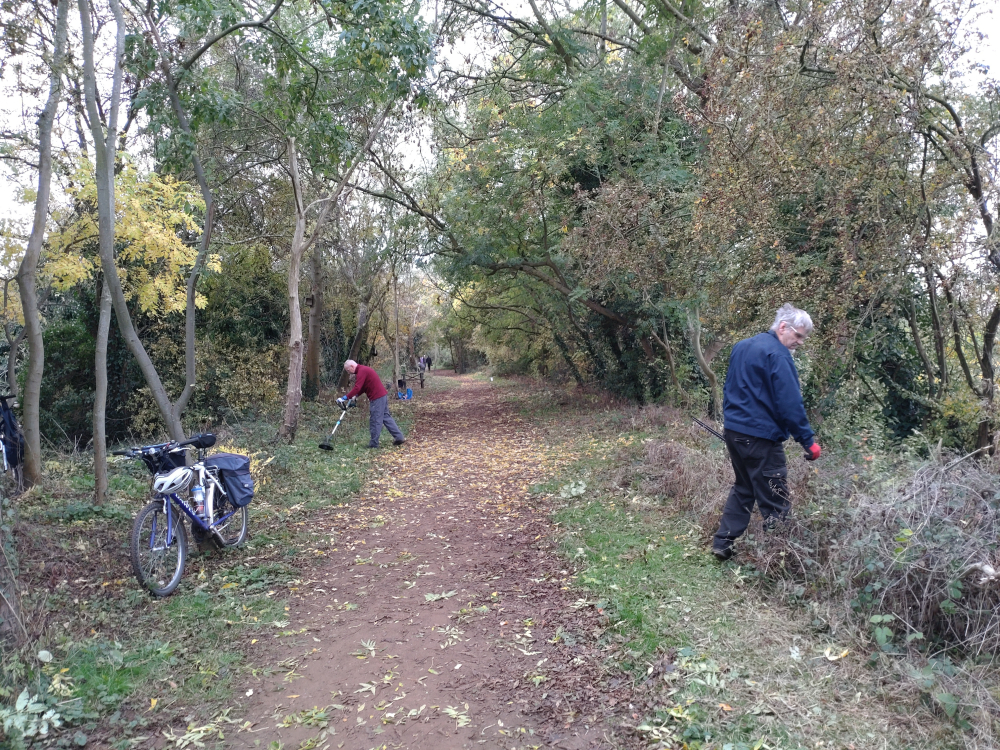
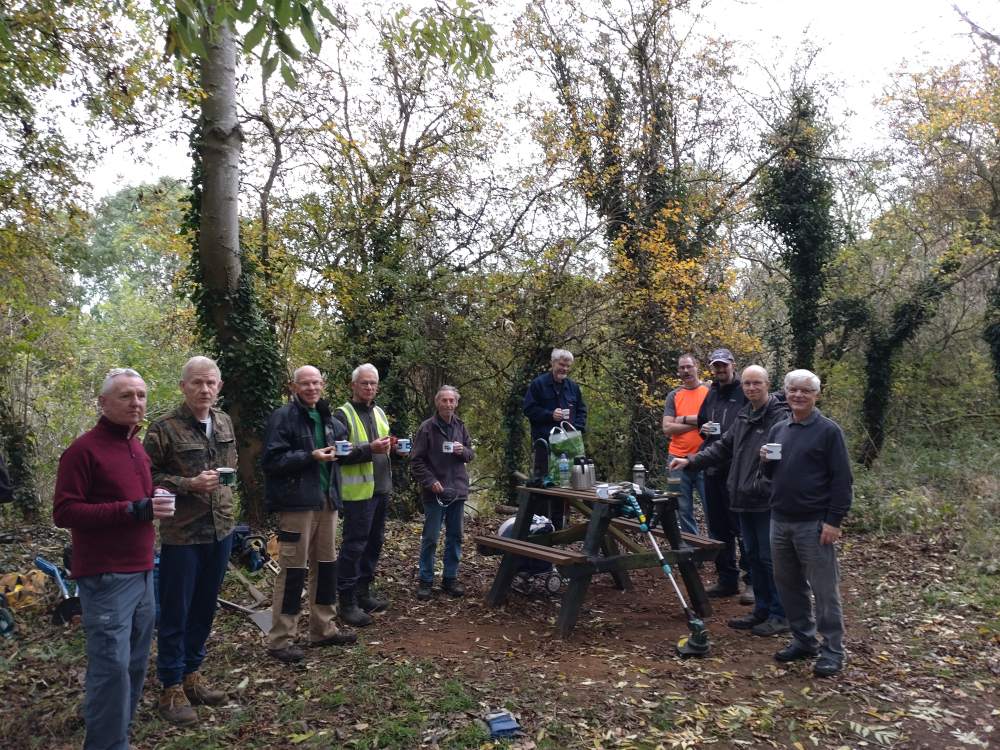
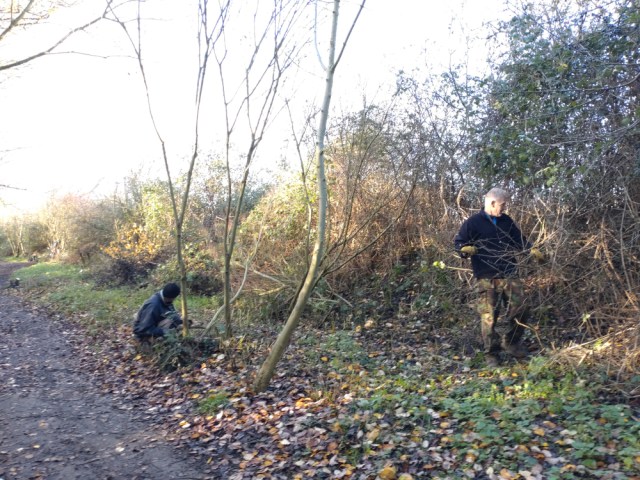
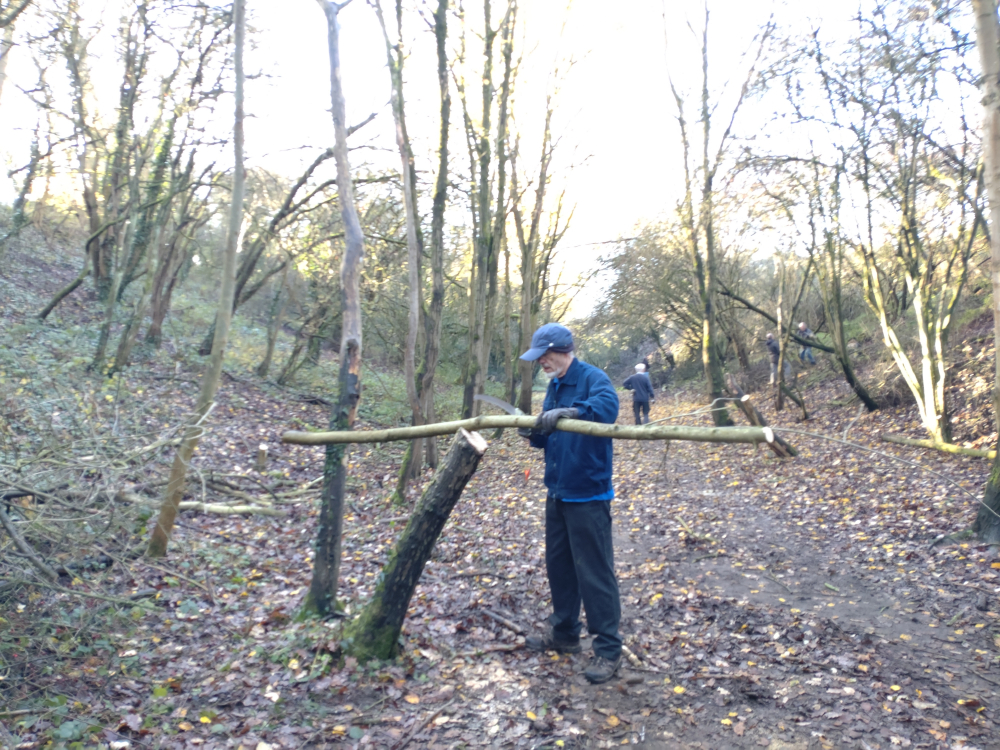
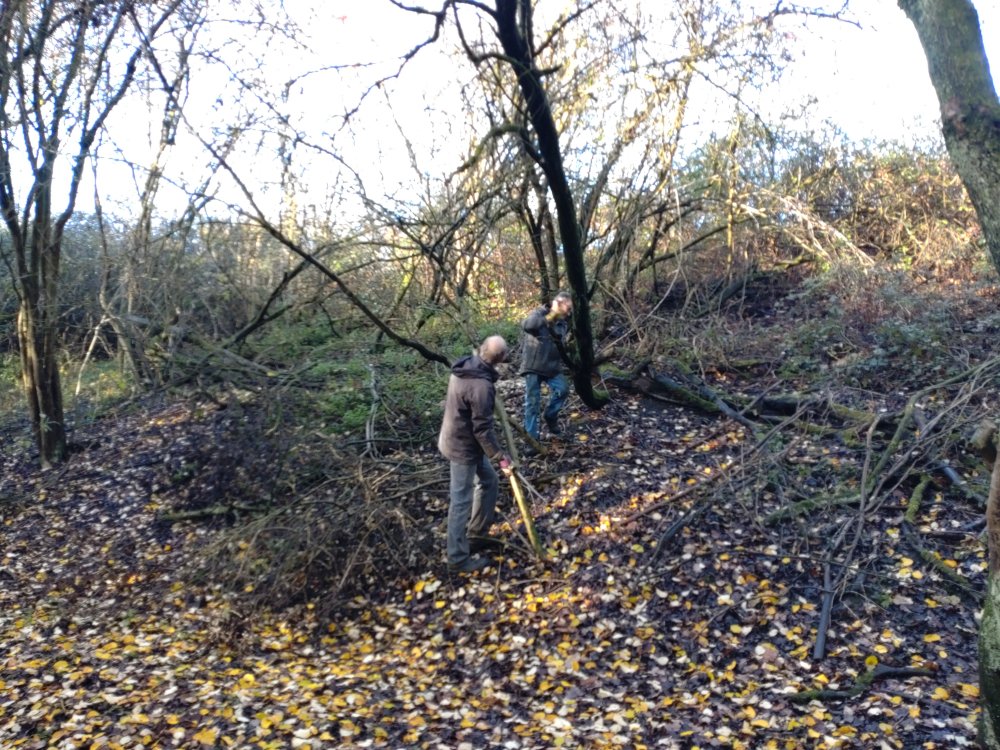
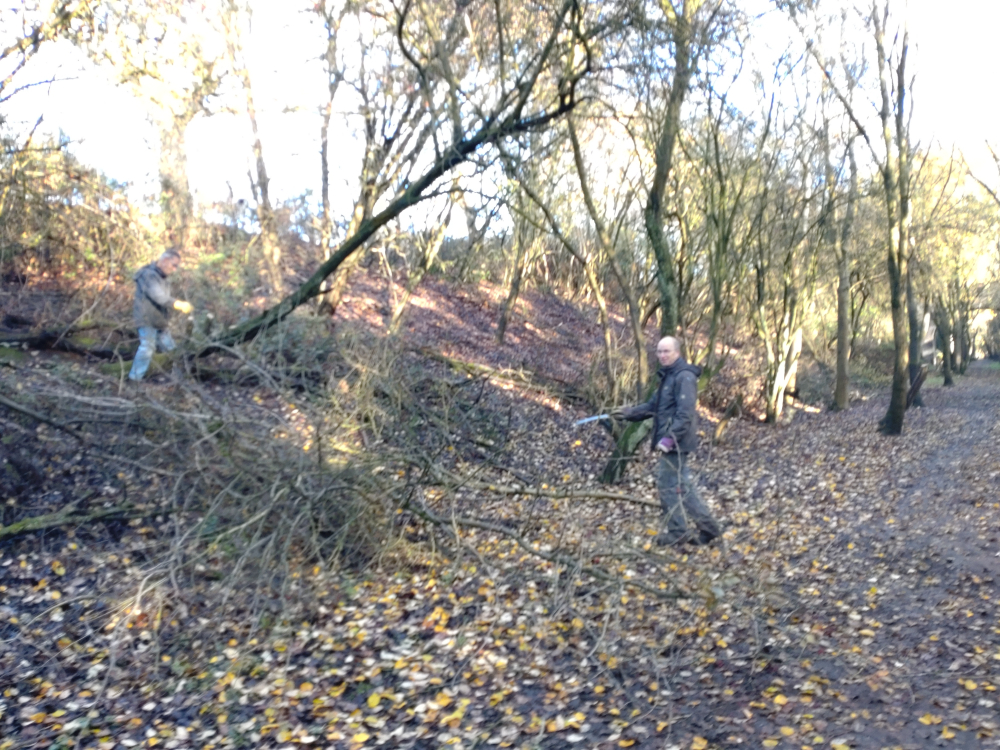
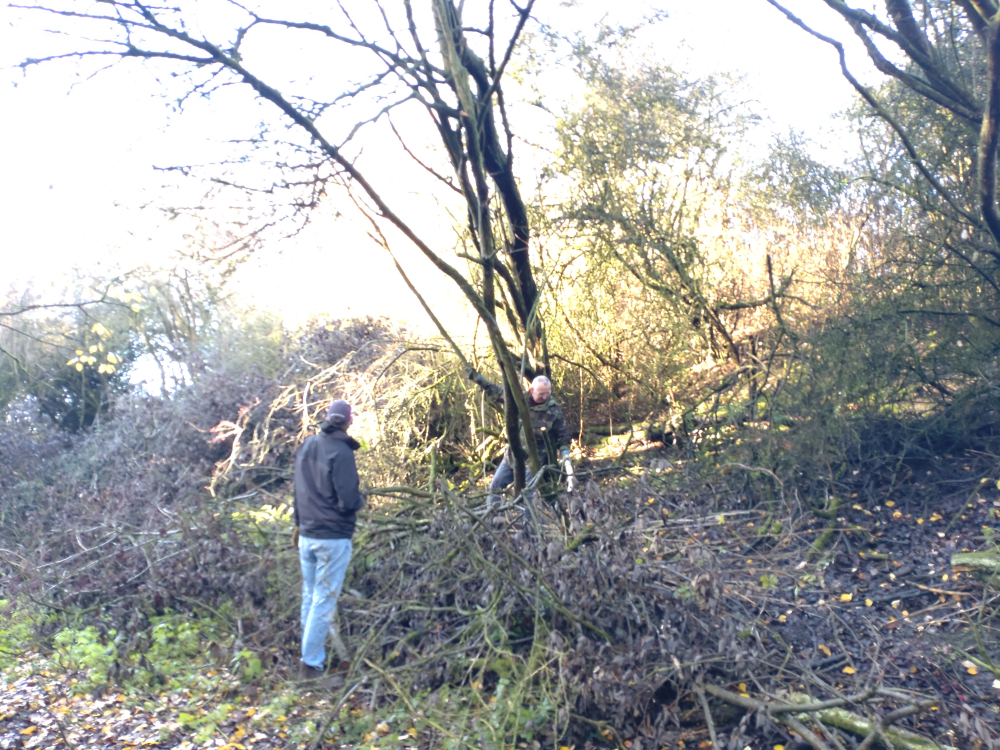
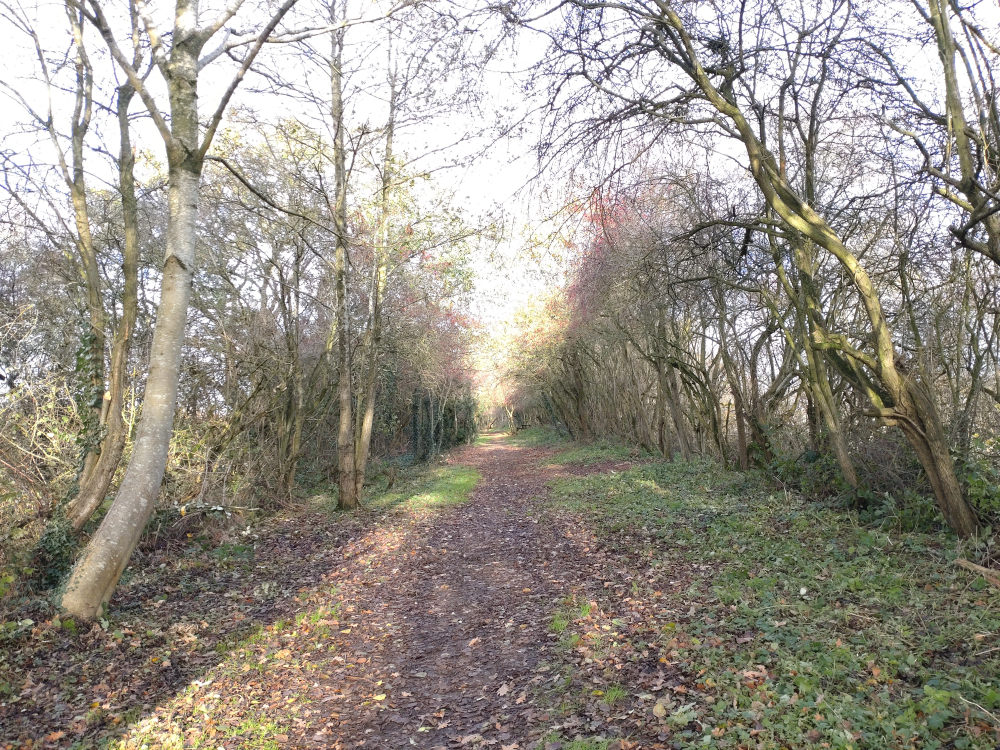
Nine of us turned out on a very soggy morning with just one mission on our minds. Steve, David, Marcus, Reece, Ian, Andrew, Mark, Dave, and Paul armed ourselves with strimmers and Zubat saws and went for it.

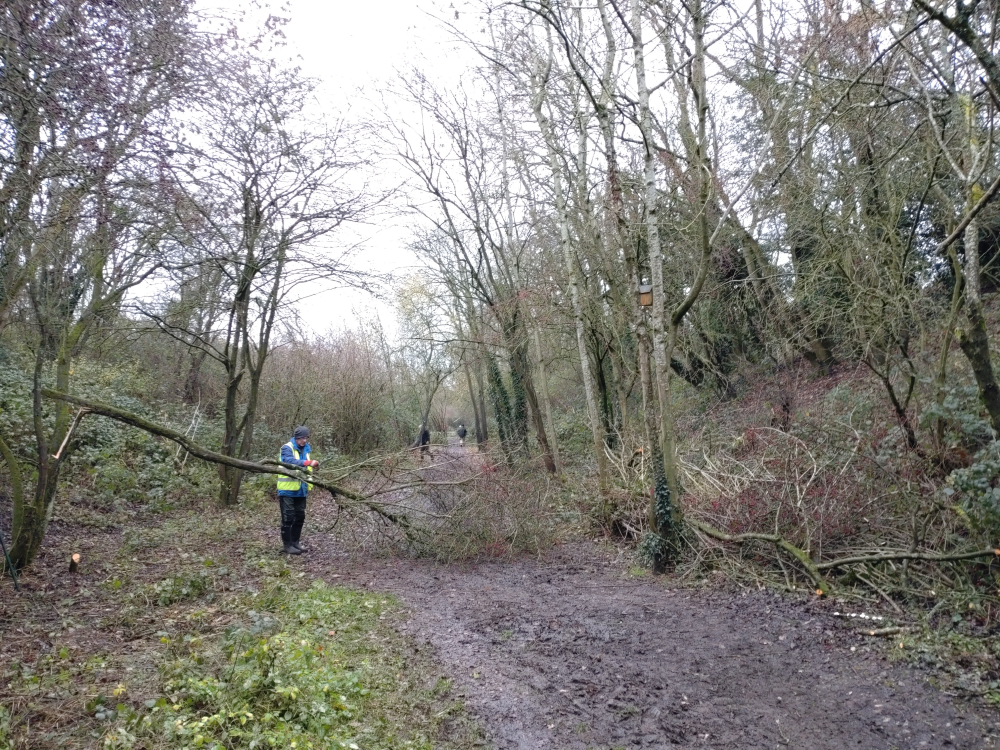
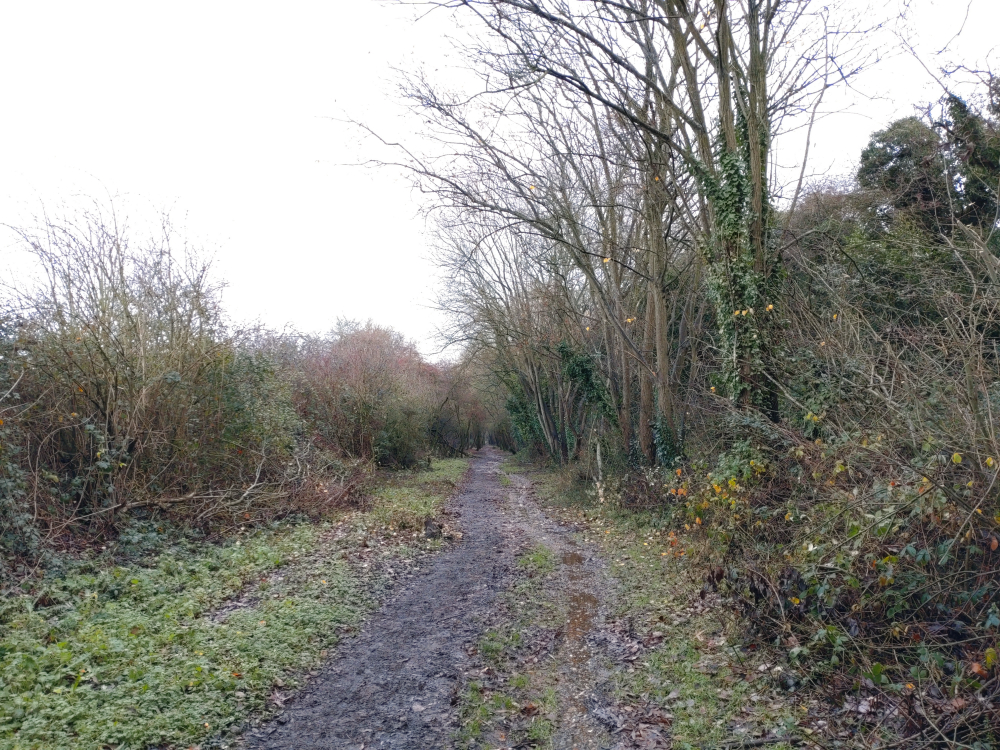
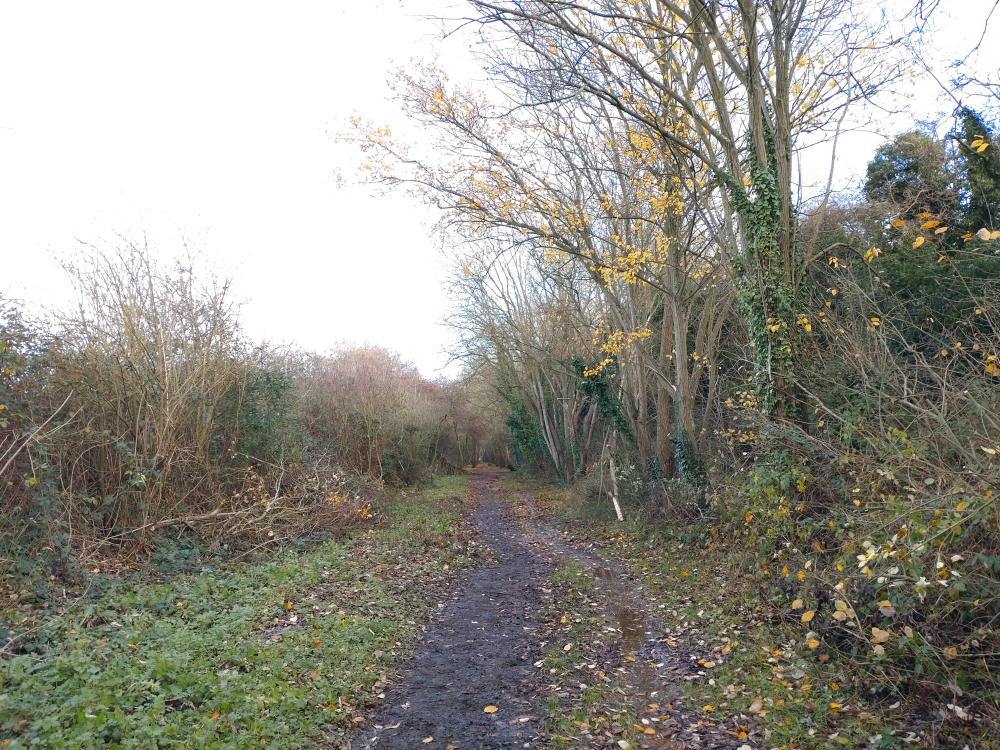
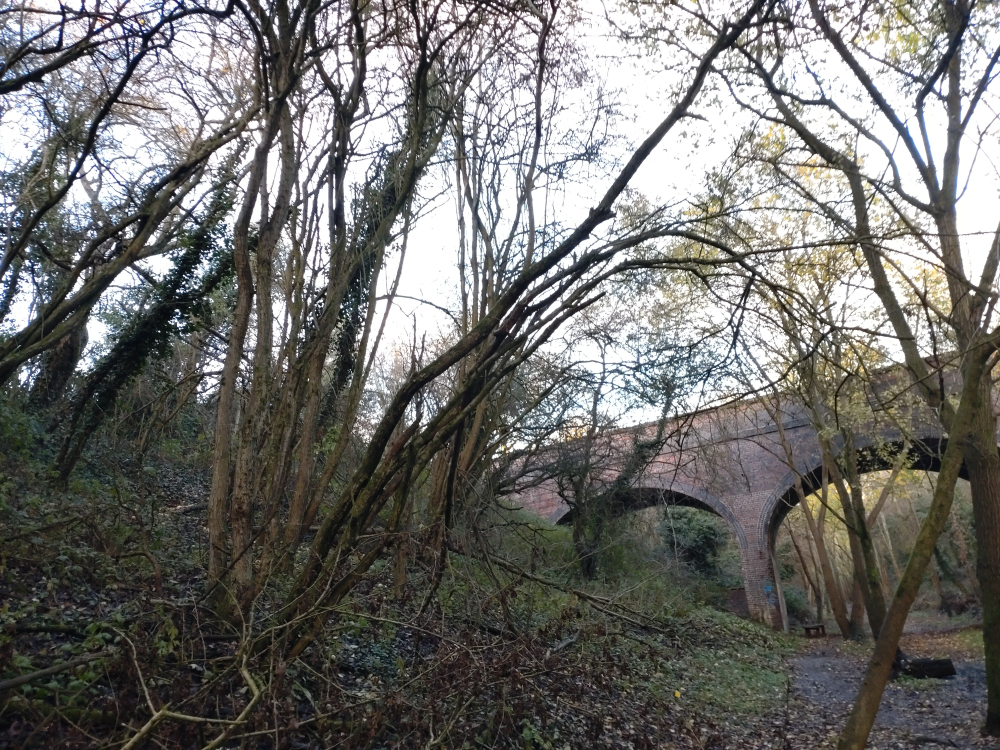
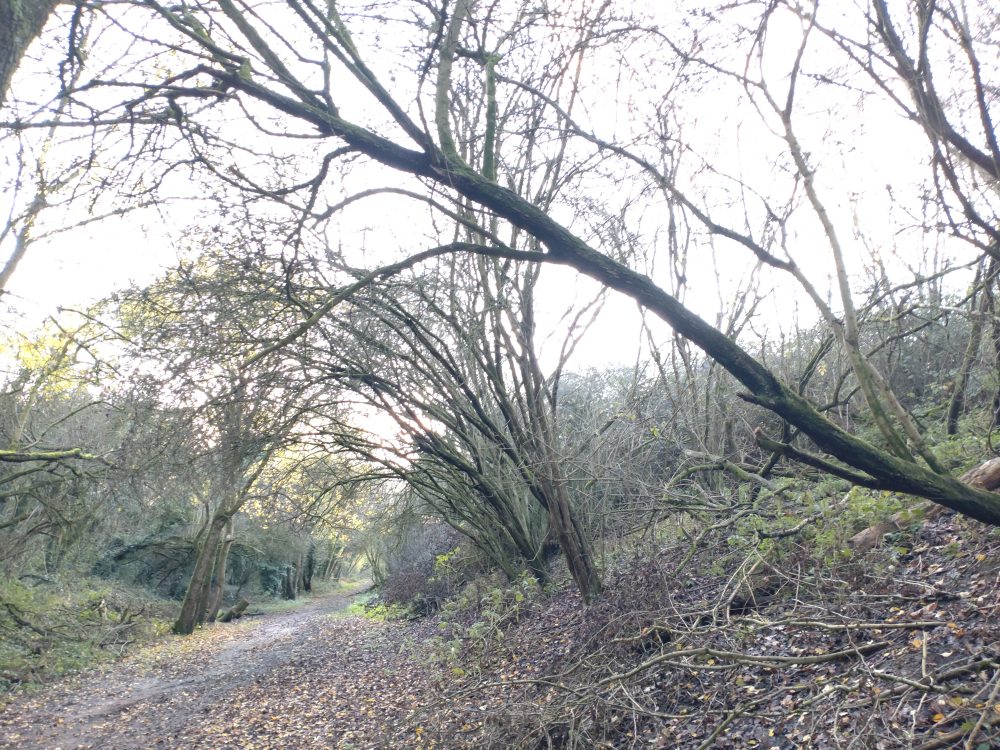
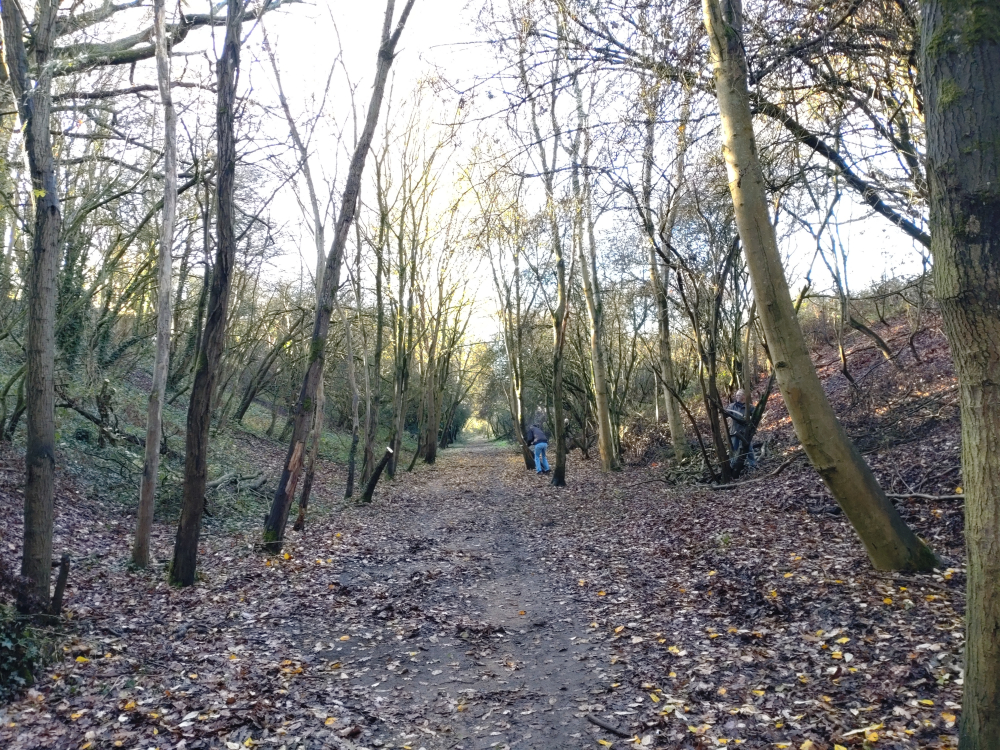
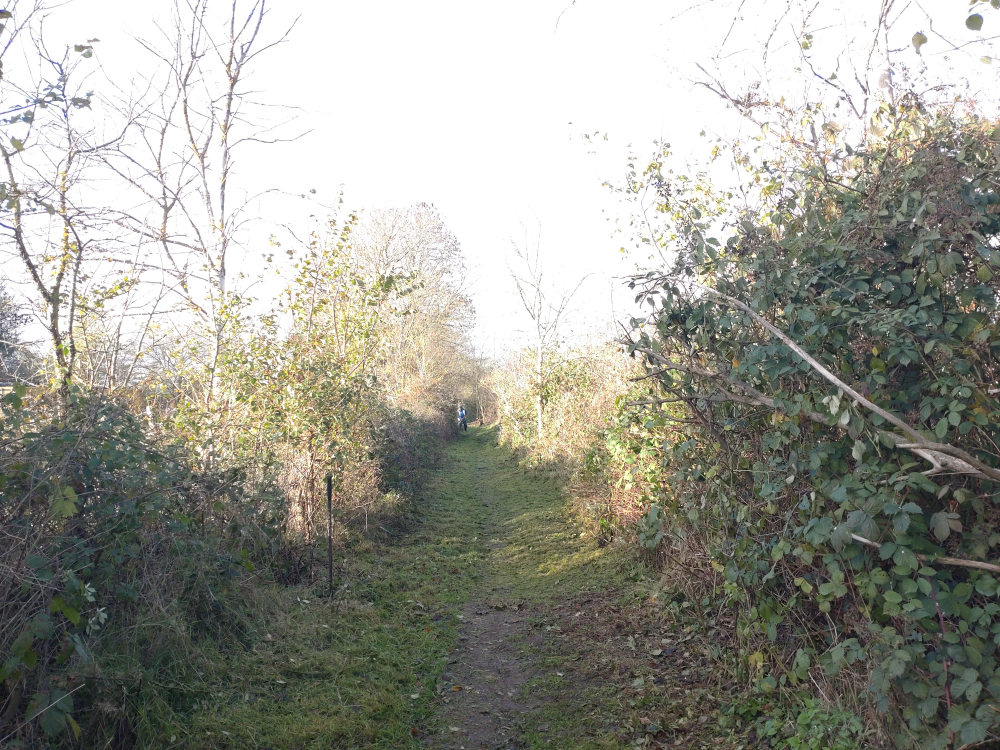
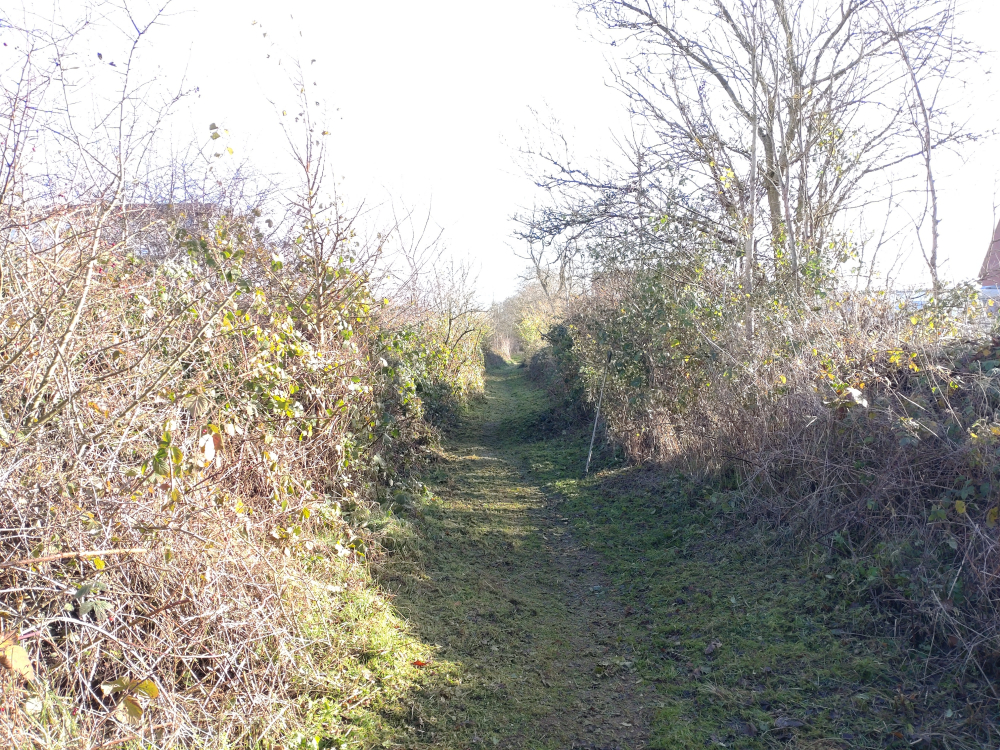
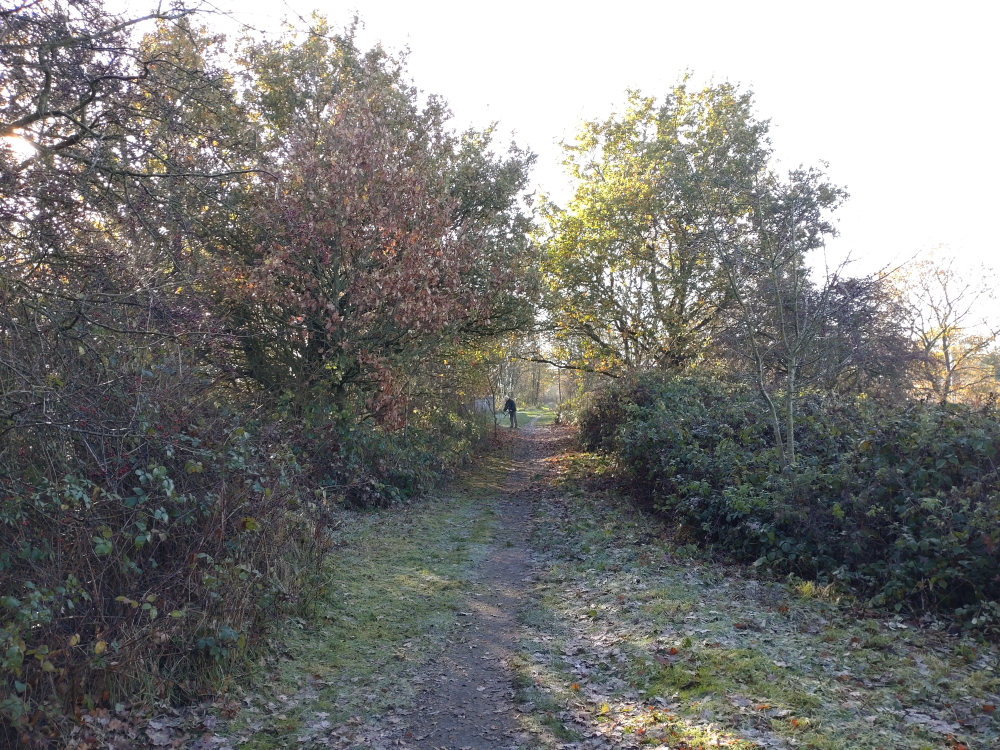
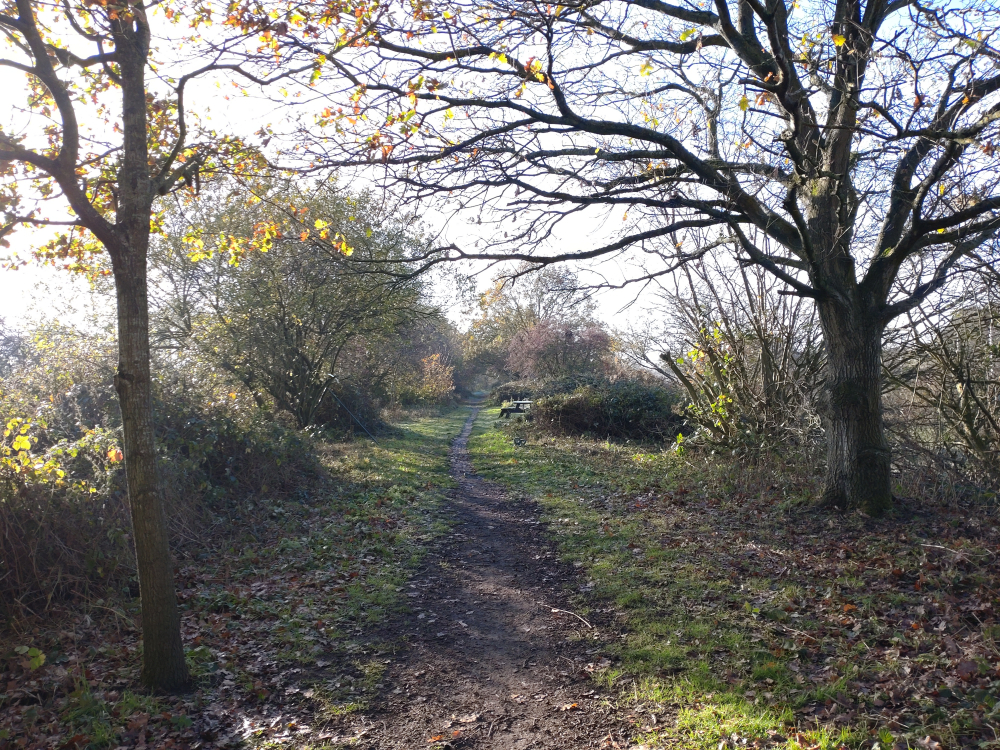
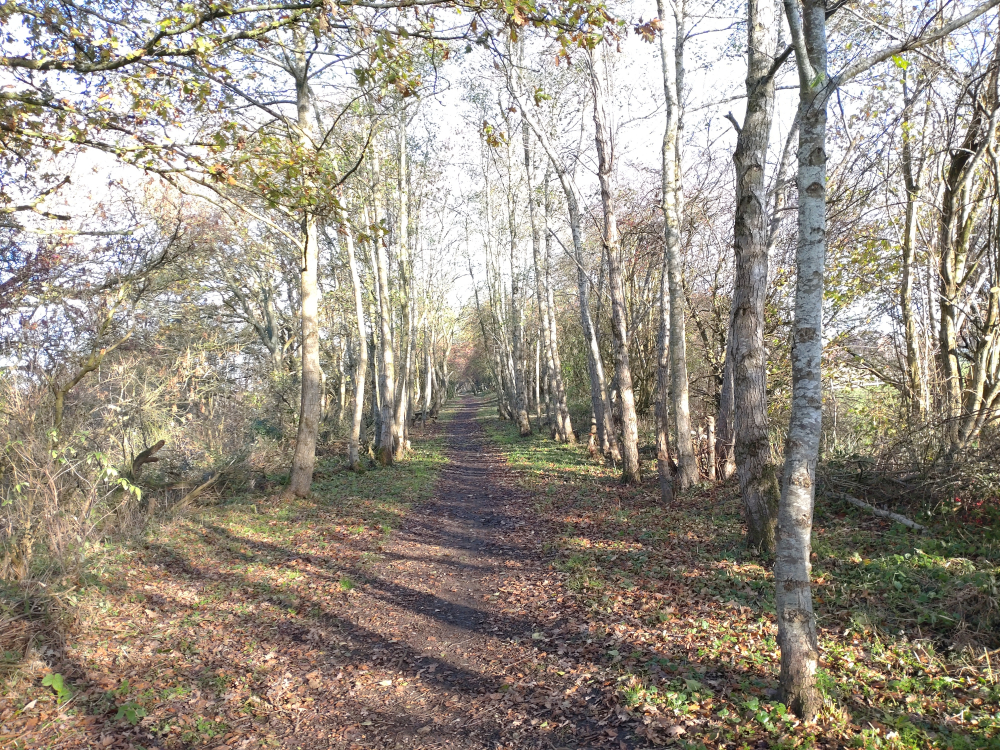
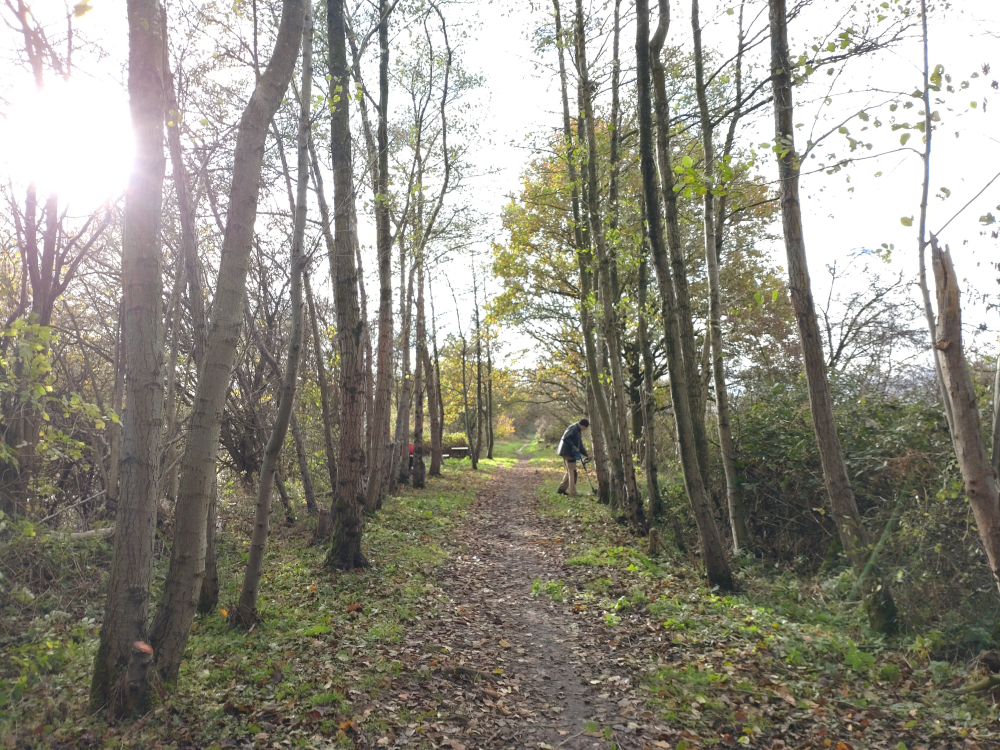
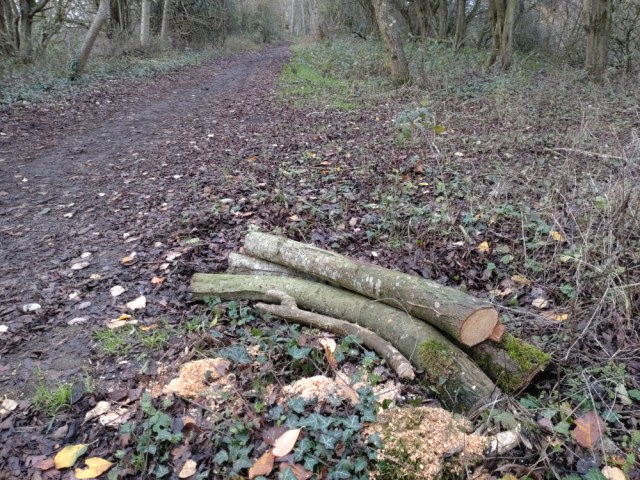
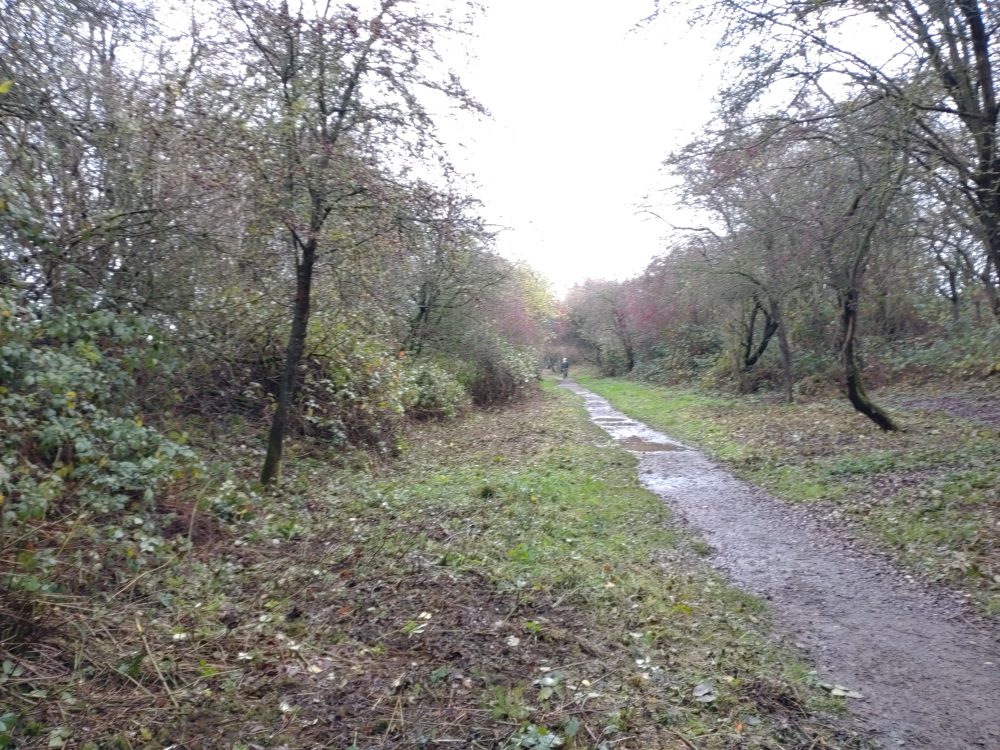
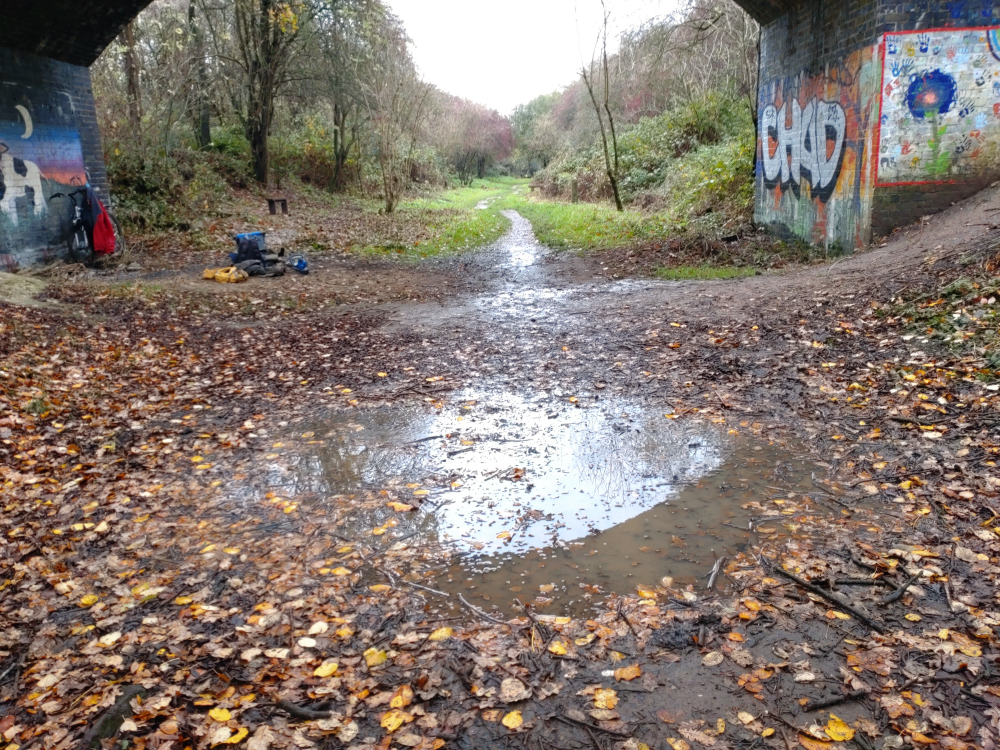
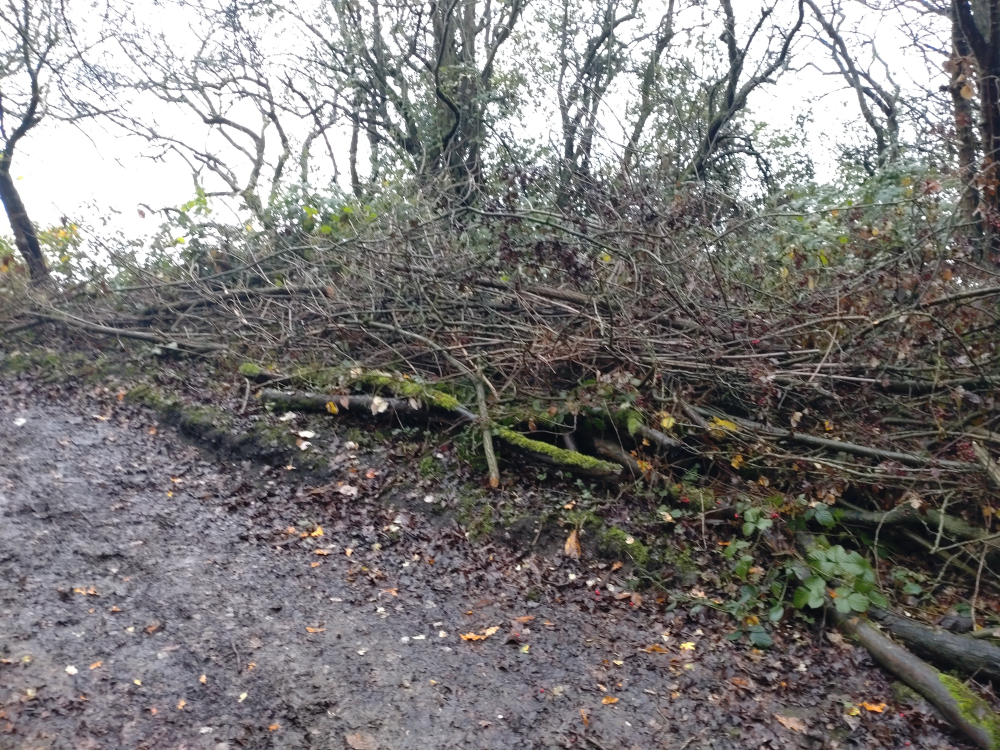
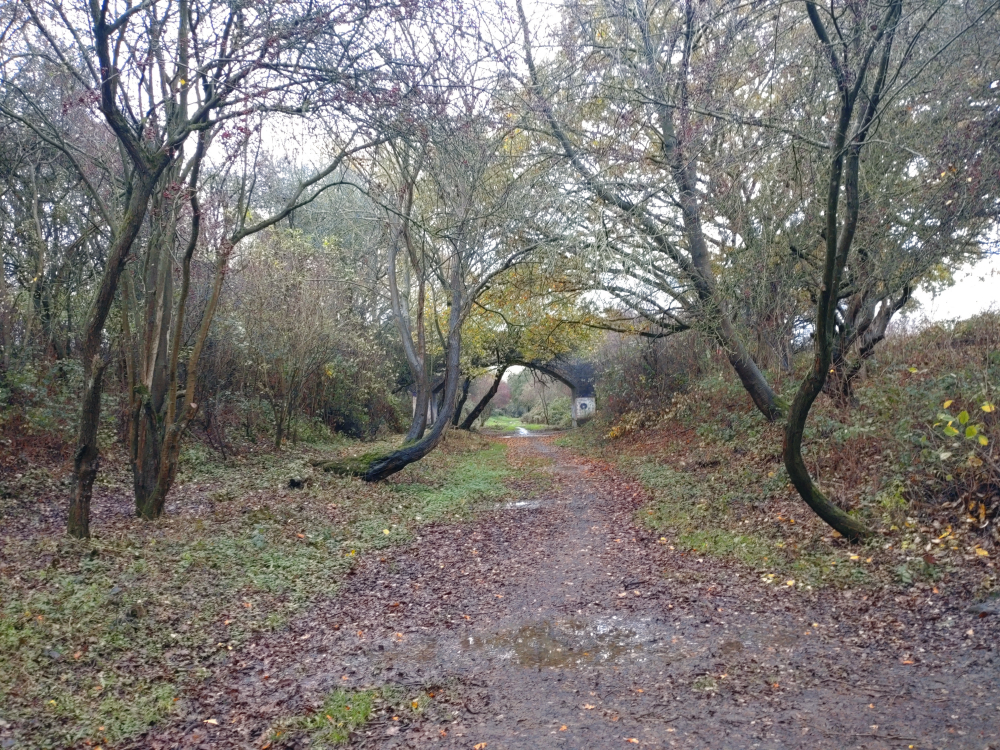
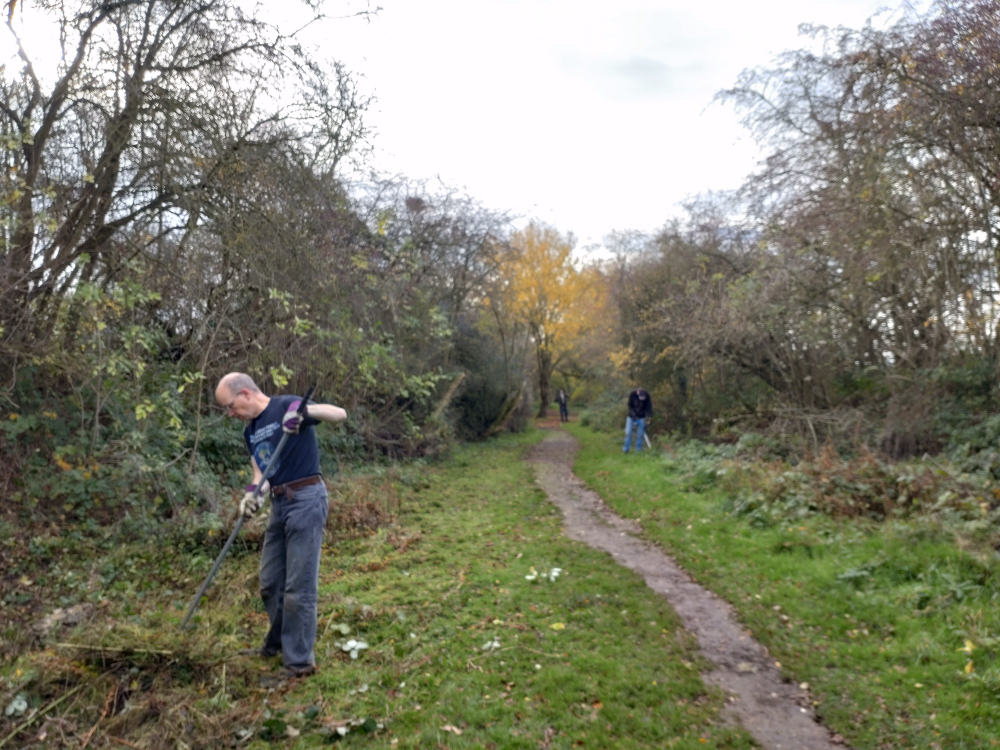
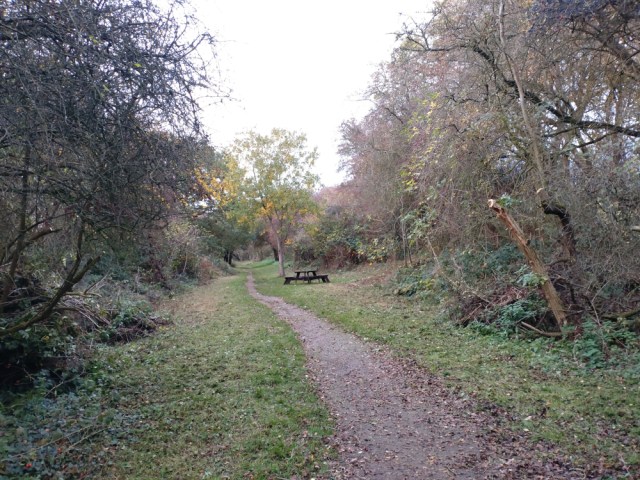
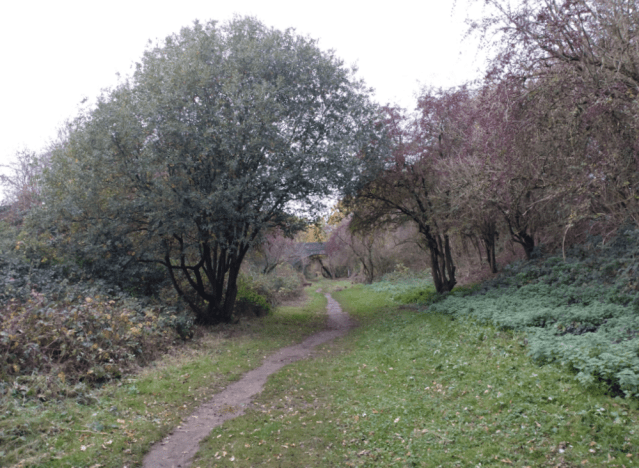
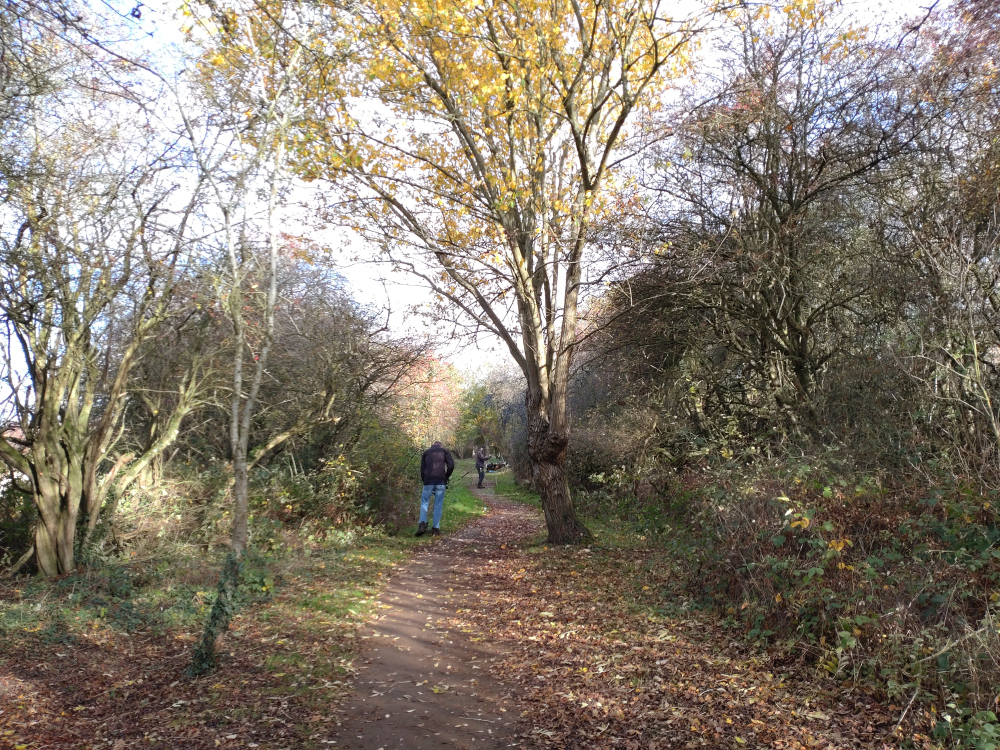
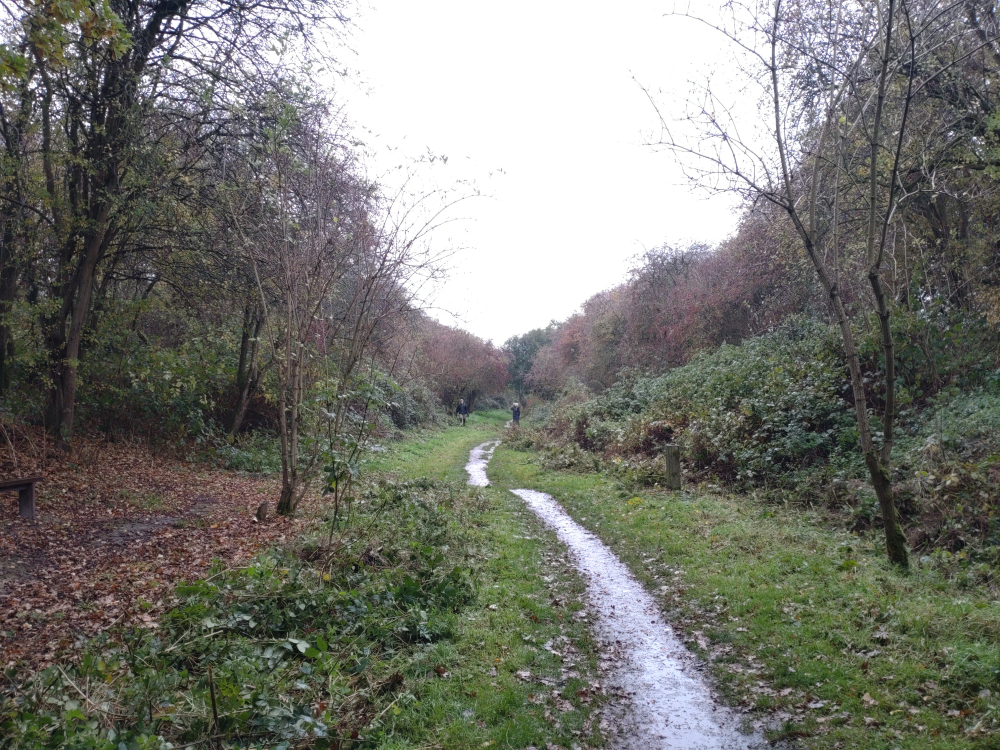
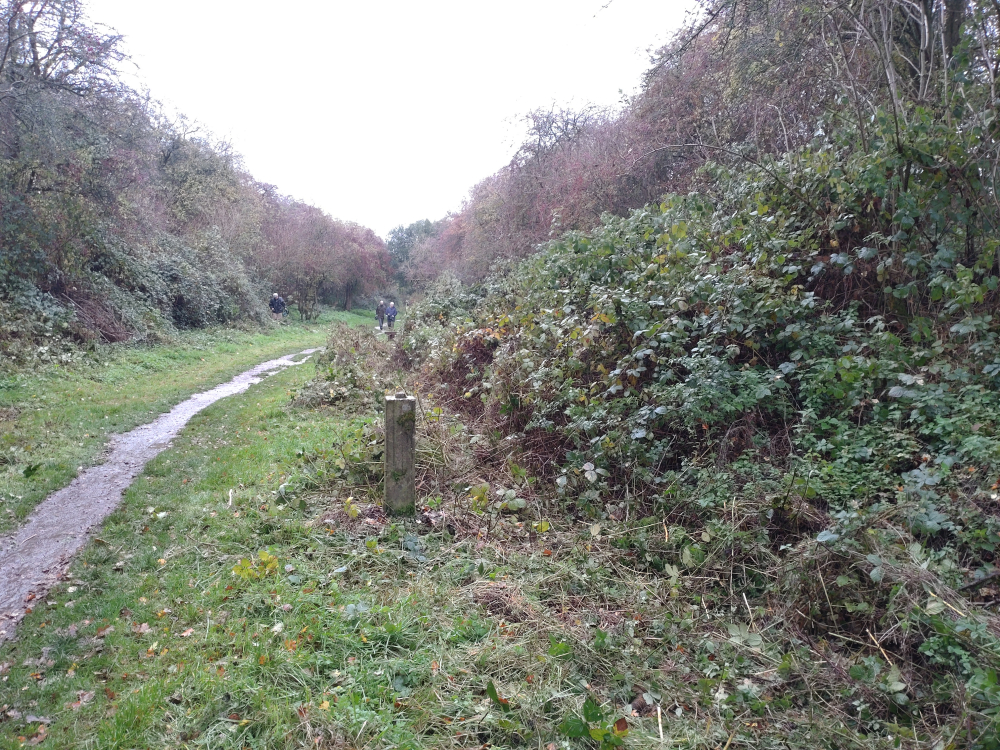
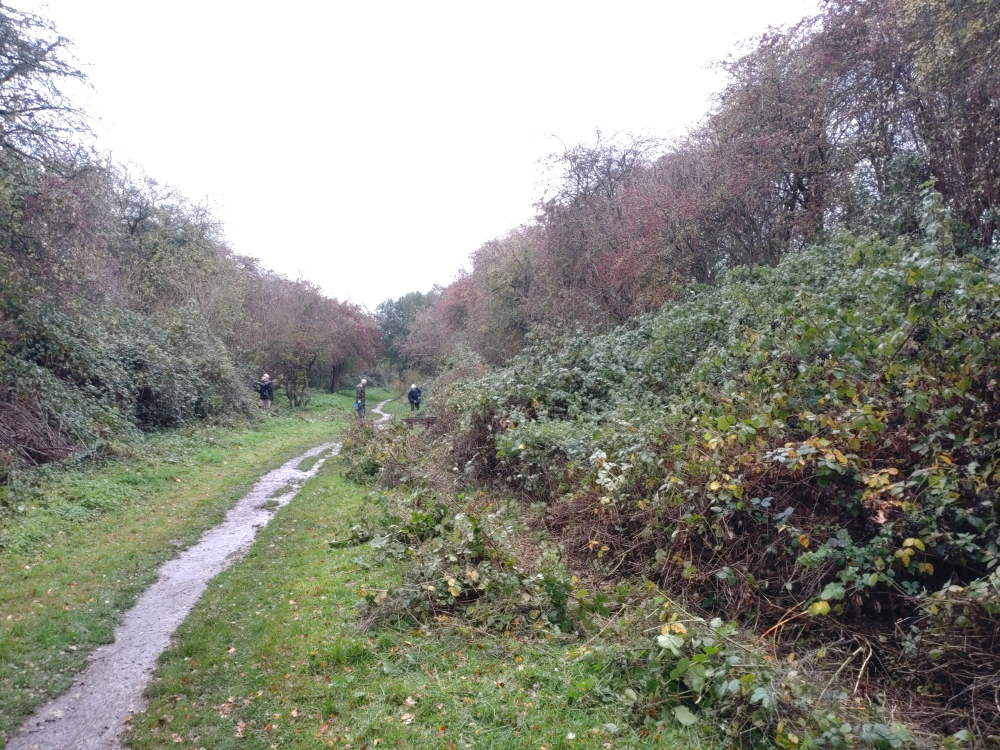
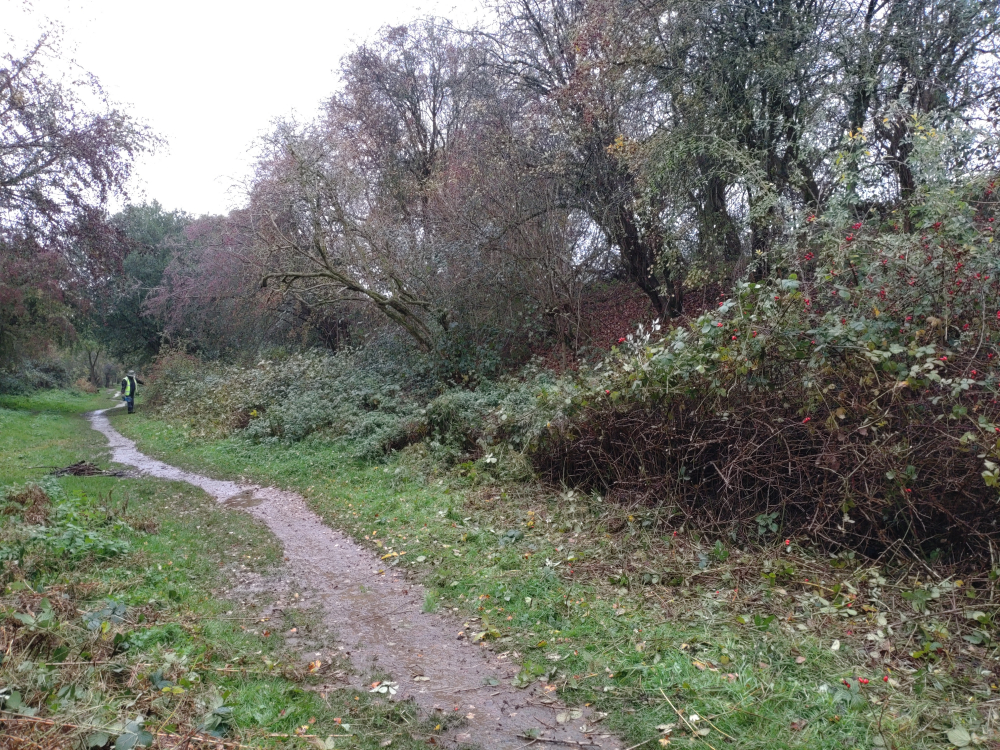
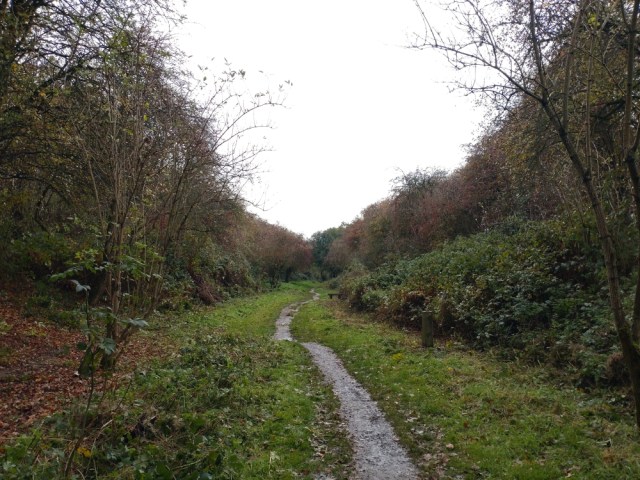
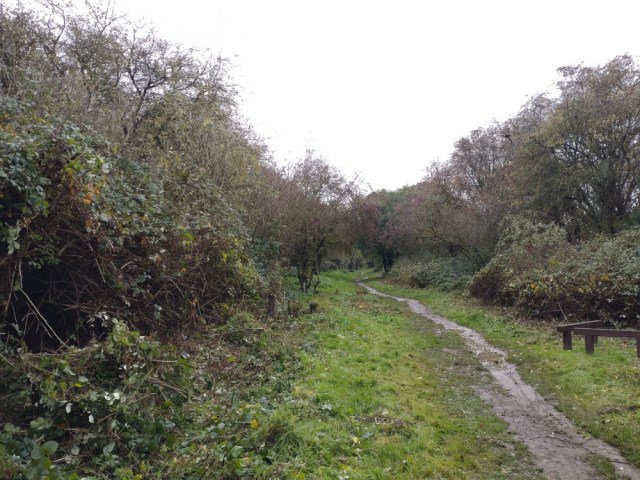
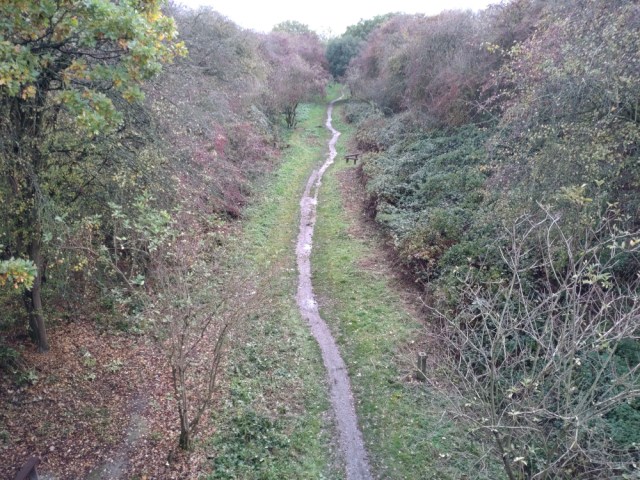
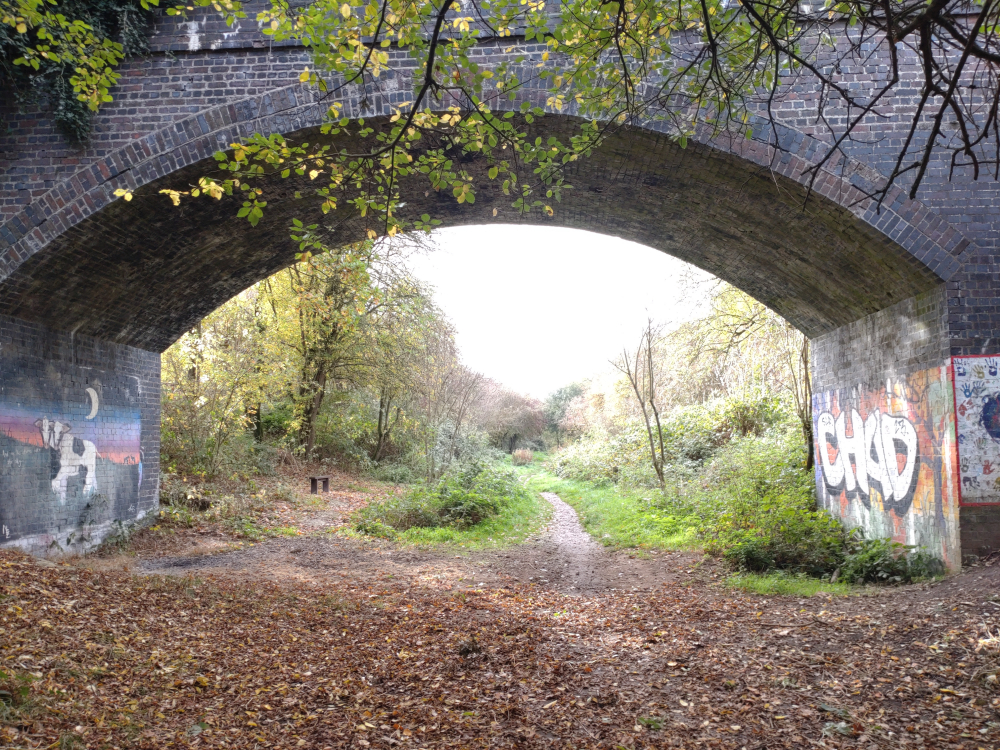
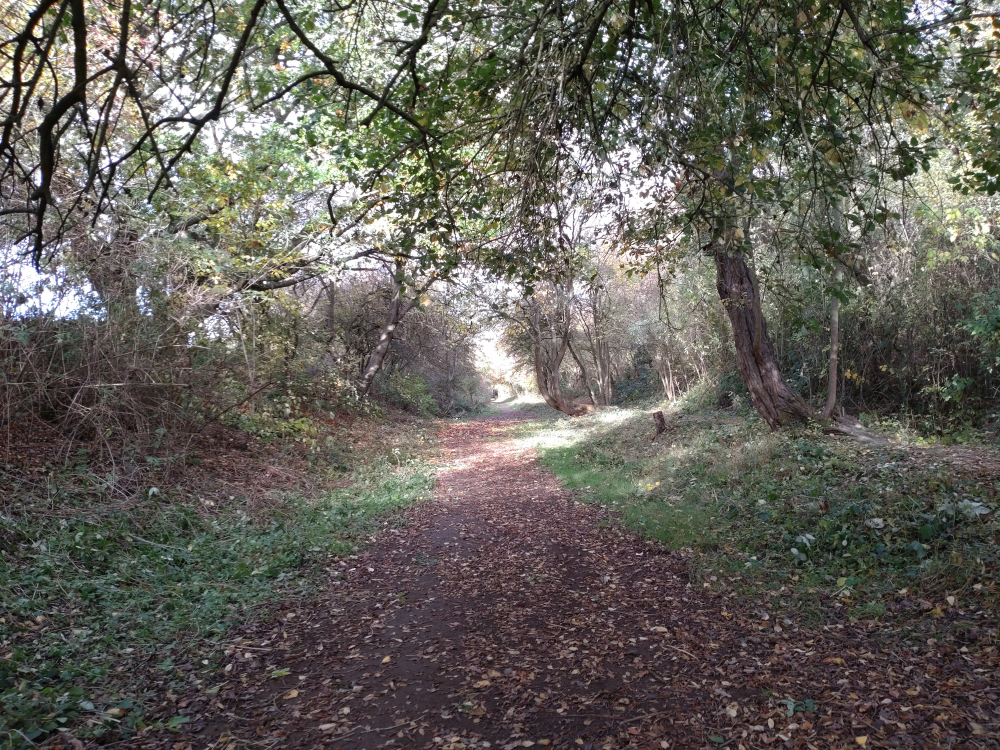
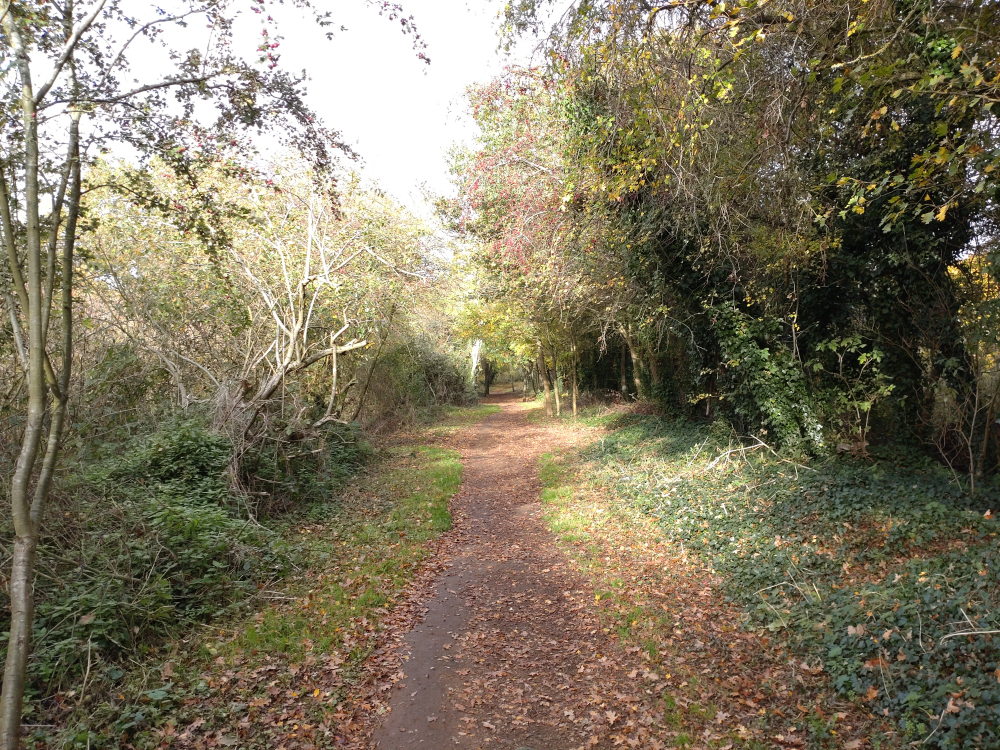
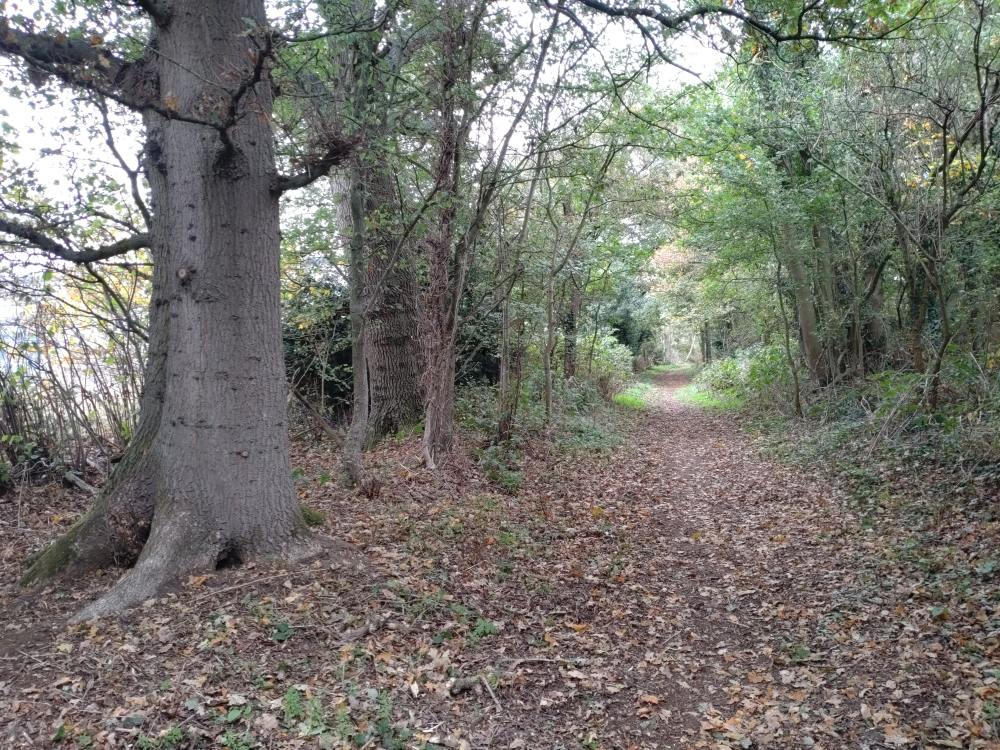
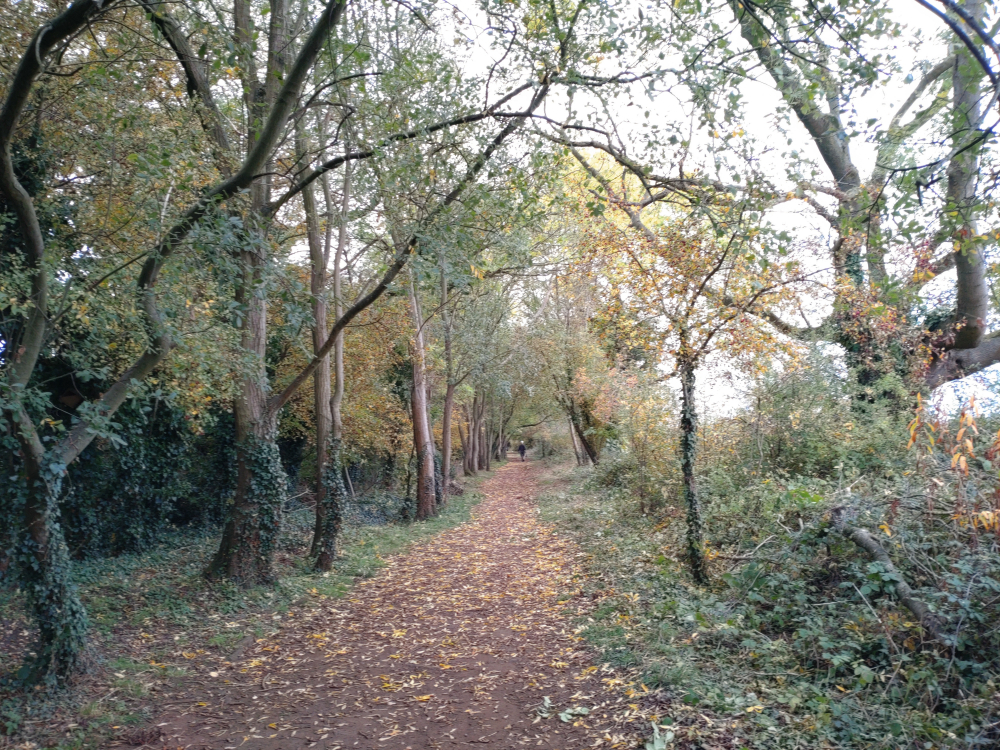
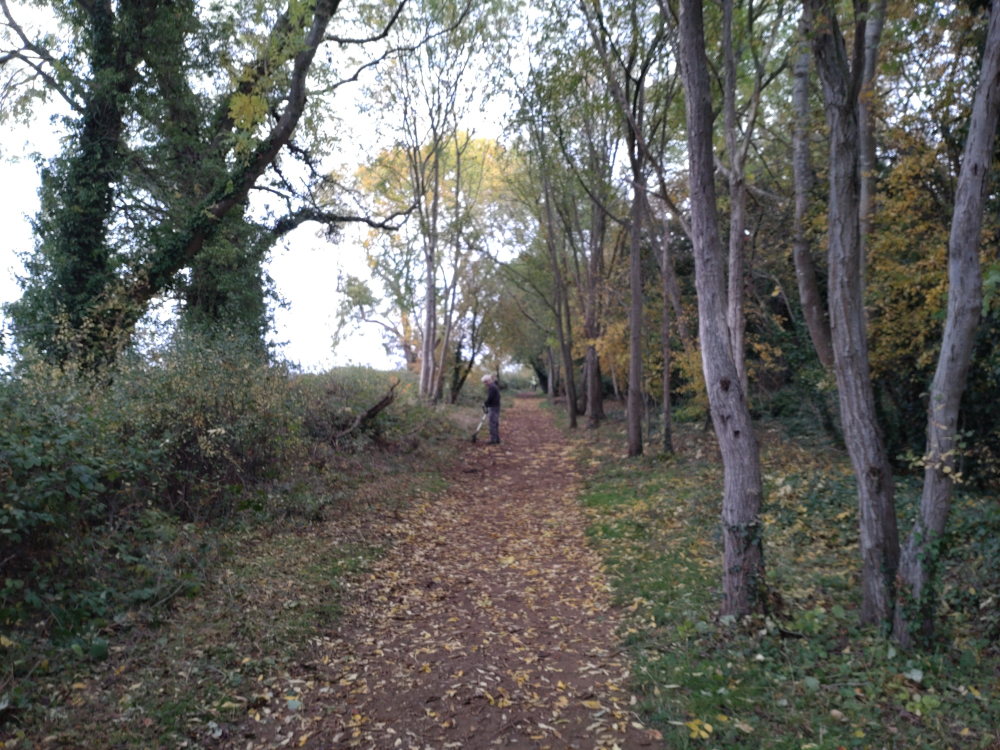
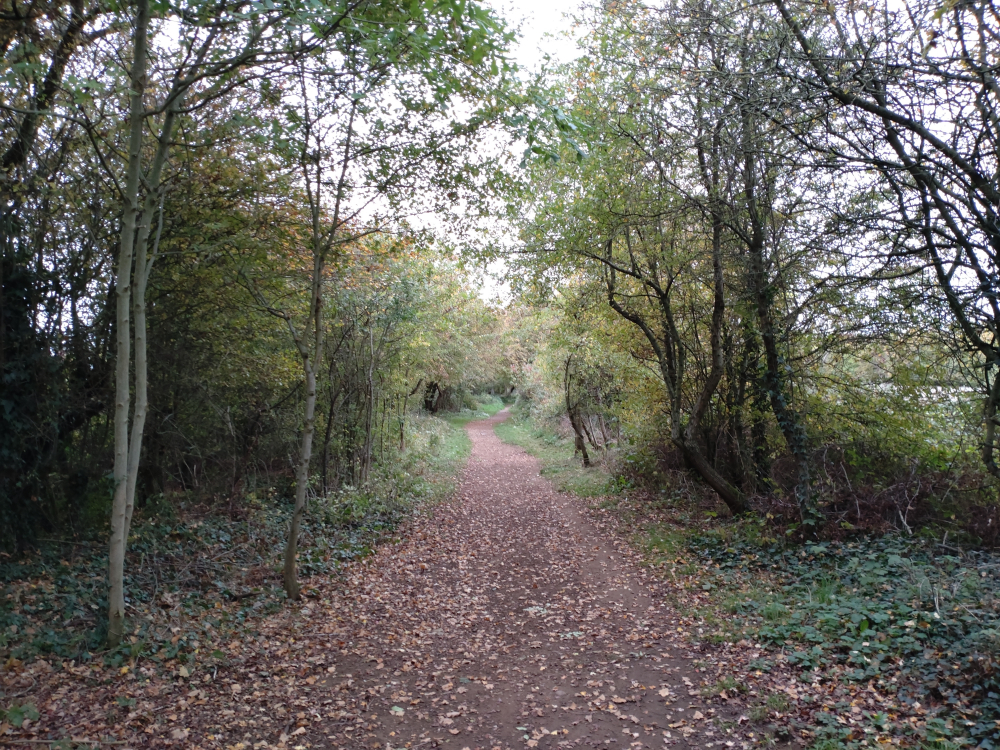
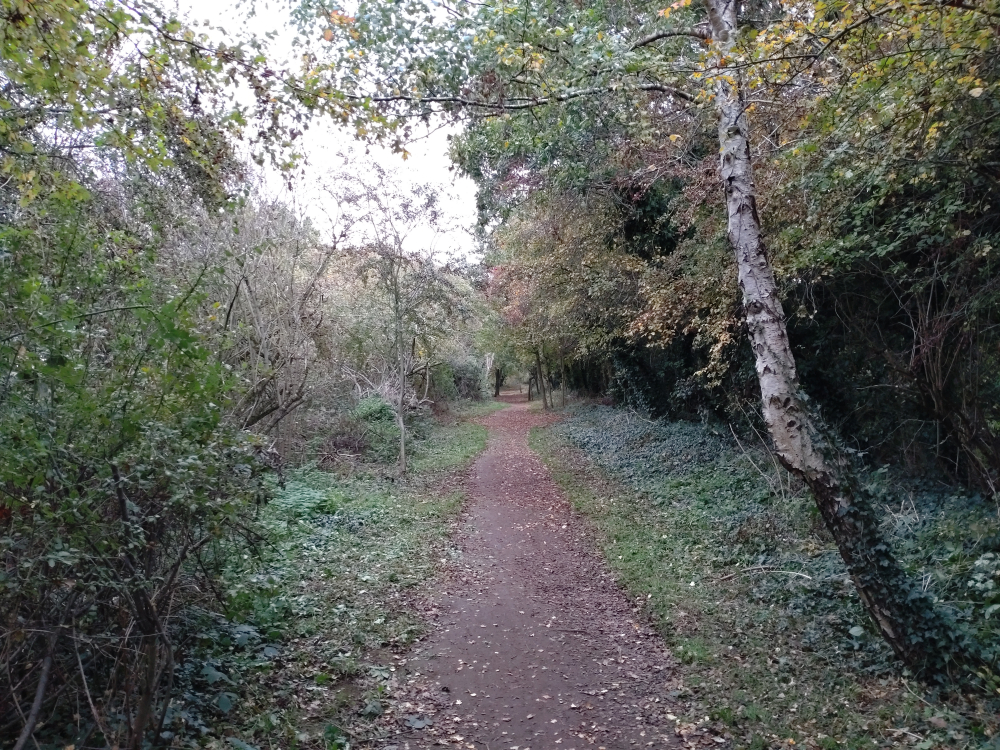
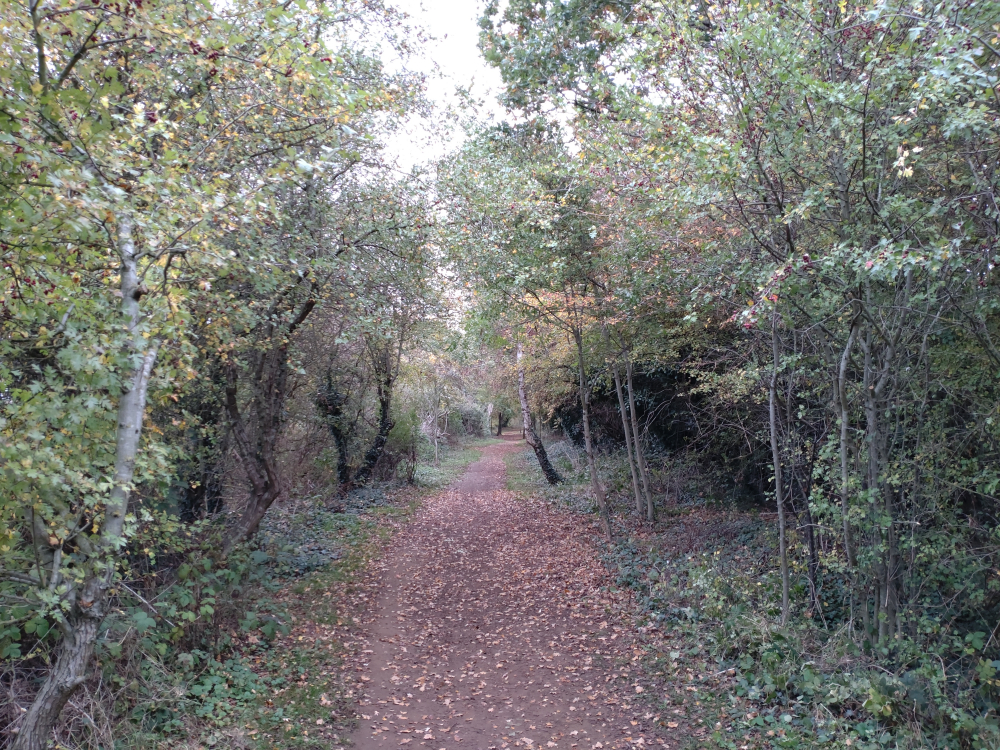
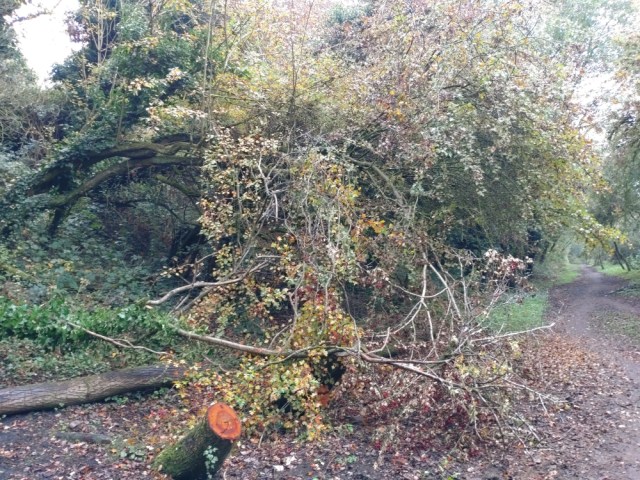
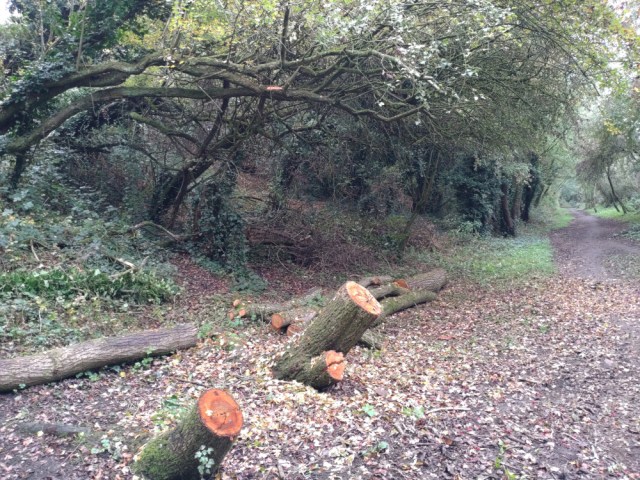
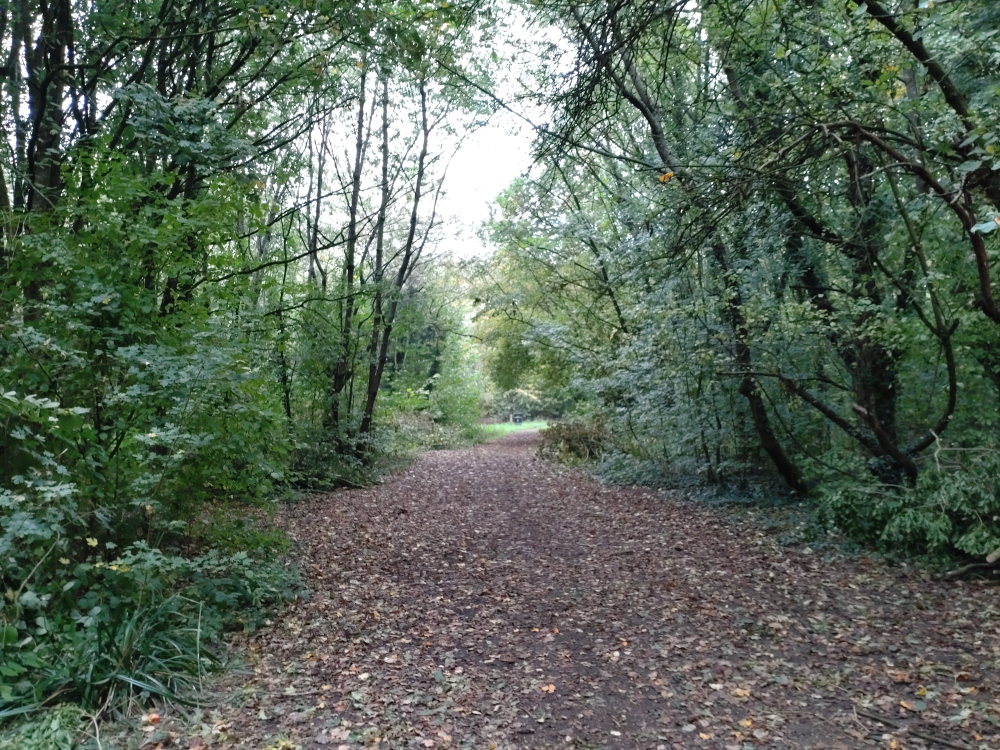
The objective is to clear the overhang and widen the path on the section between Berrybanks and the underpass.
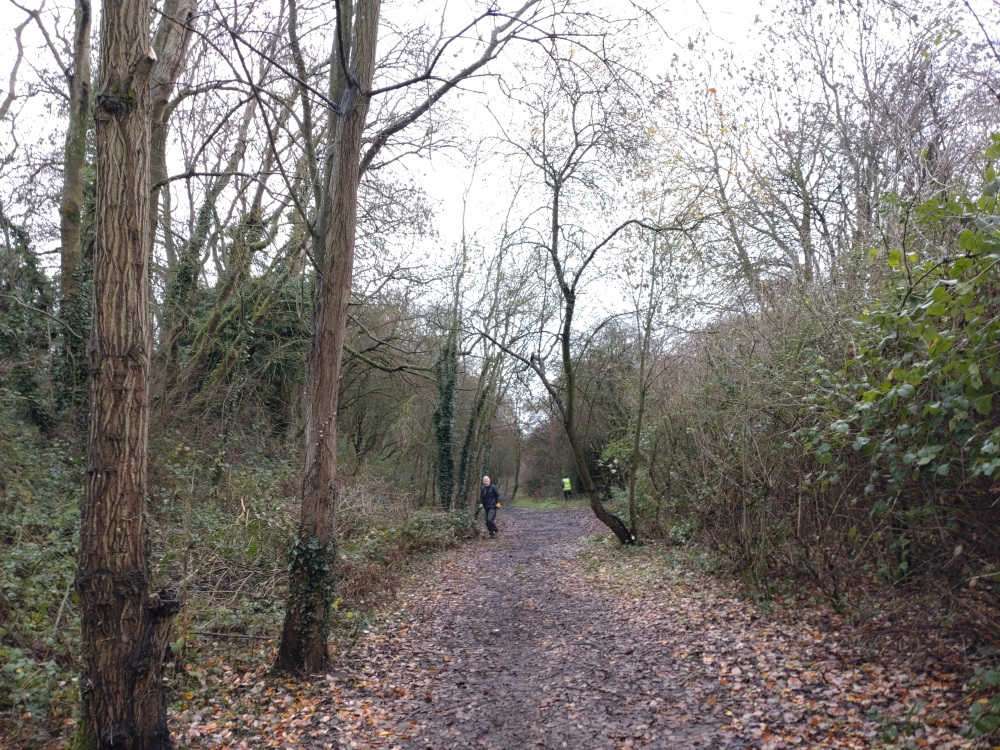
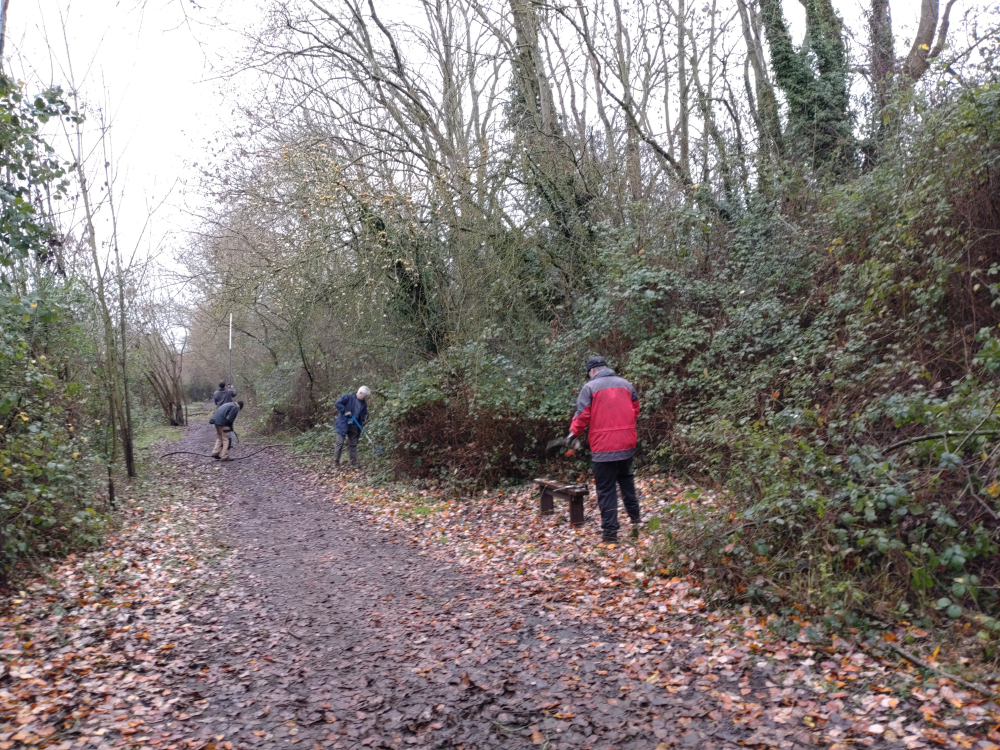
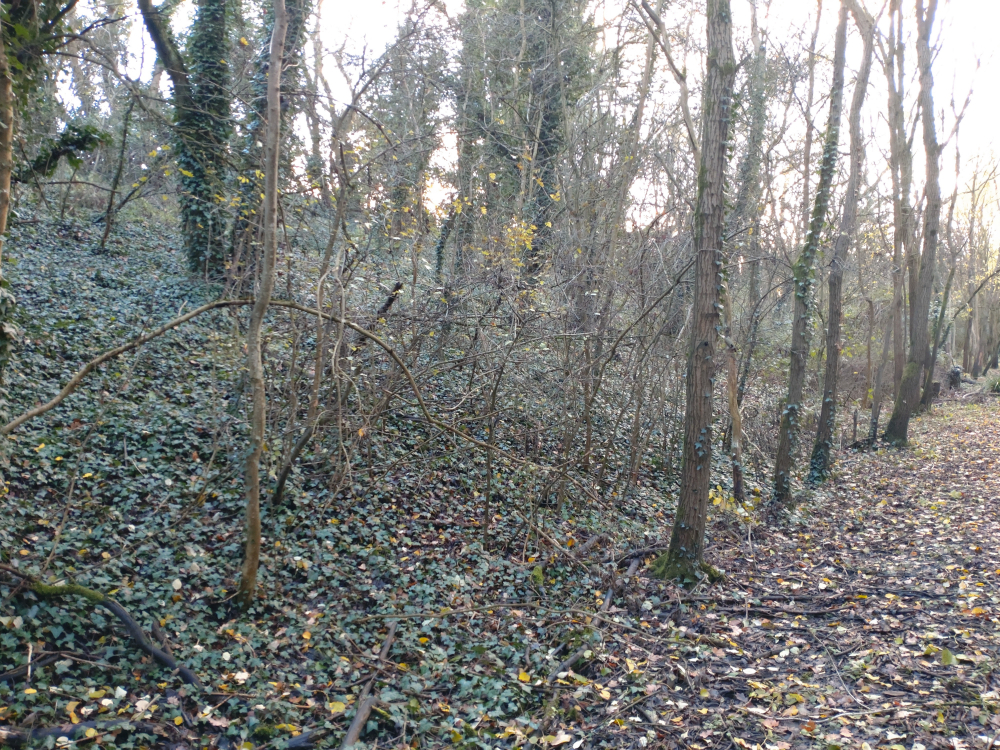
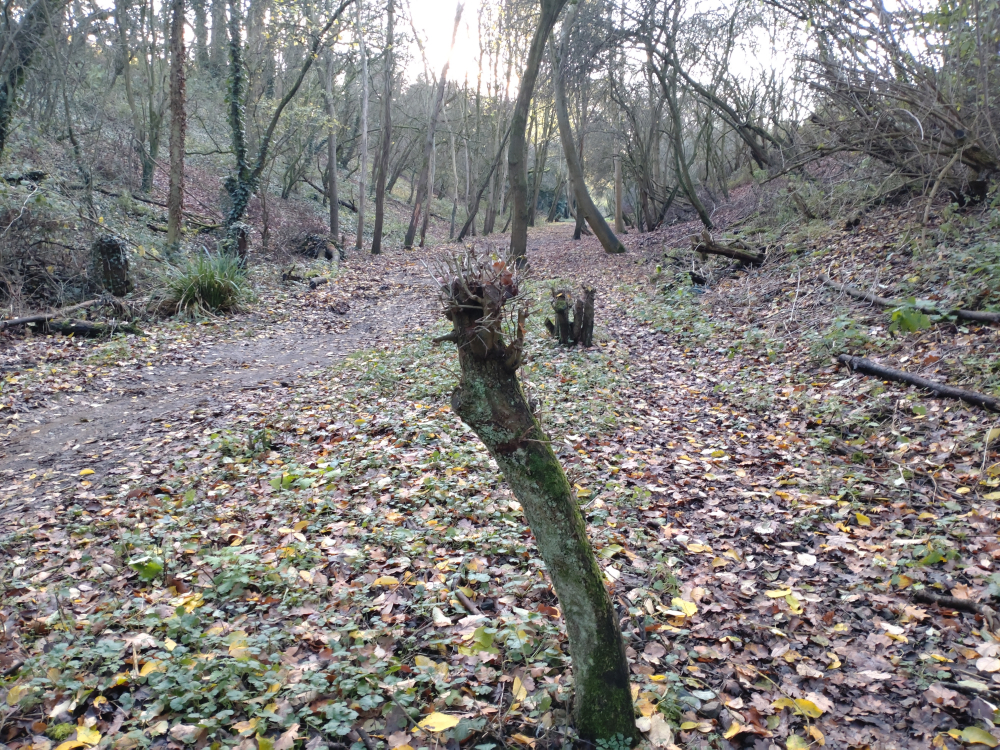
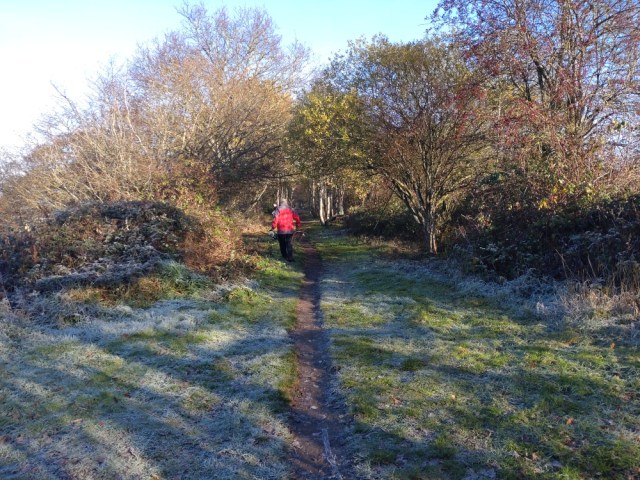
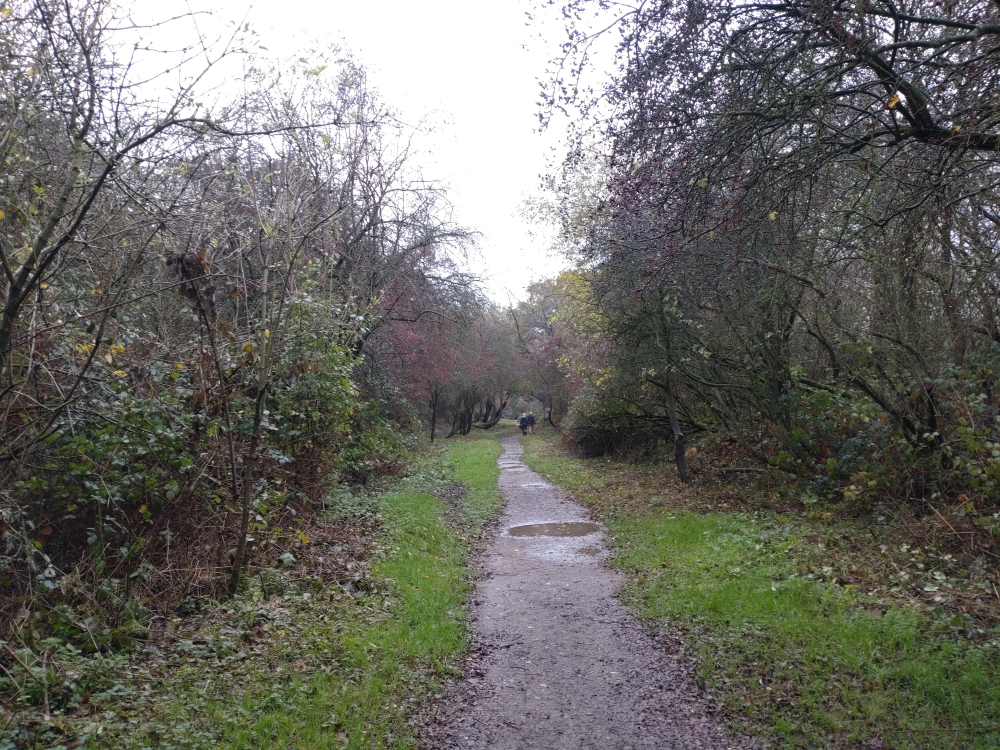
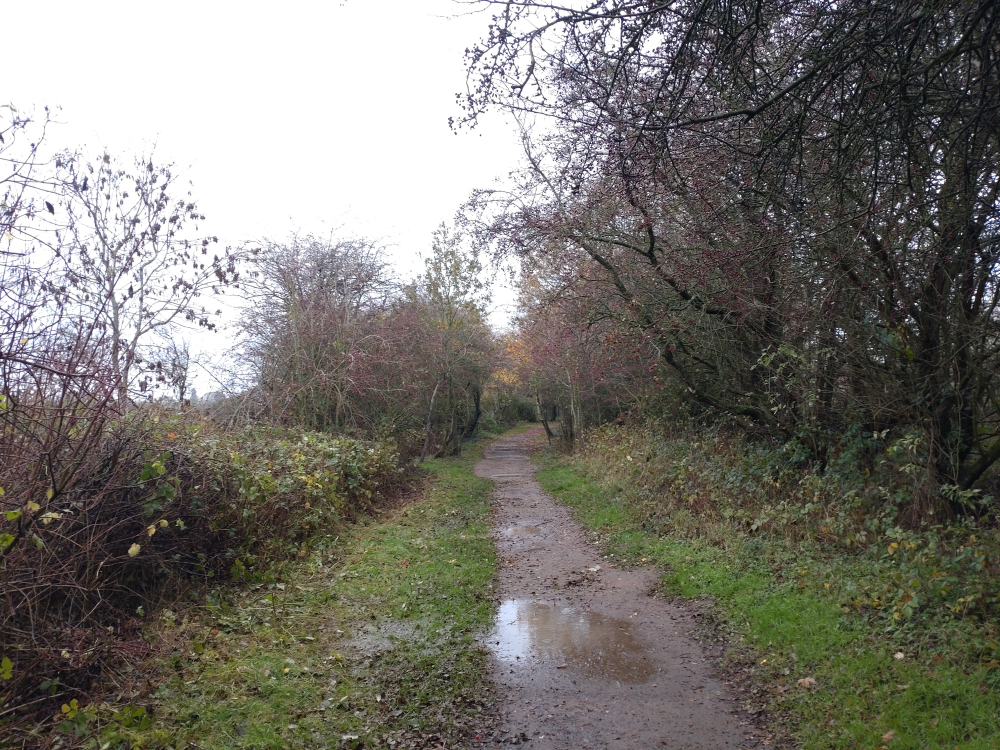
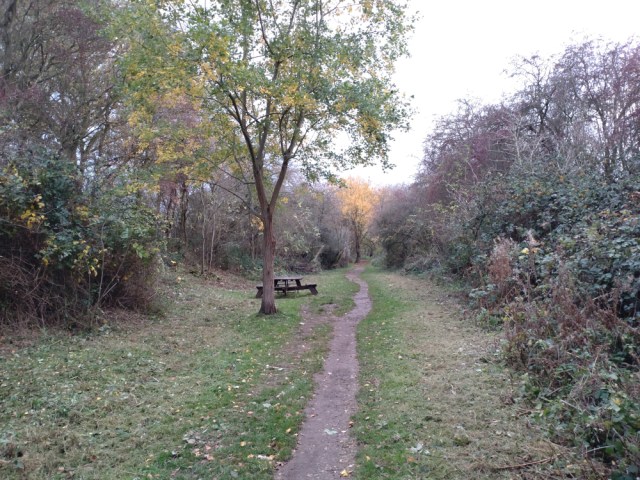
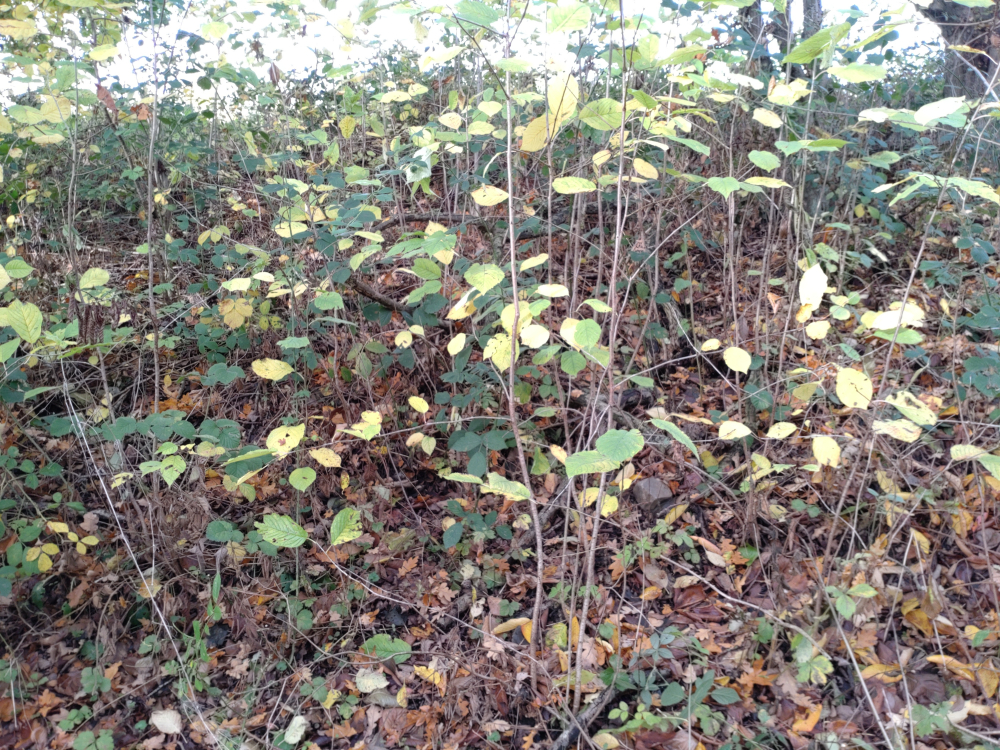
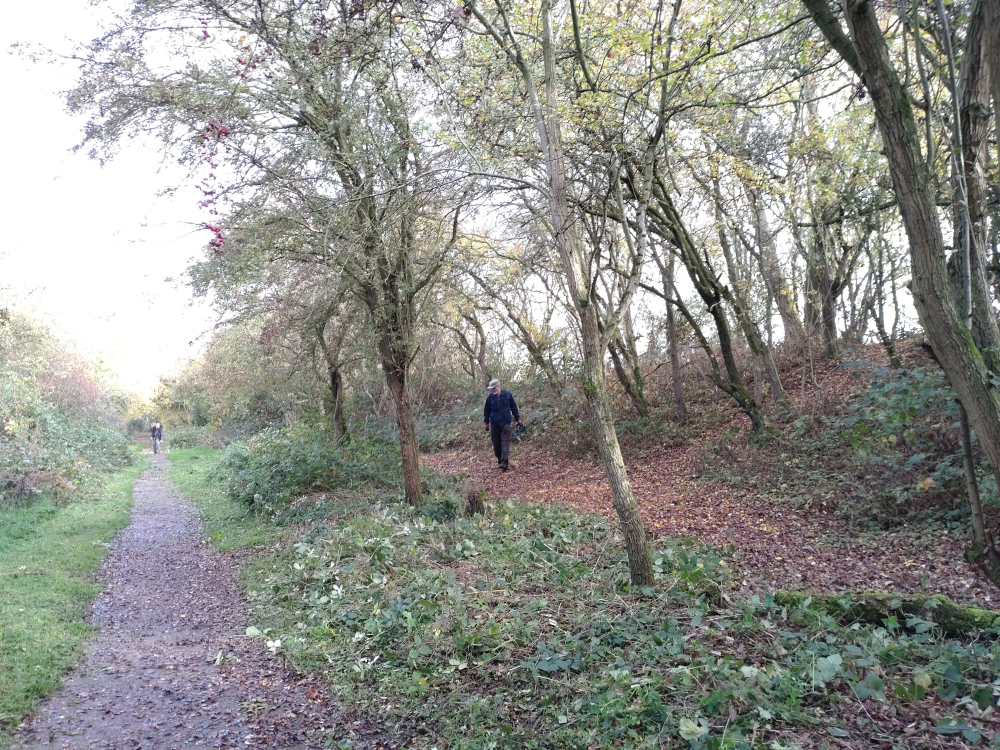
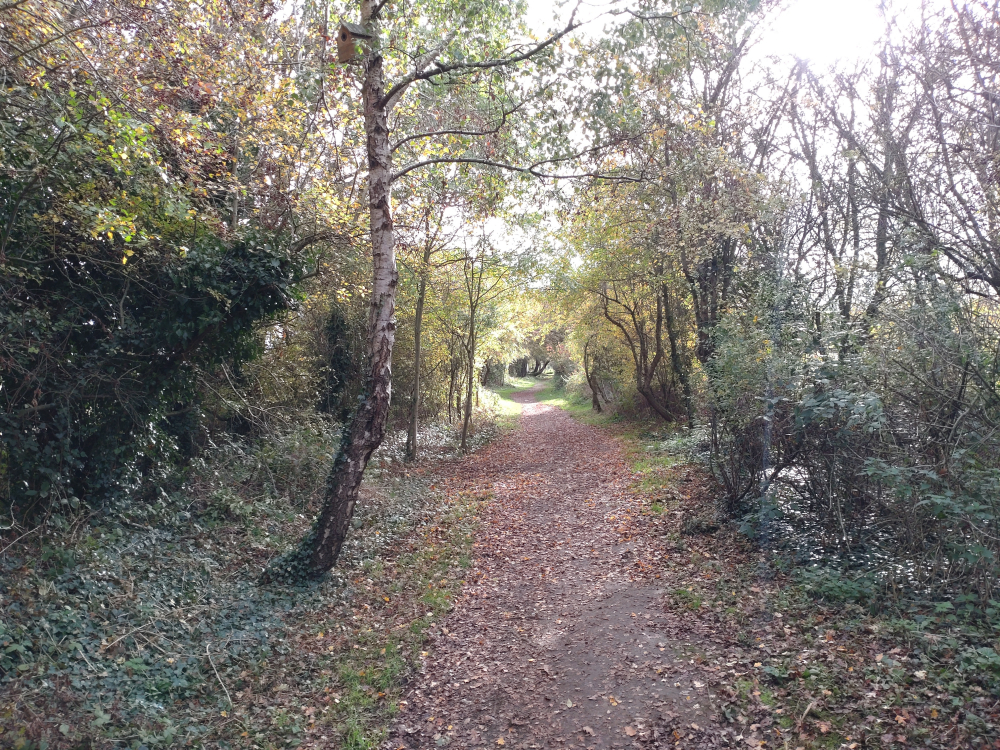
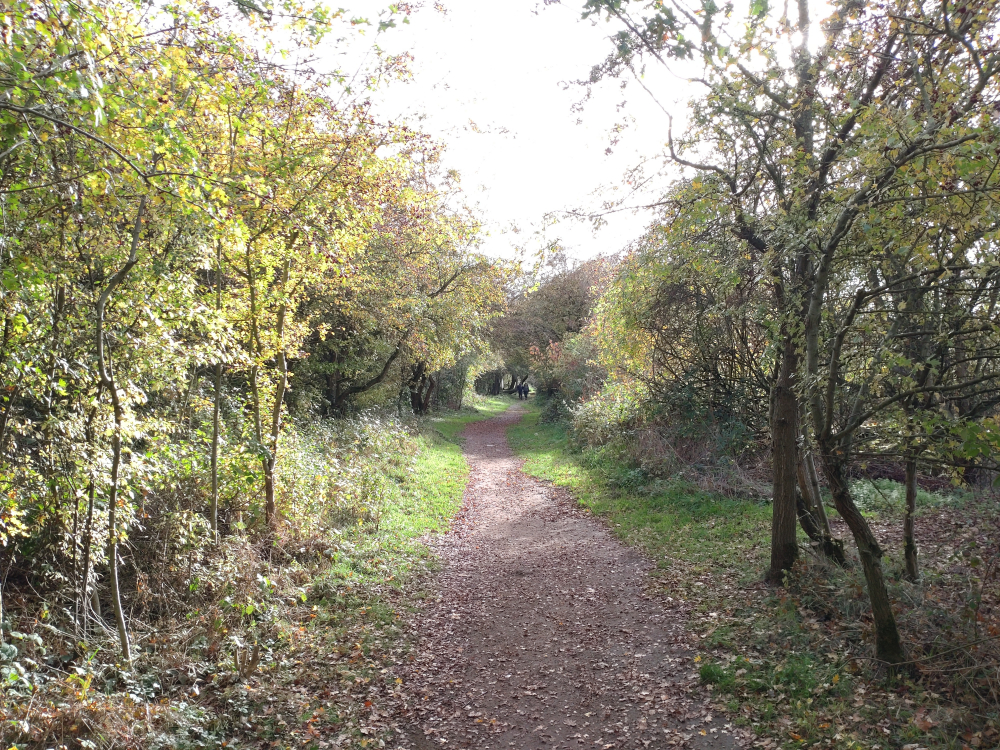
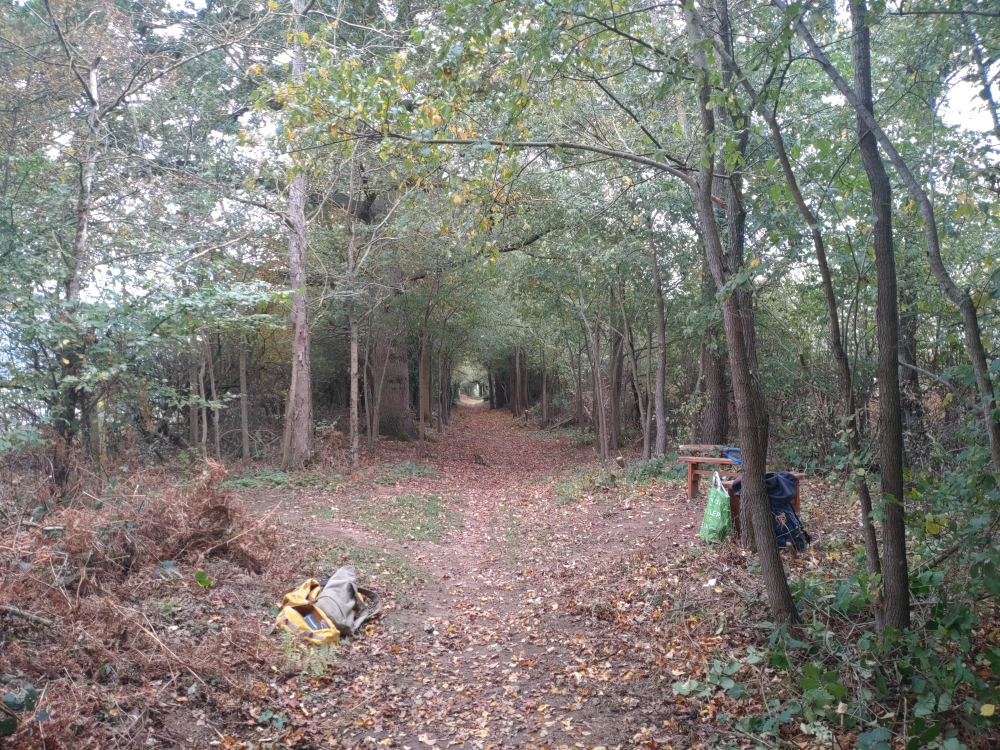
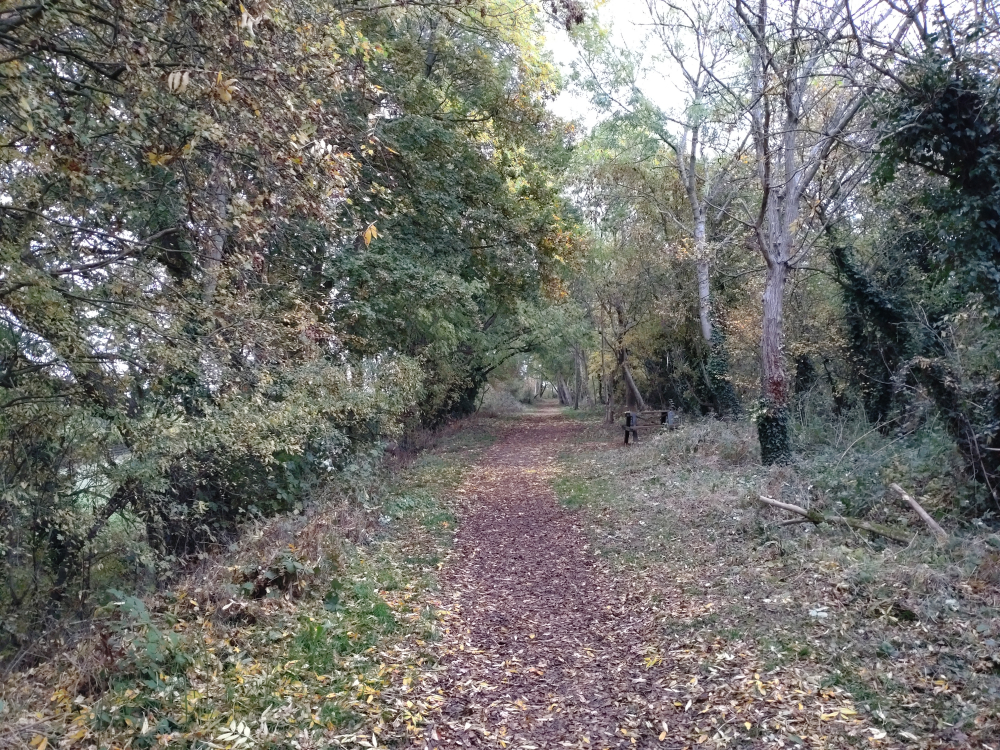
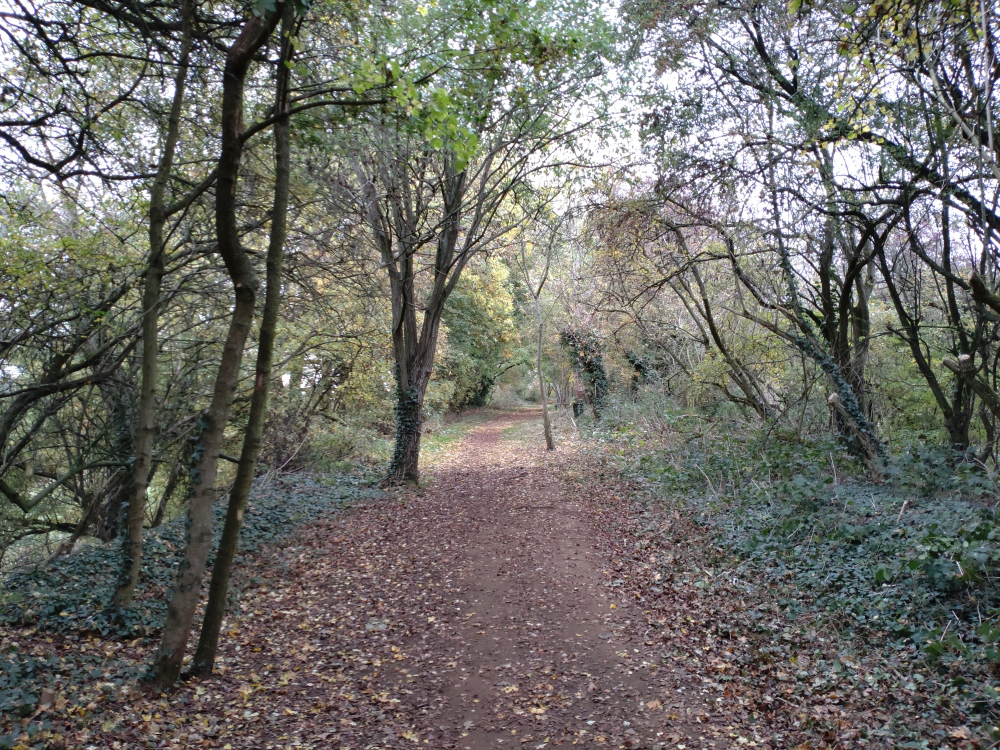
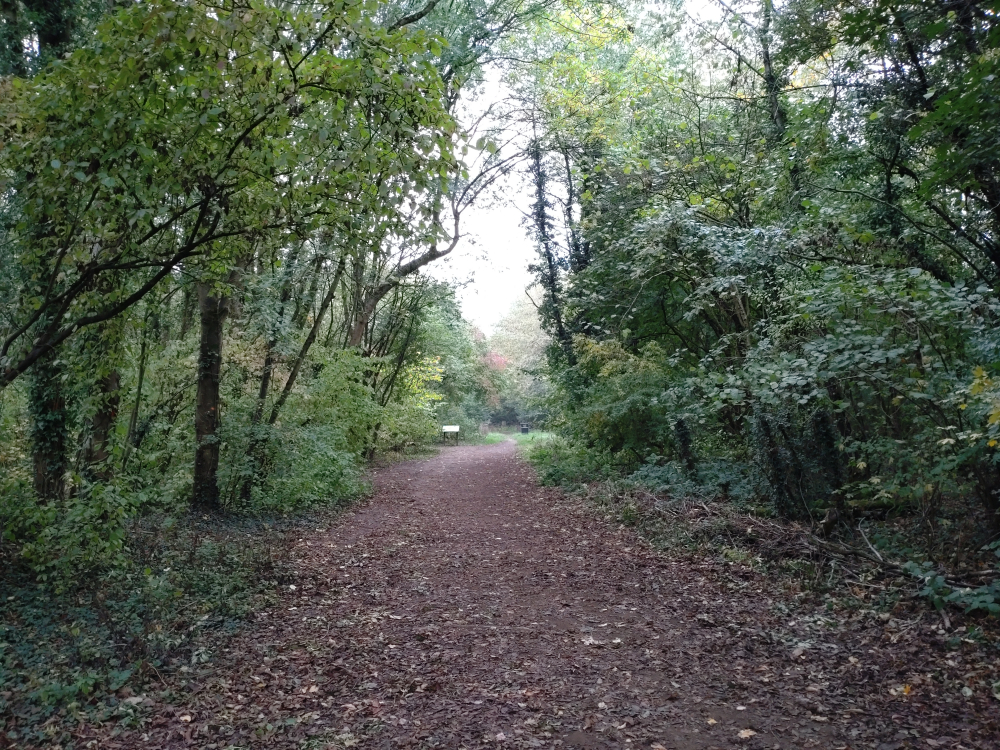
We’ve never really got to grips with this section properly, which is a shame because the path turns to the east, so the southerly facing bank will get a decent amount of sun in the summer, but only if we thin the trees out on the northerly facing bank. Another issue is the deep cutting that we are in, so more sunlight and air moving around should help to dry the ground out. Still a bit to do here, but it felt like progress.

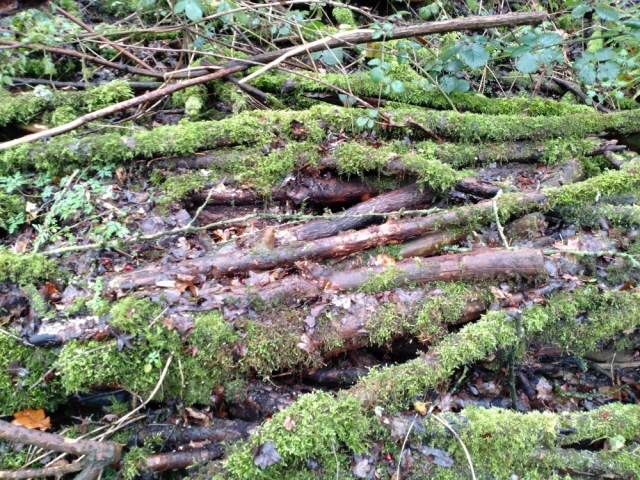
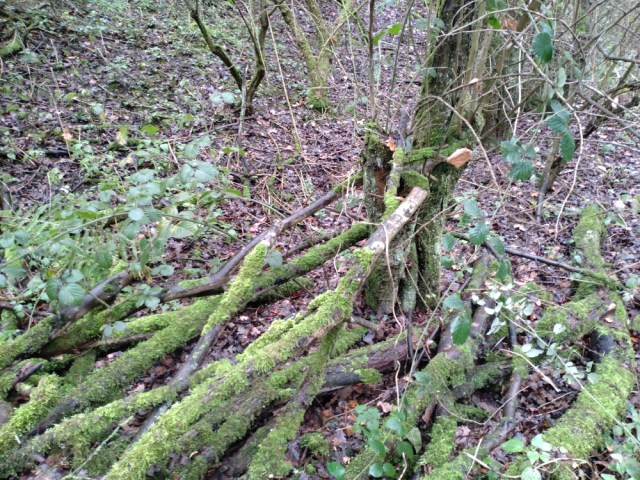
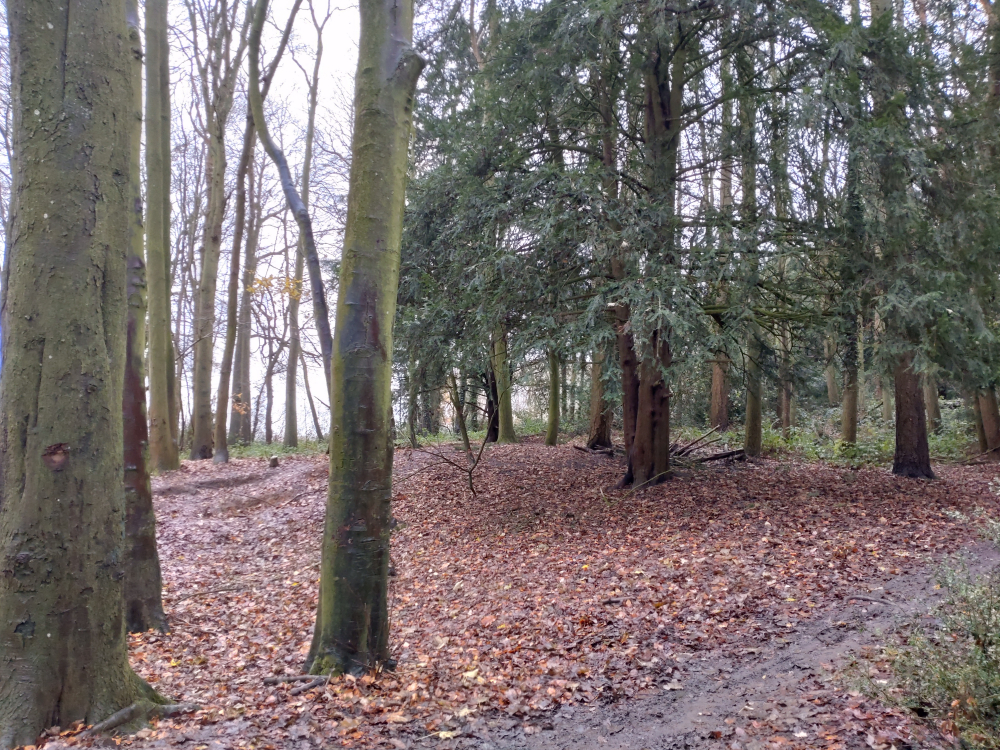
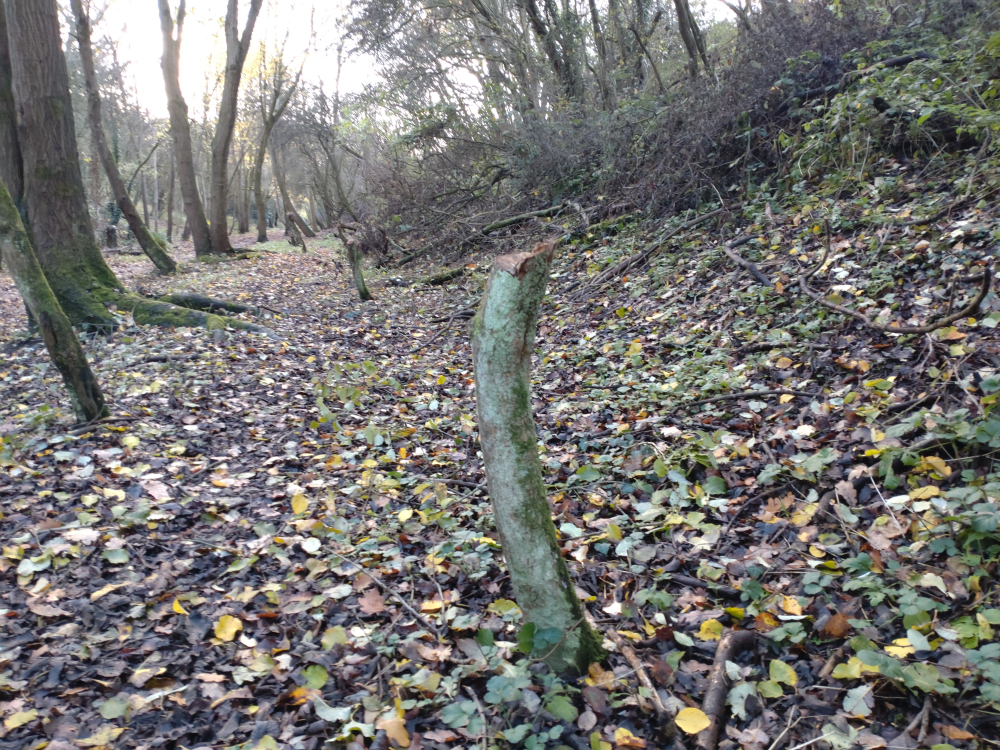
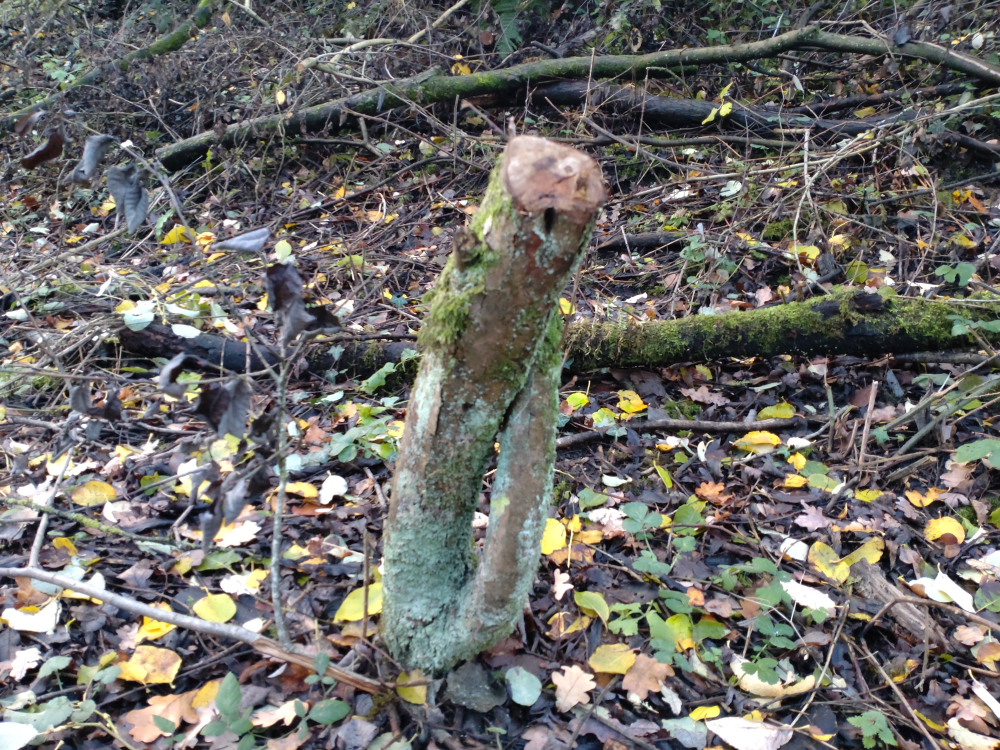
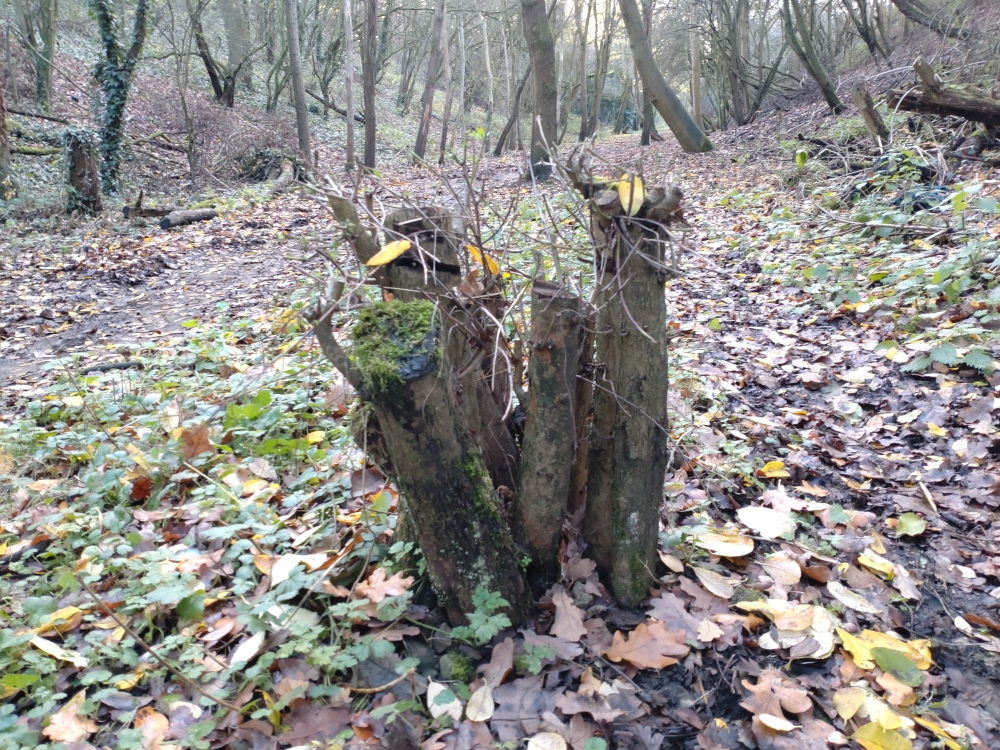
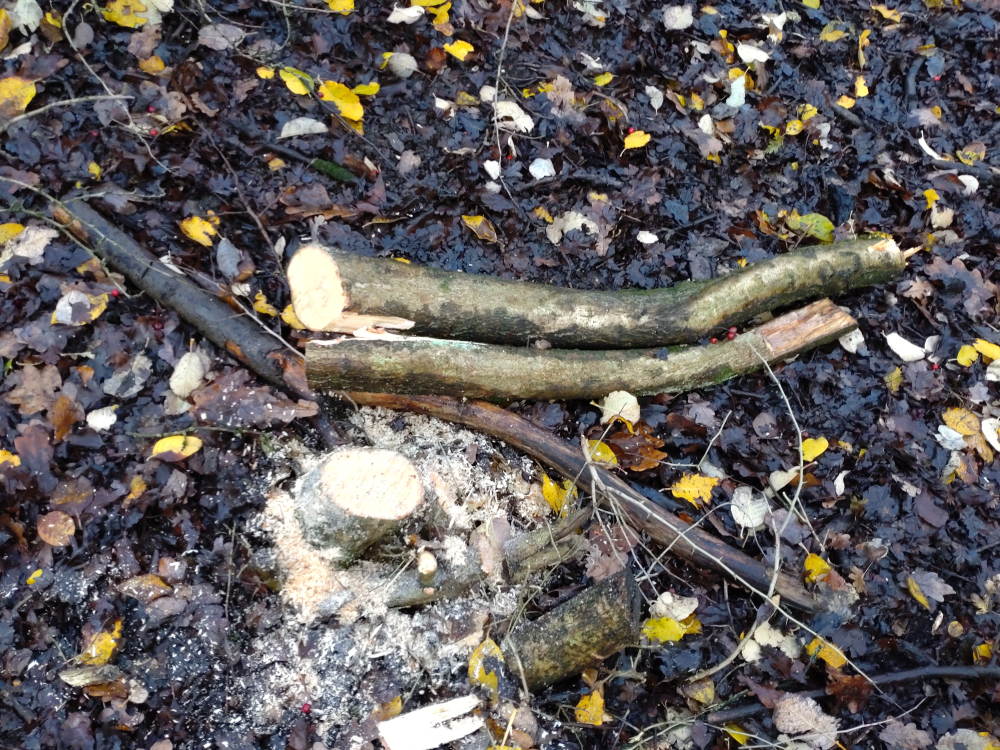
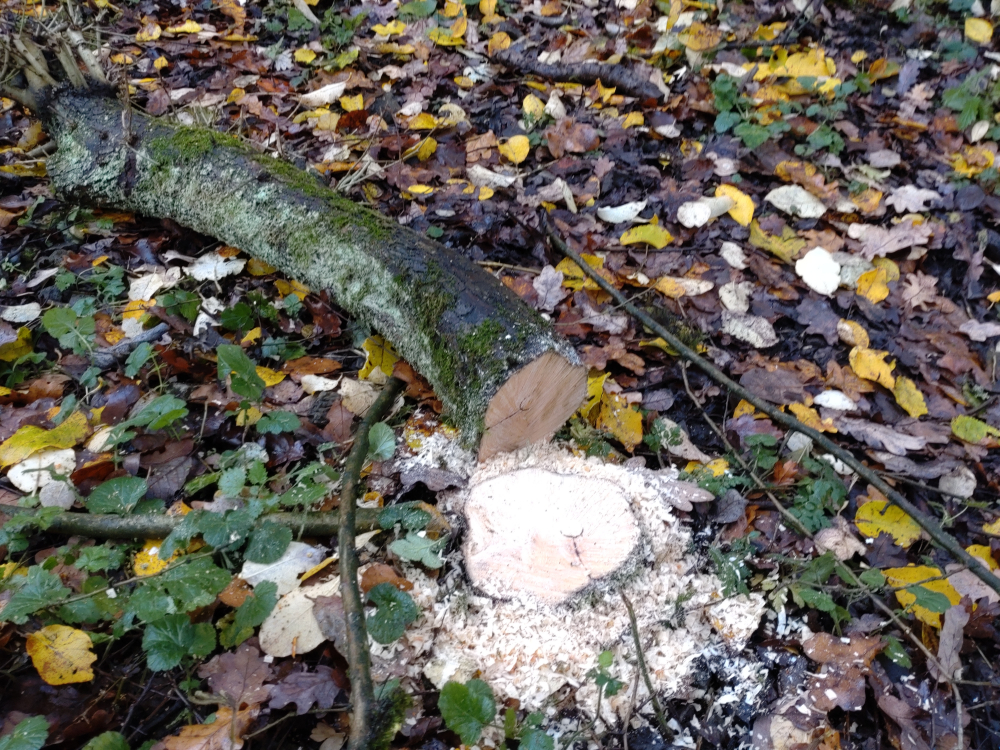
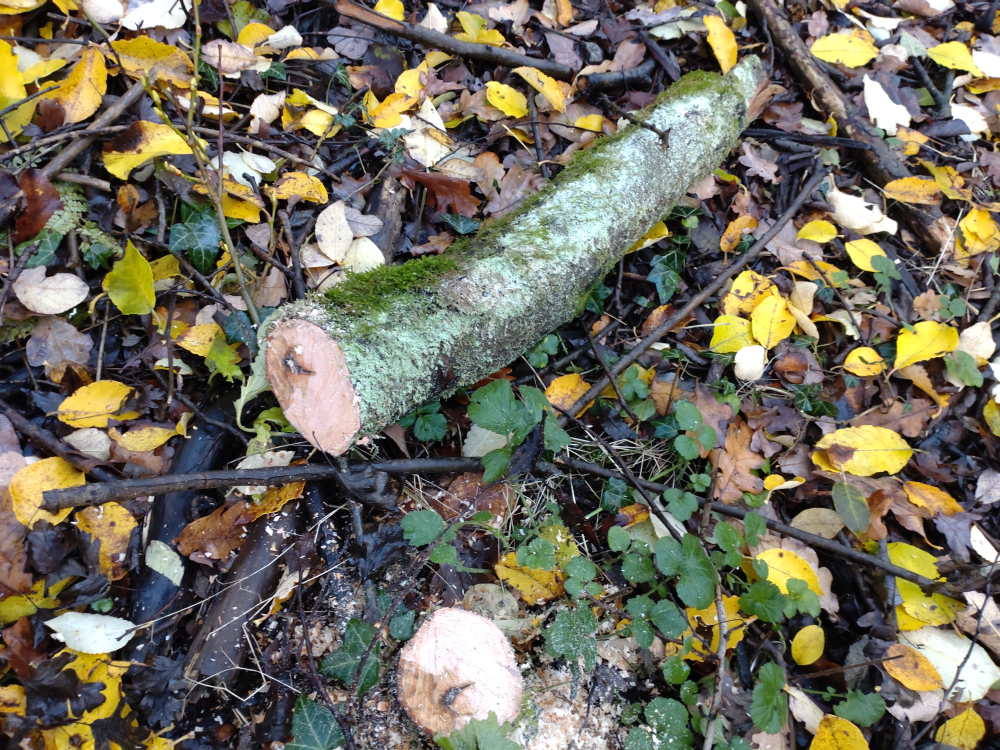
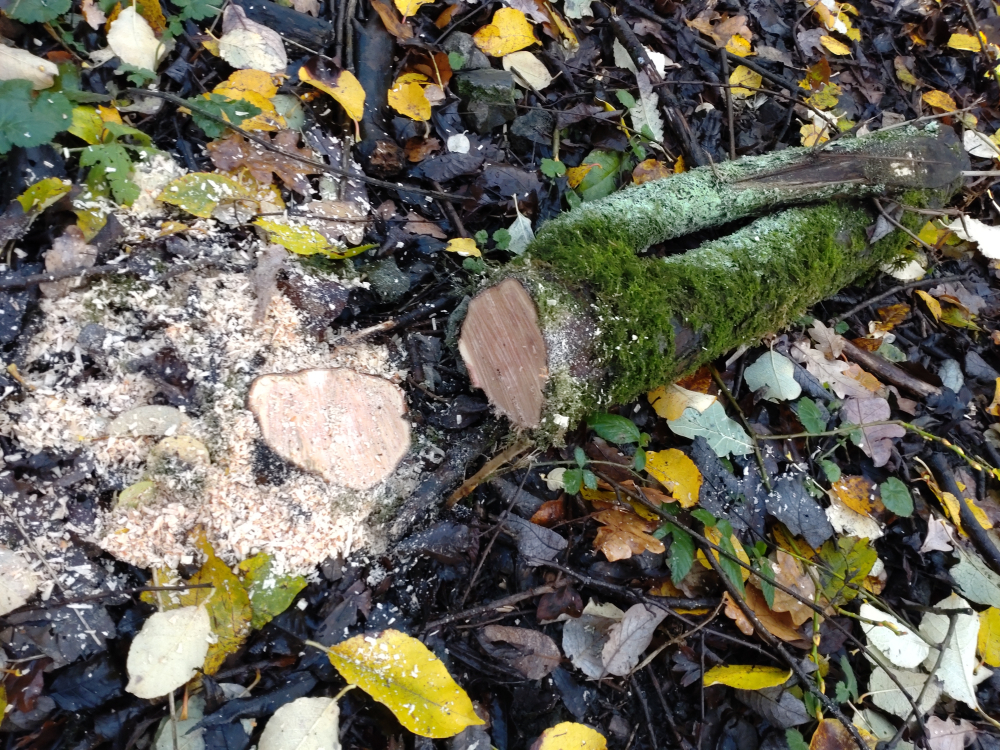
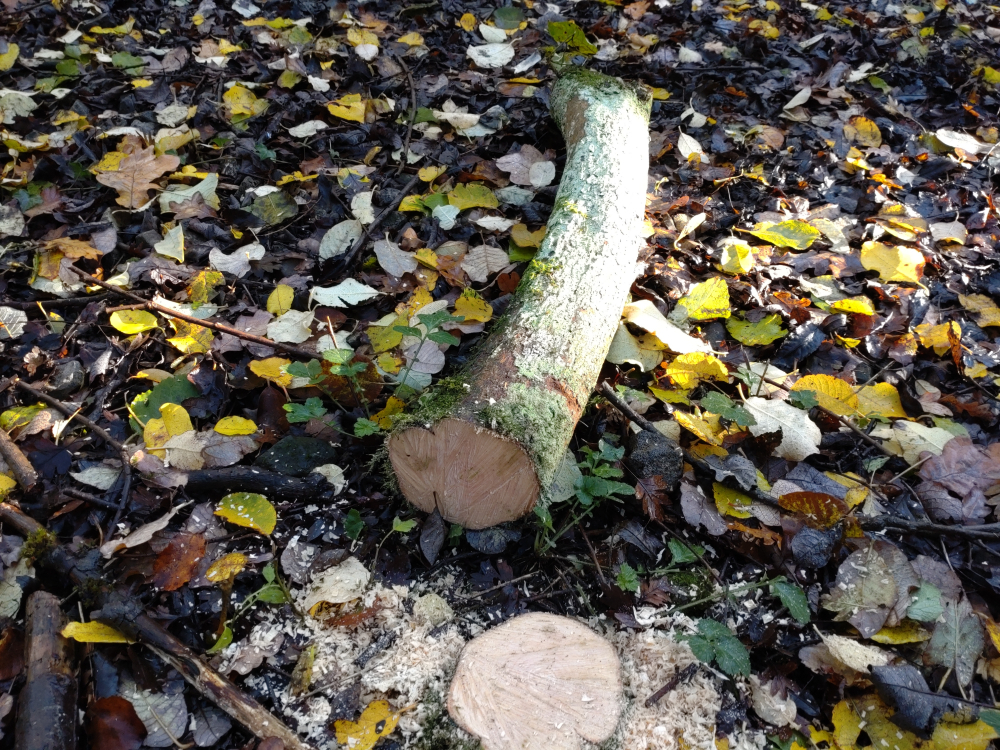
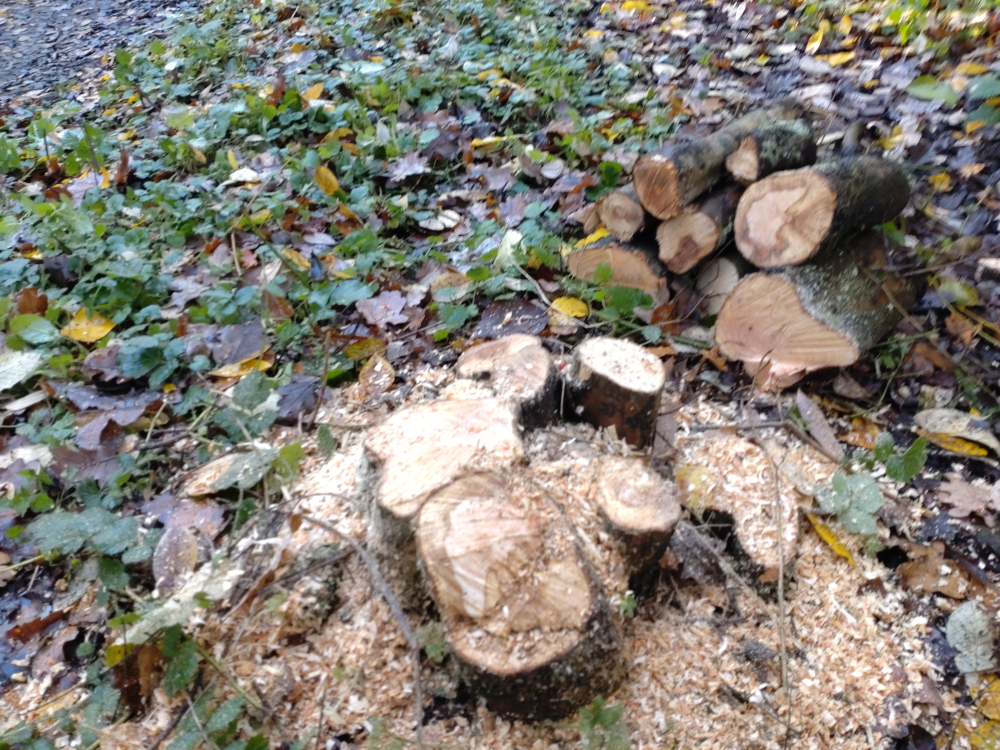
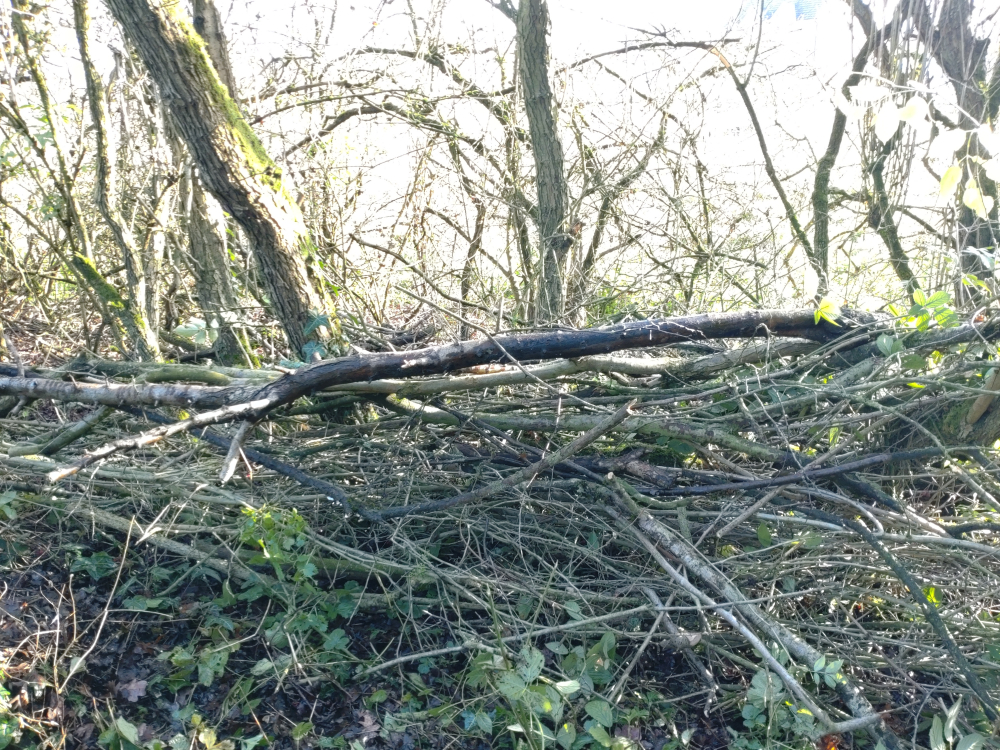
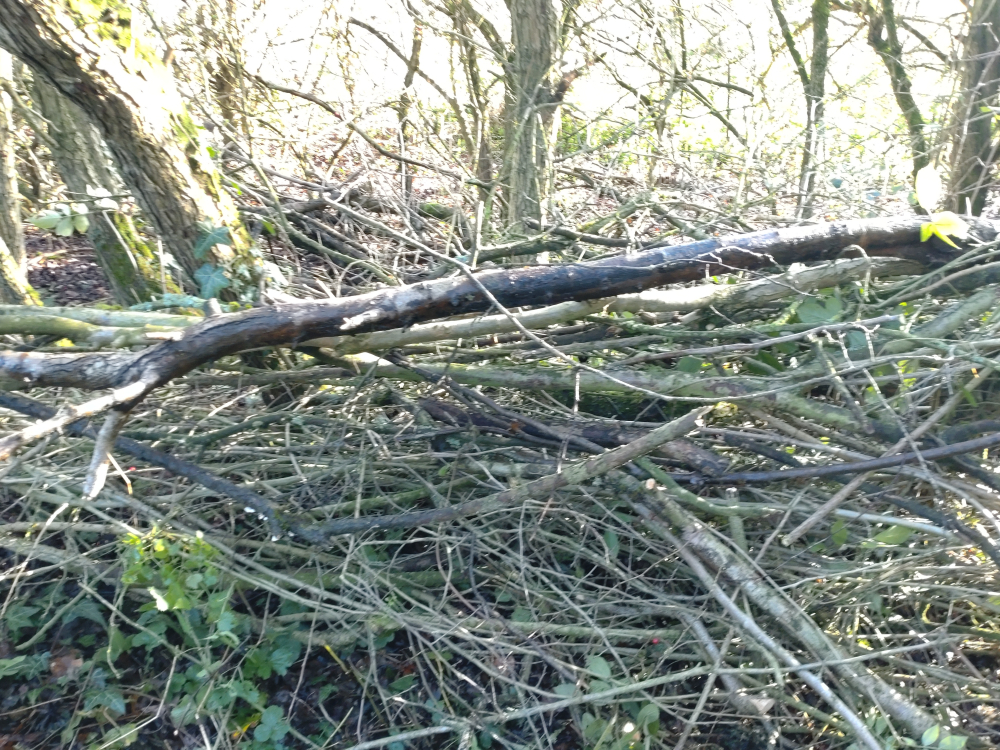
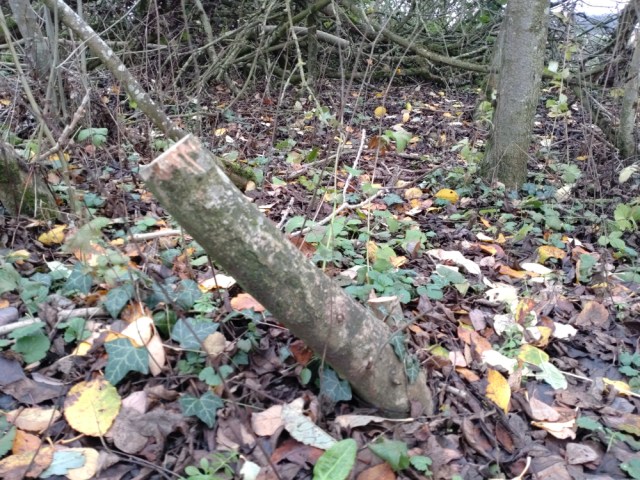
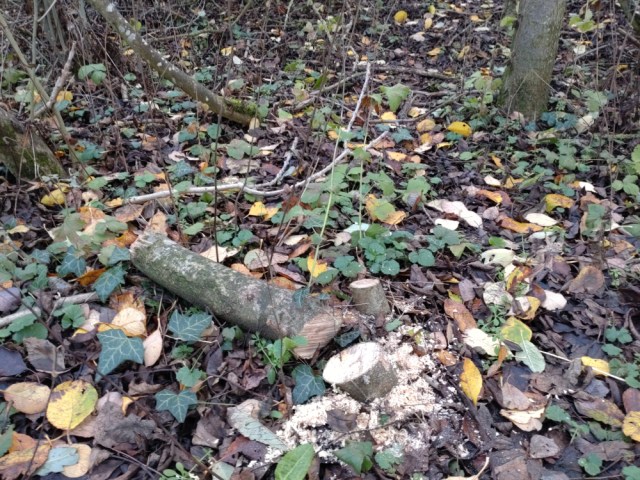
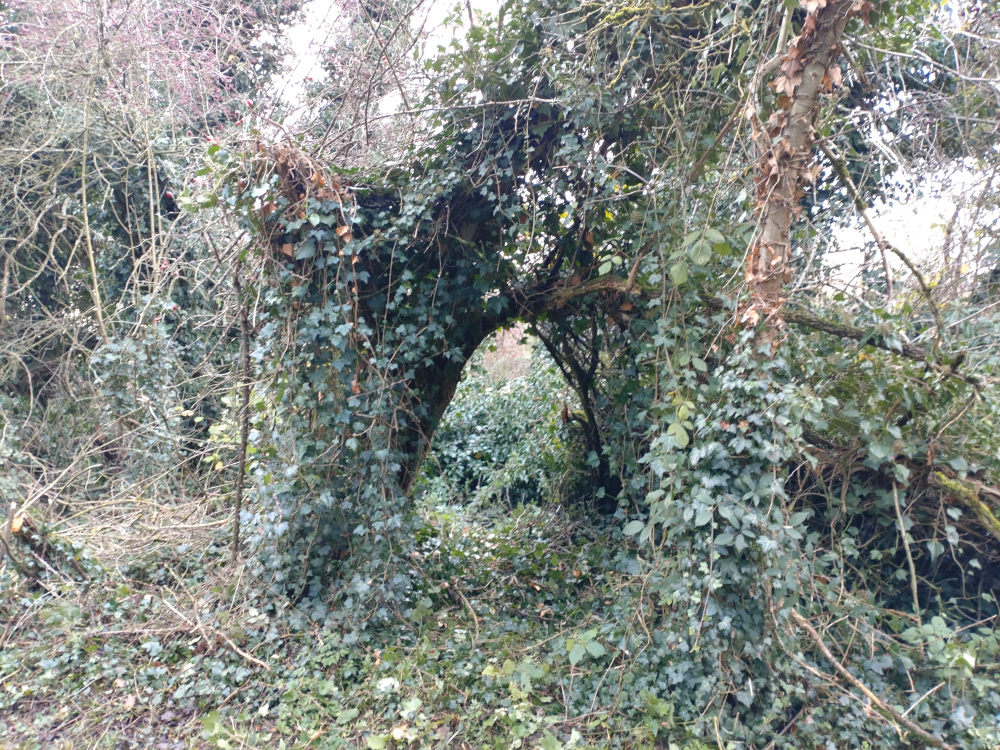
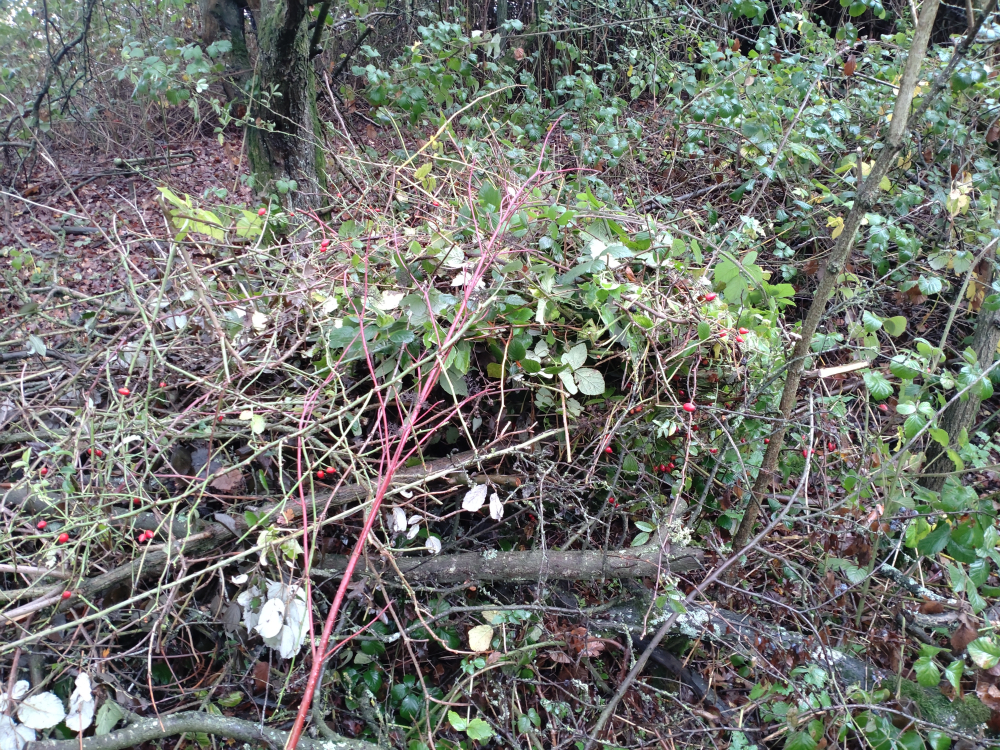
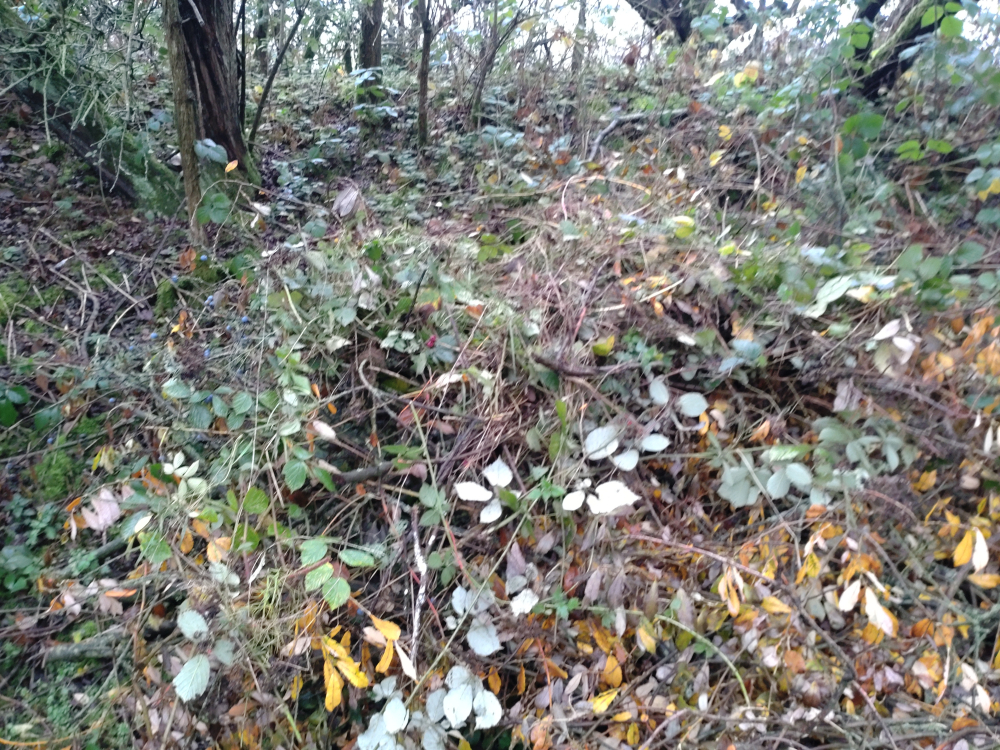
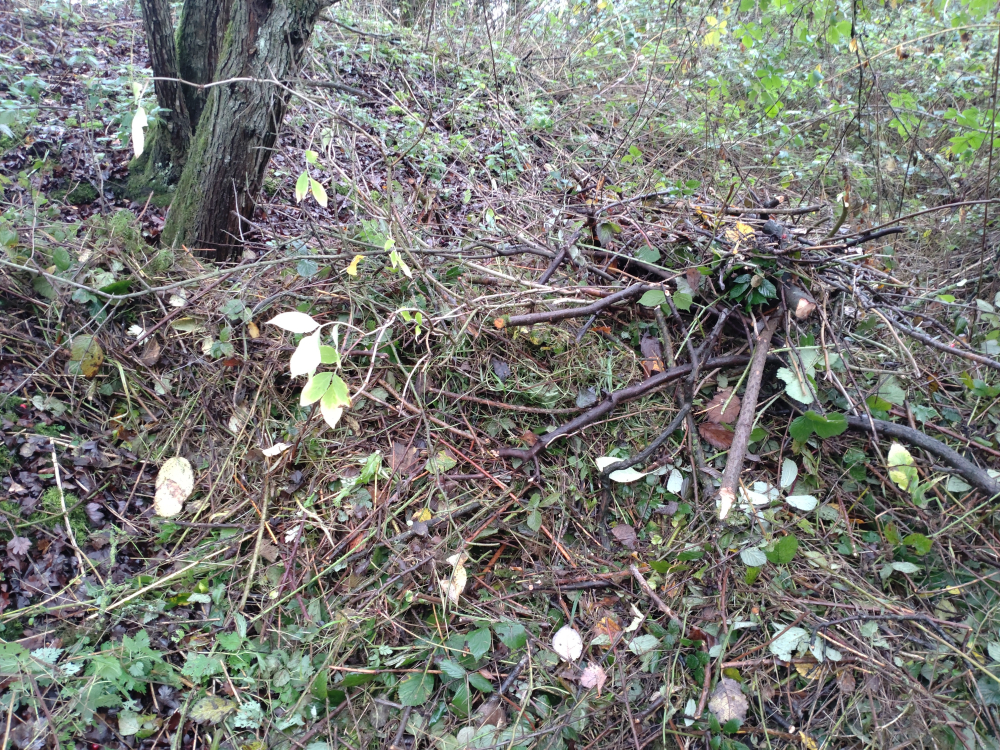
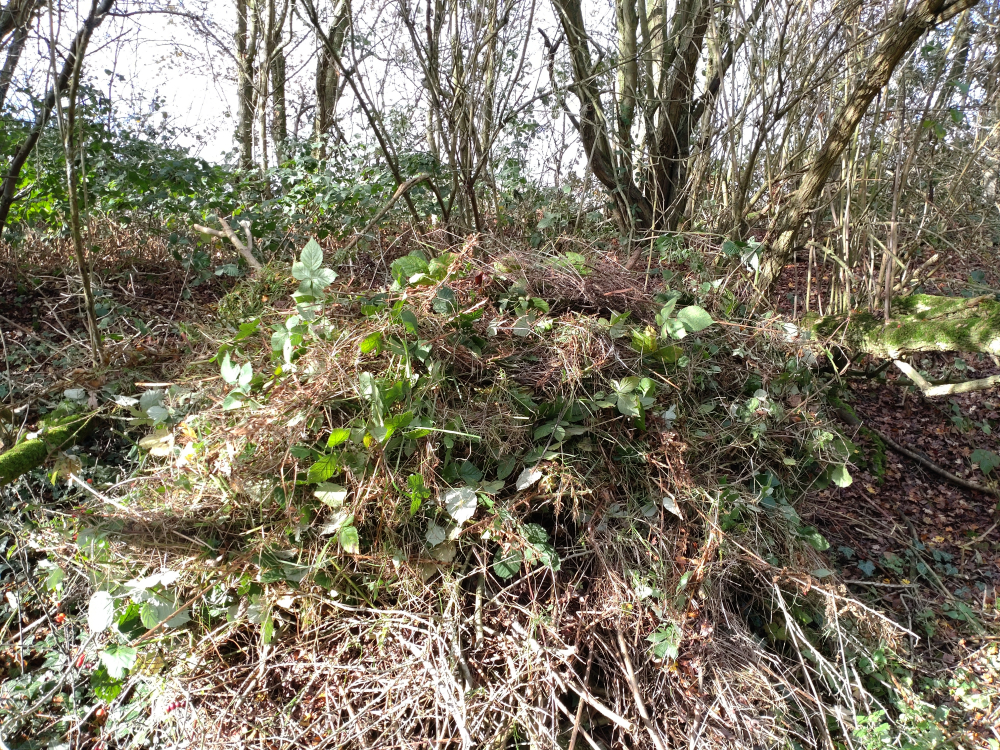
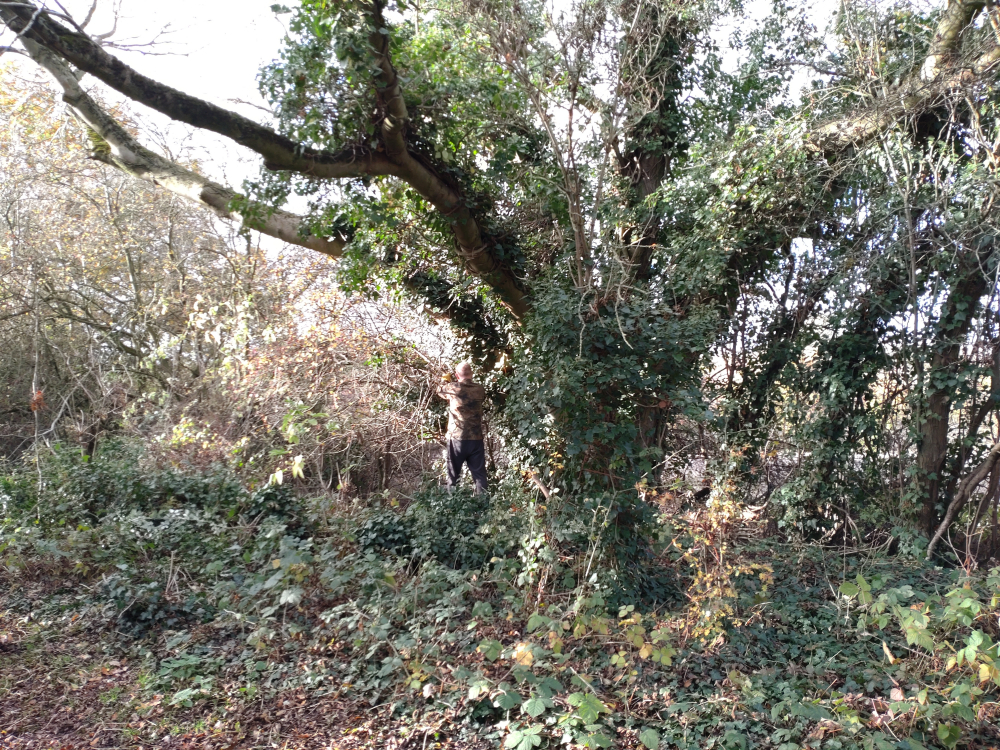
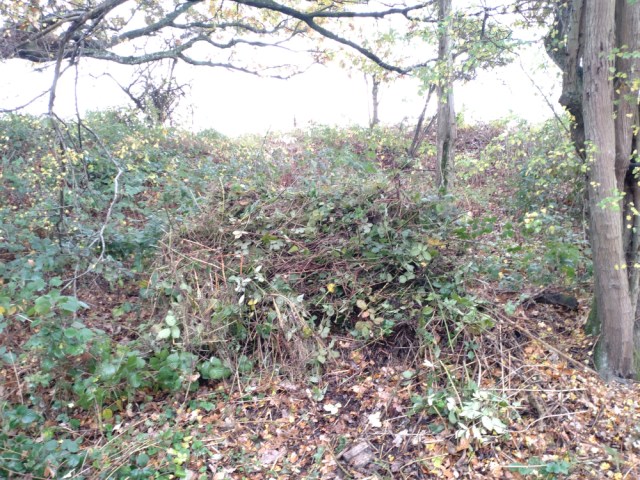
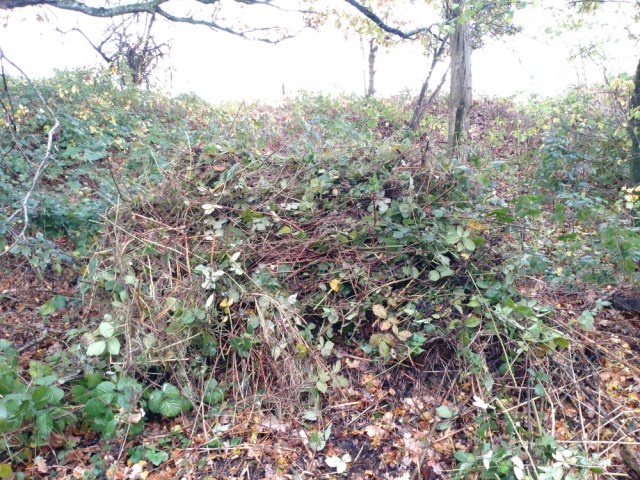
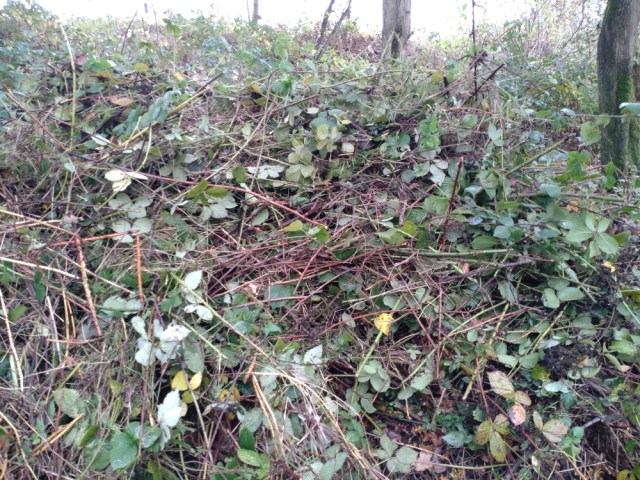
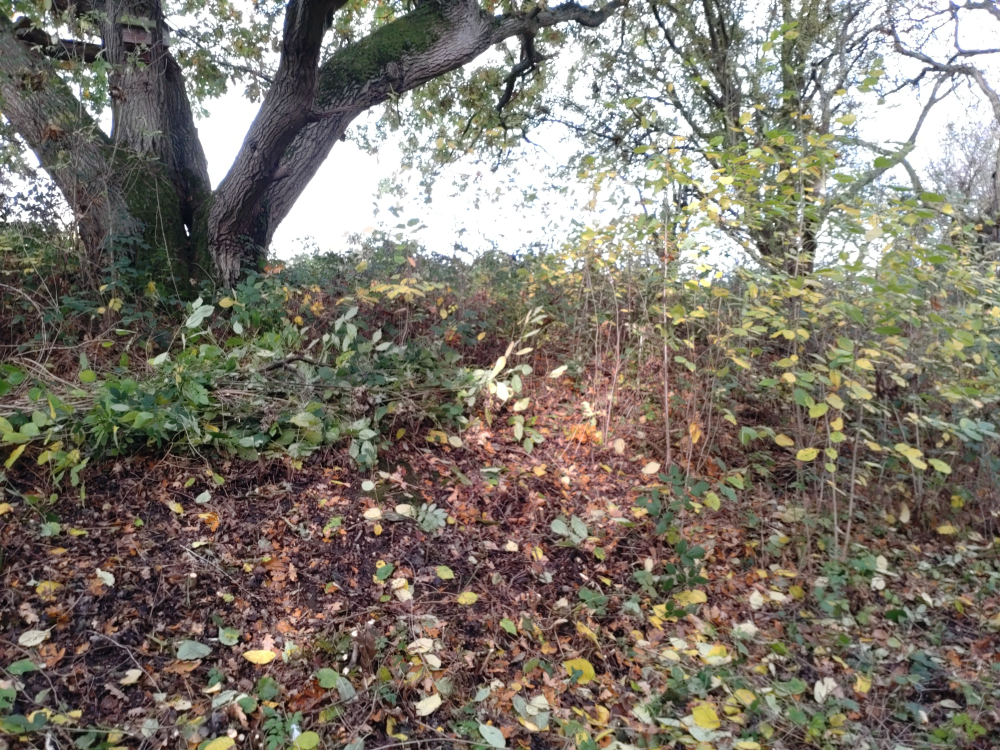
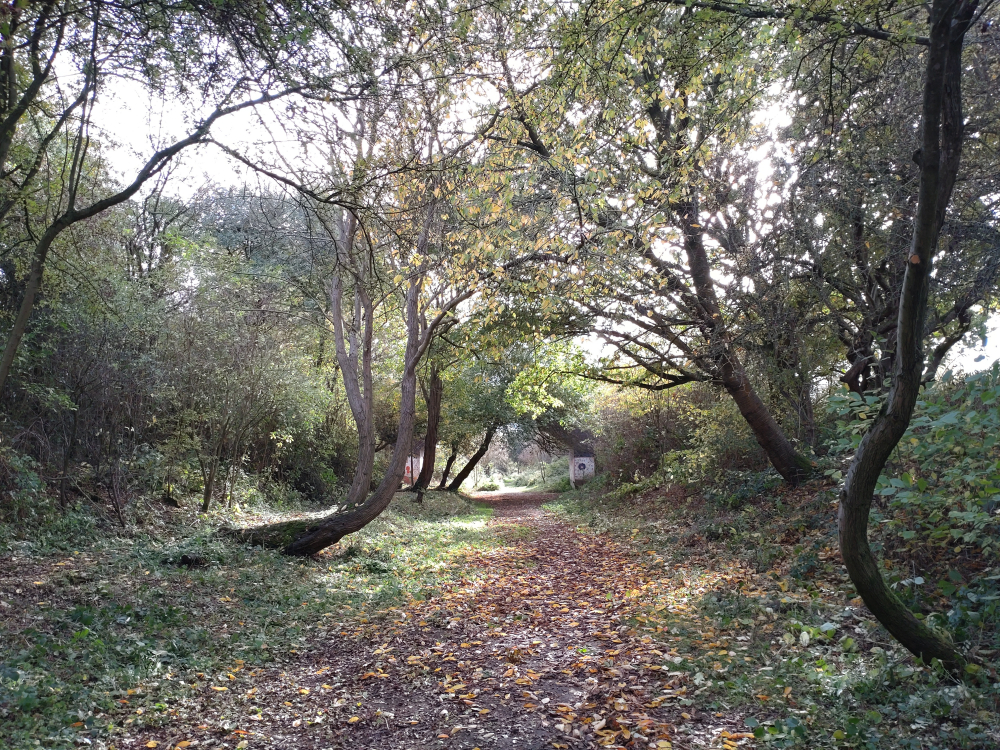
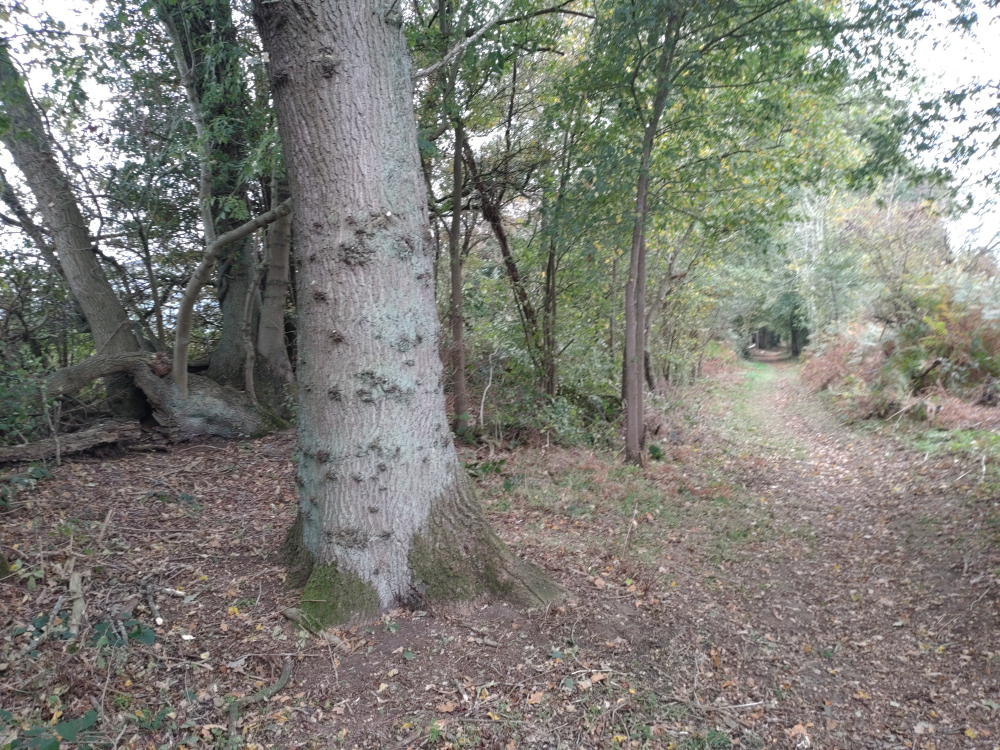
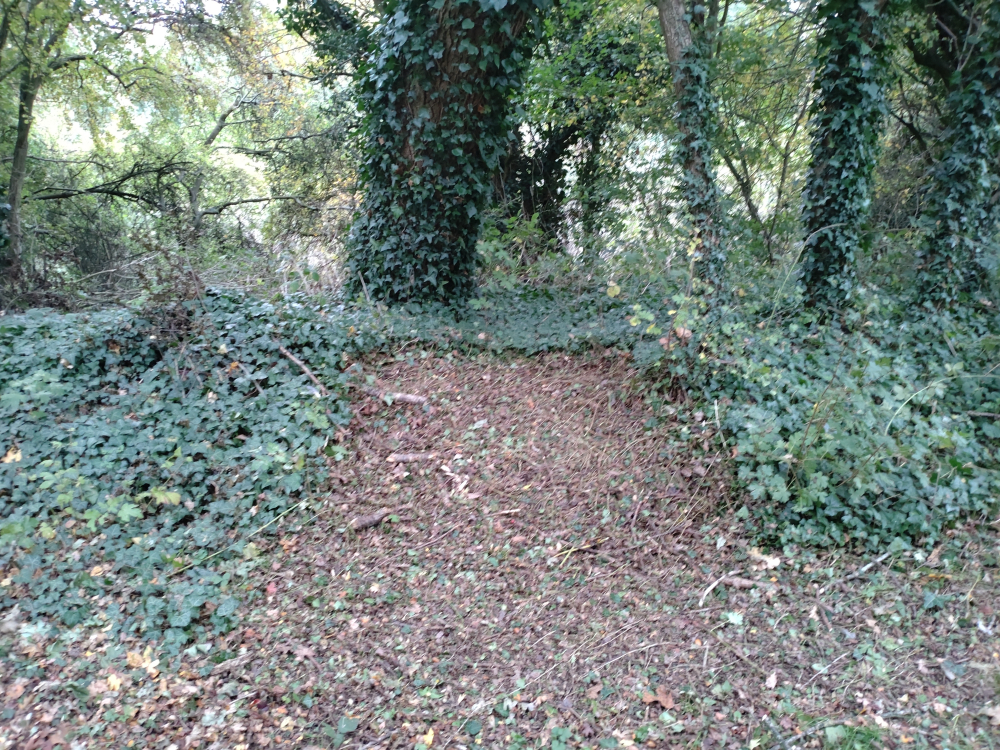
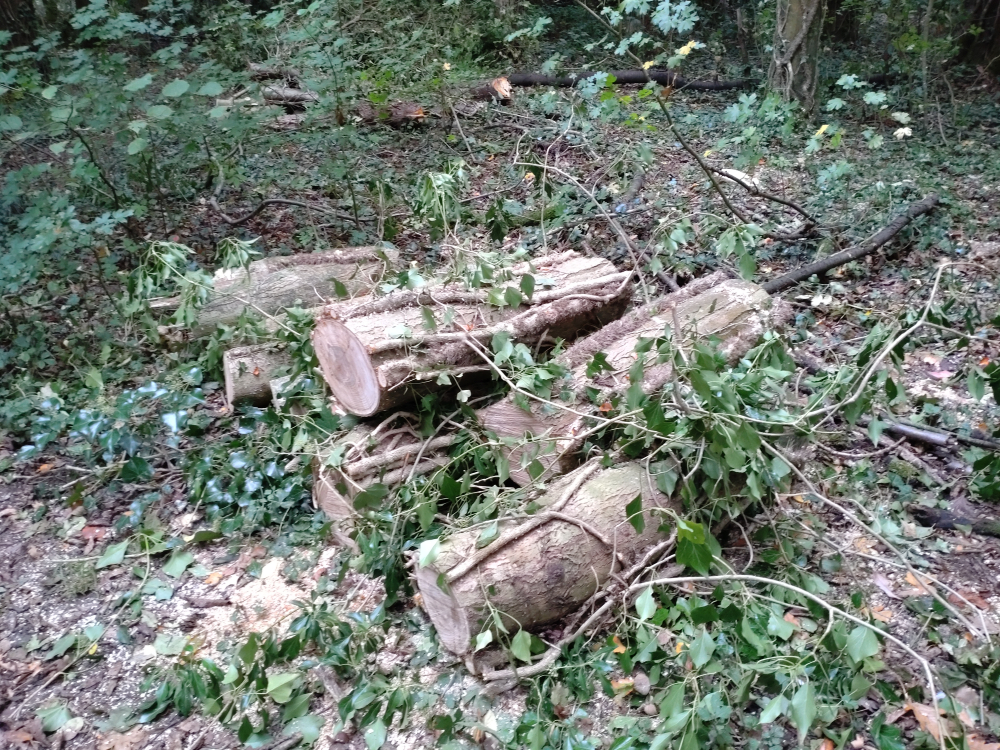
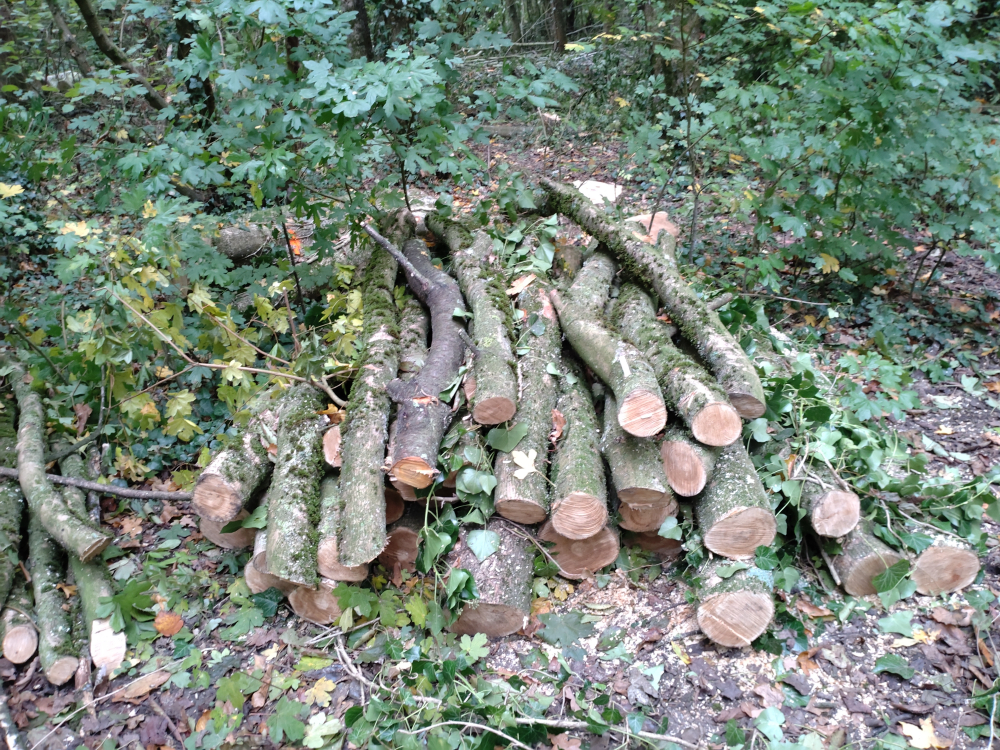
We found trees that we cut down years ago.
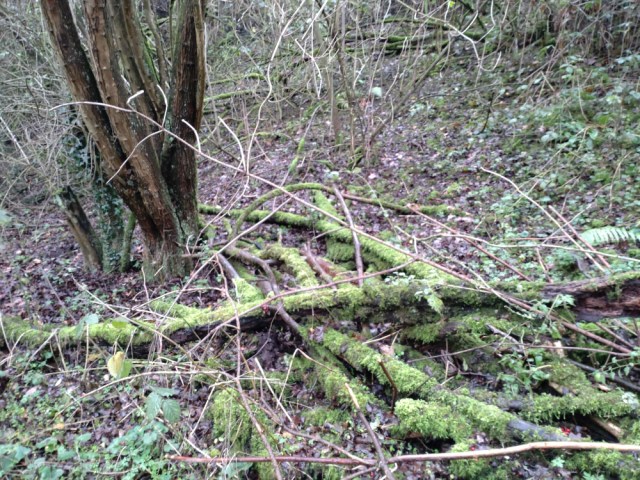
Beautiful habitats for lichens and all sorts of insects and wildlife.

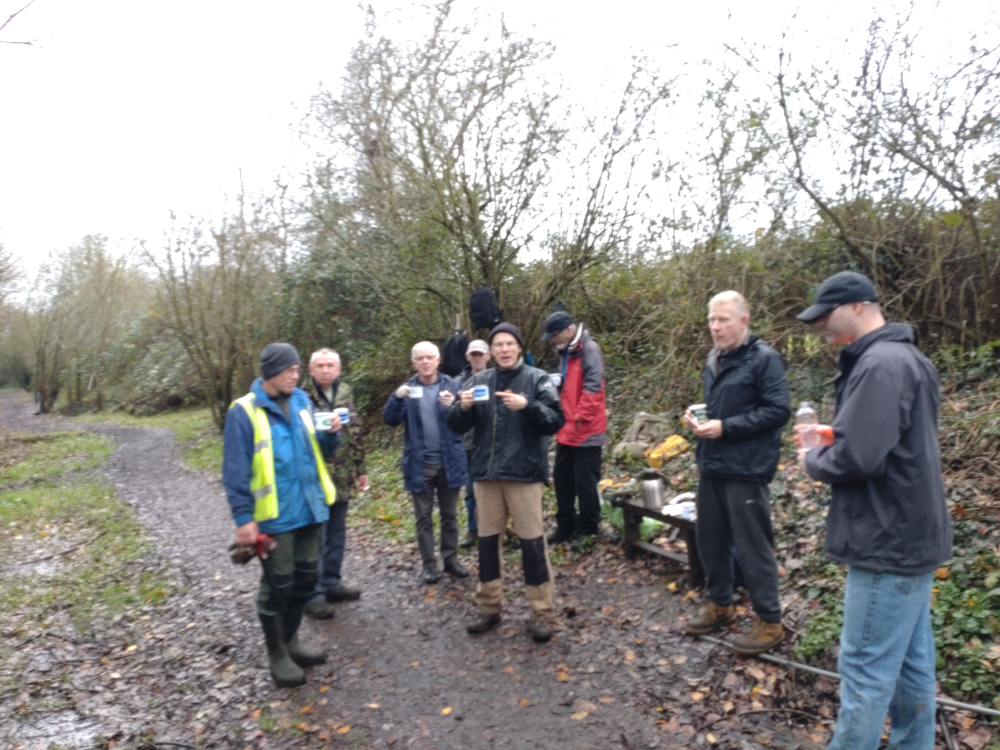
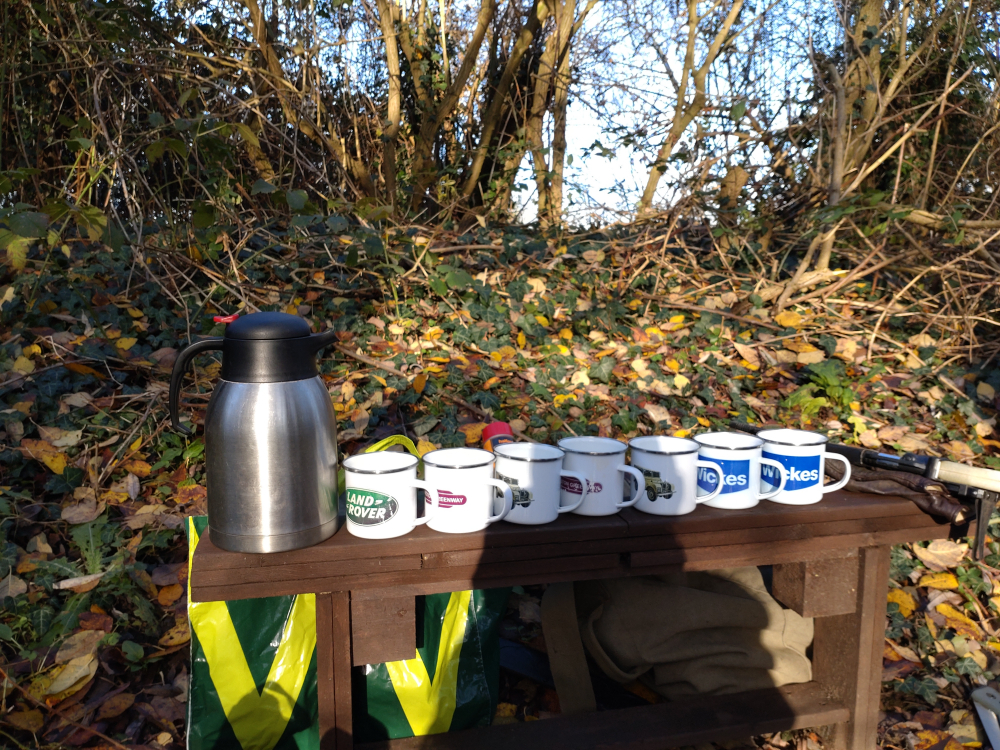
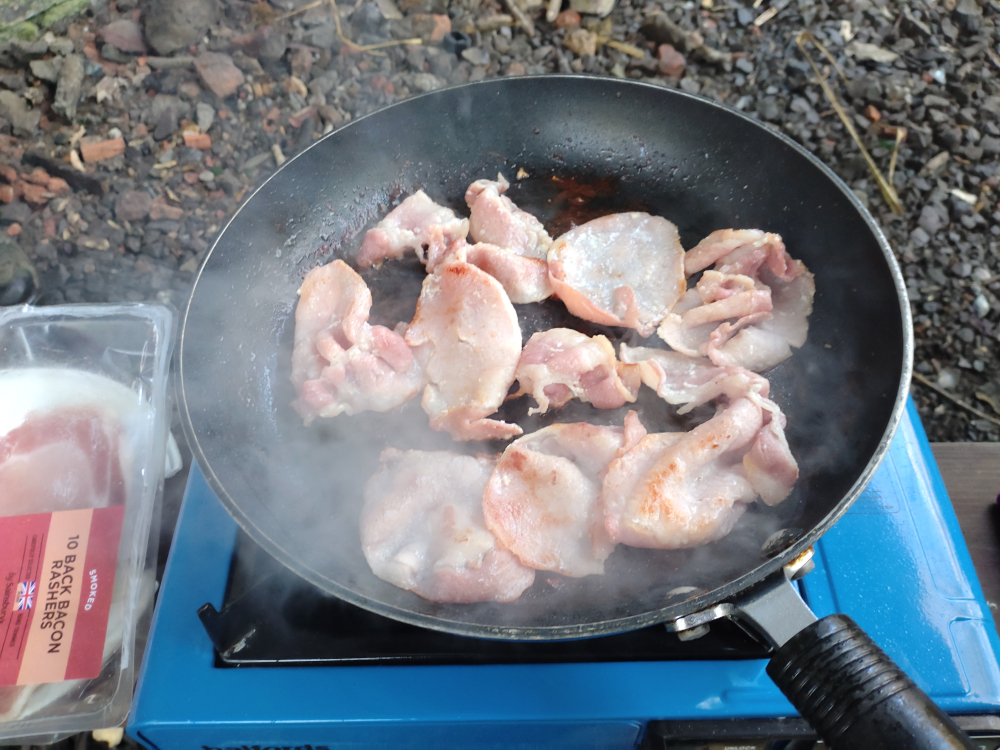
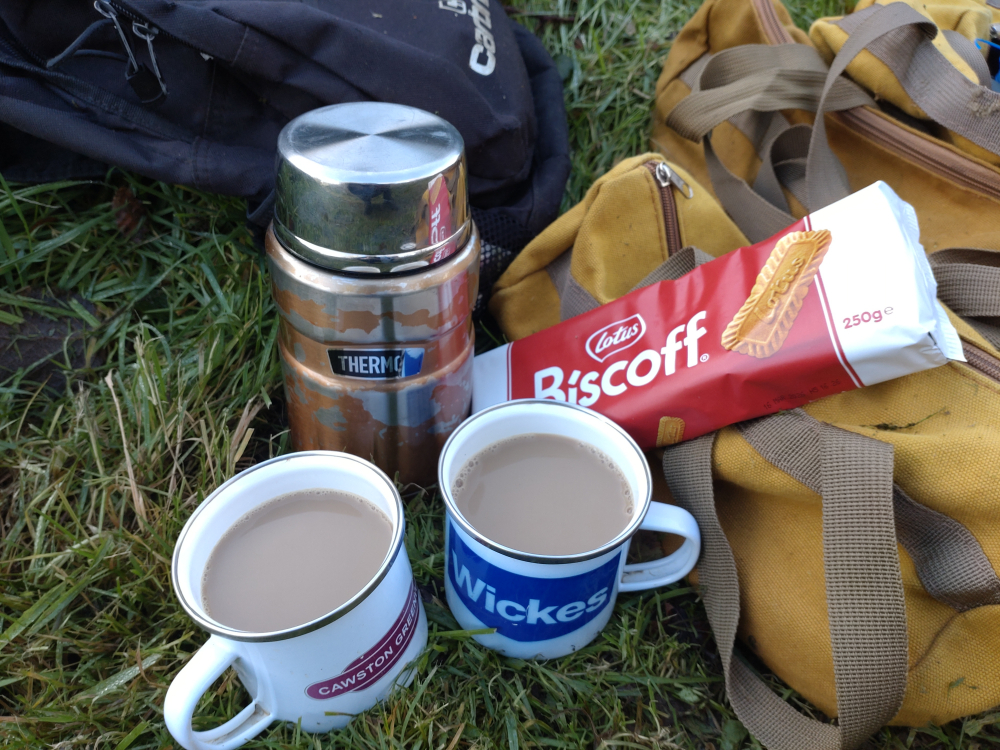
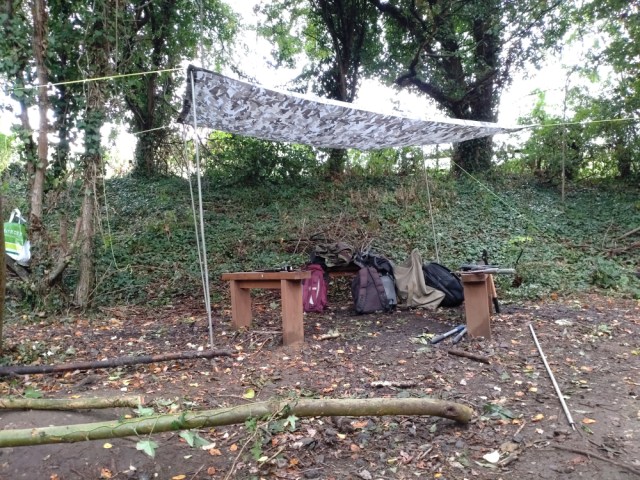
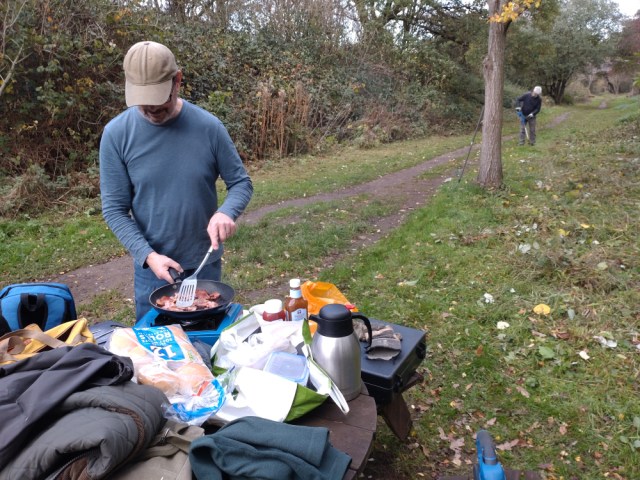
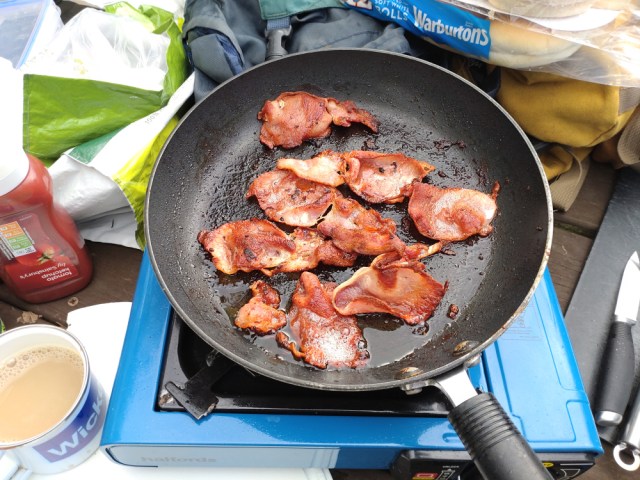
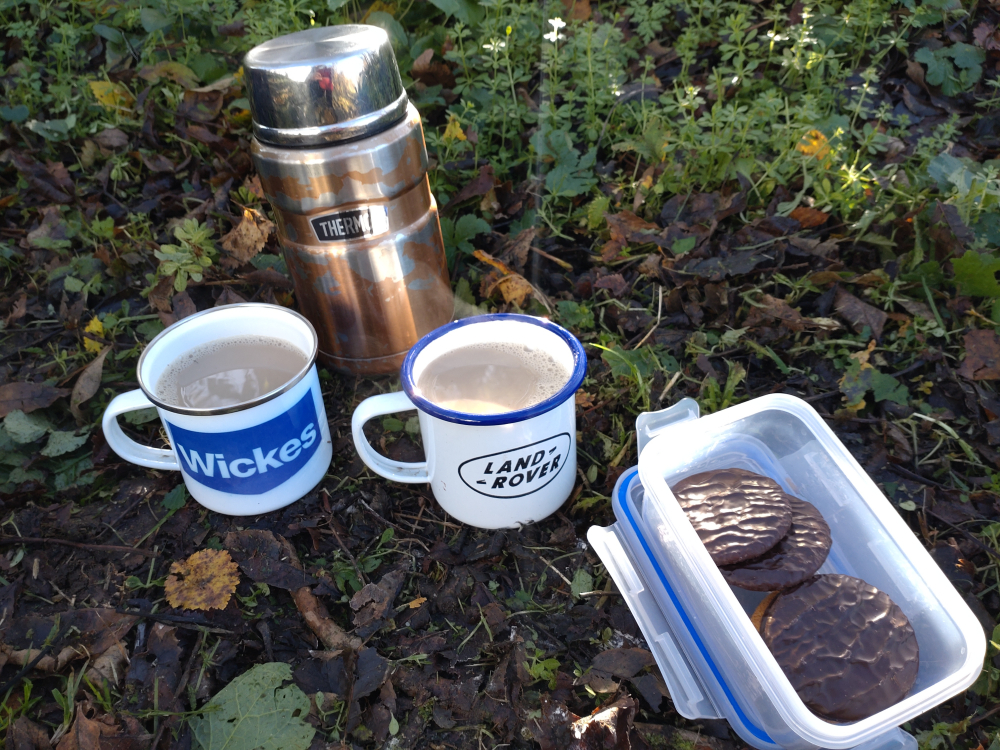
At half-time we enjoyed hot coffee and snacks.
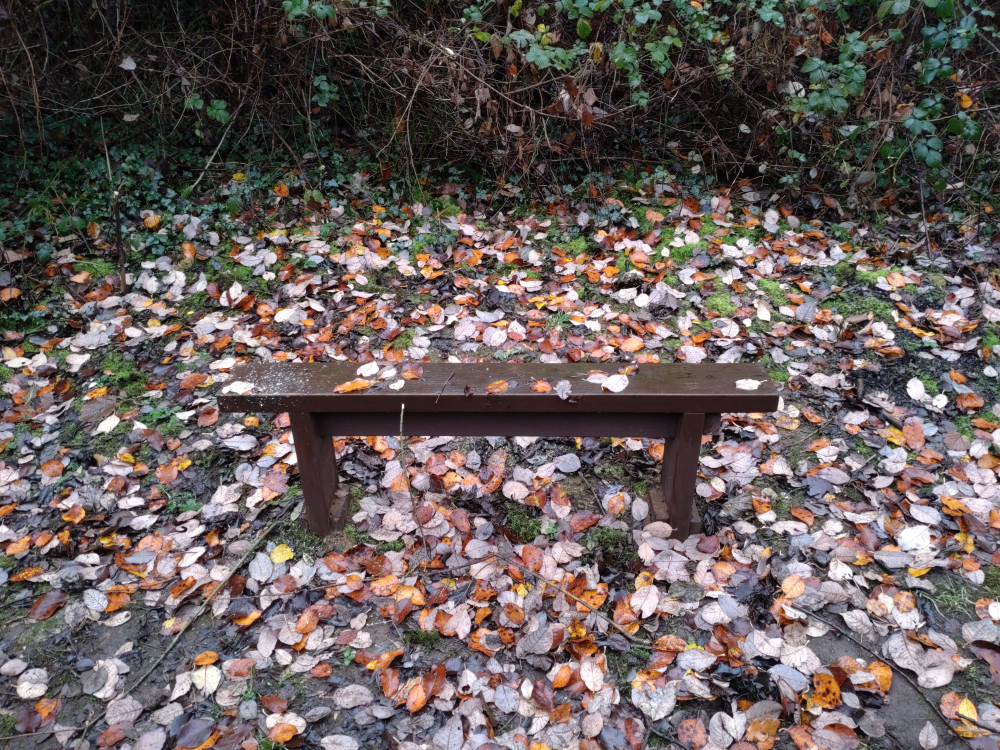
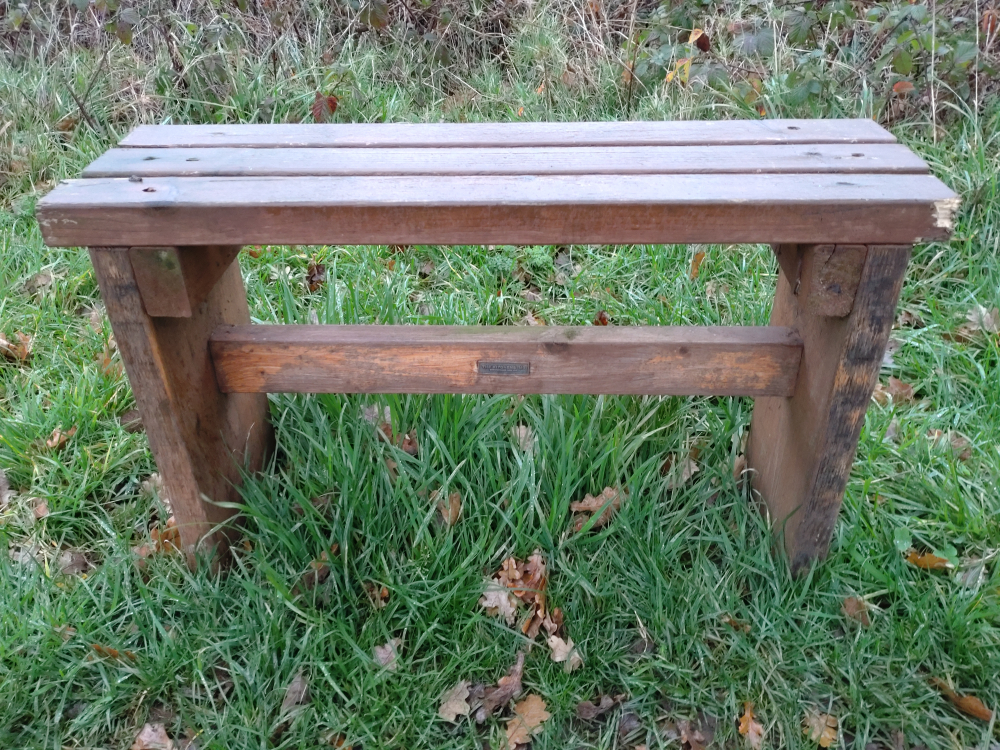
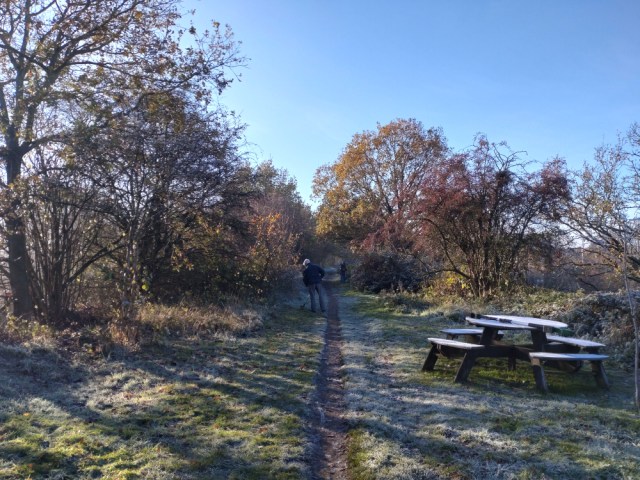
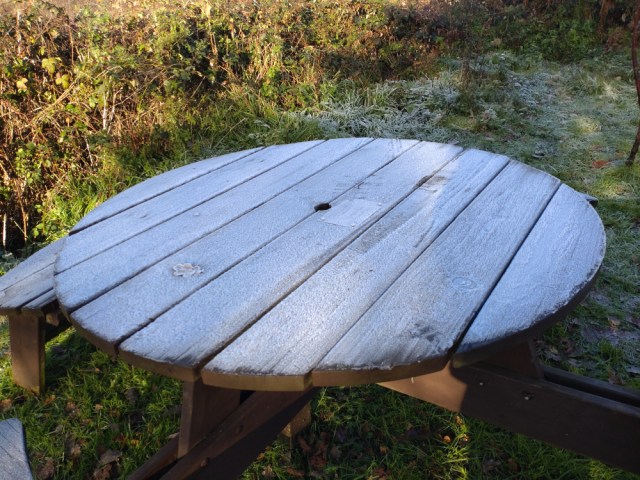
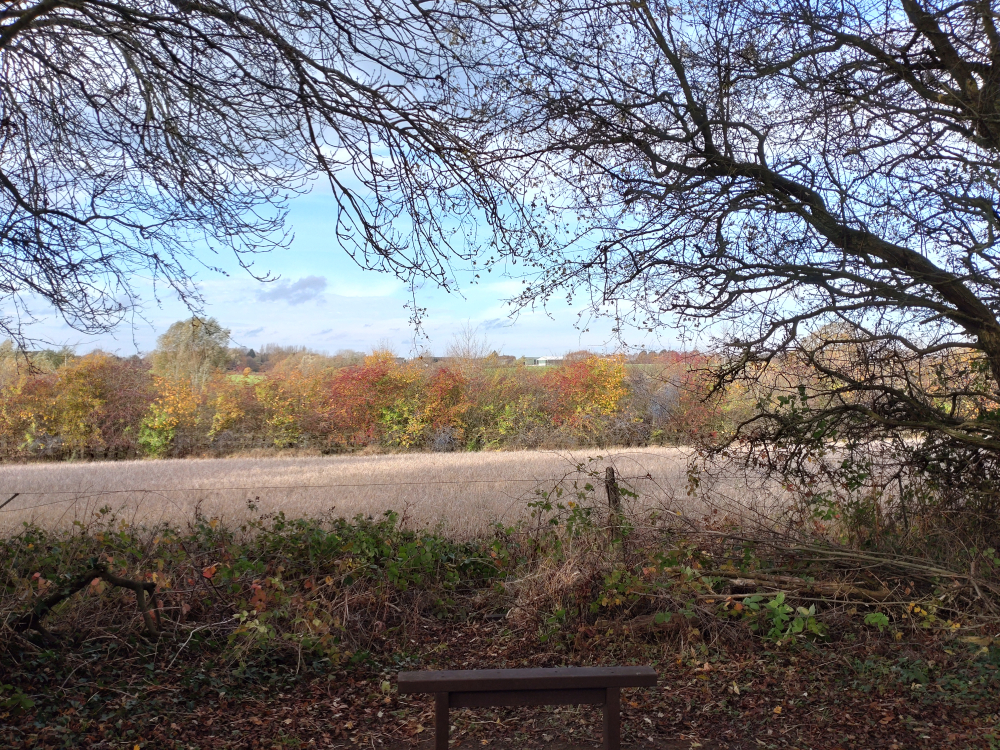
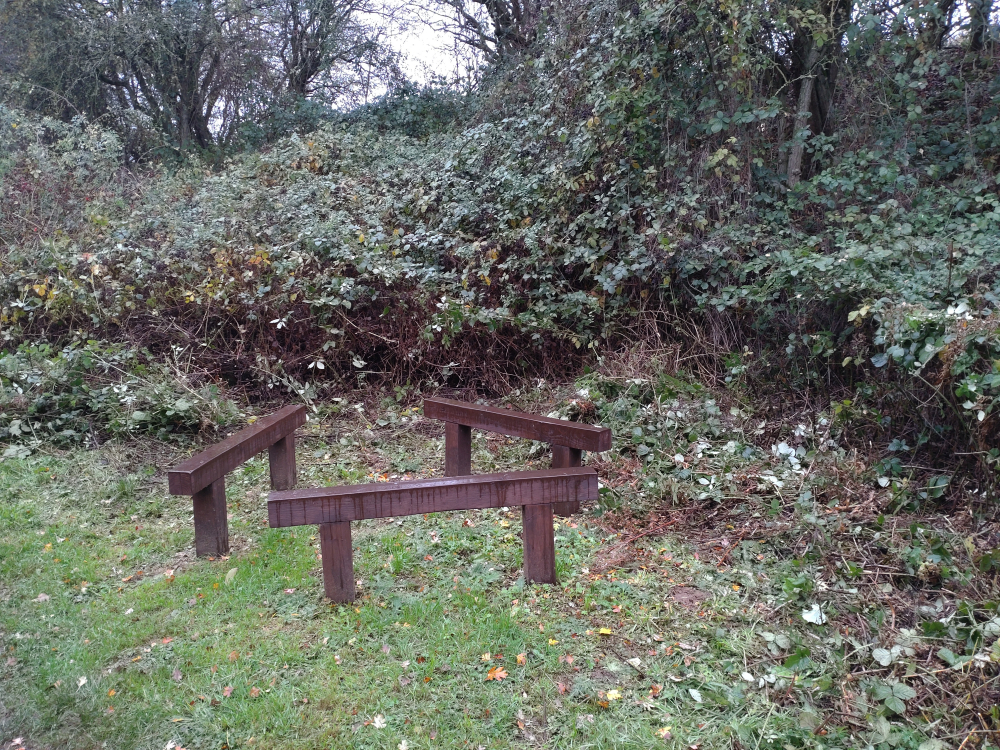
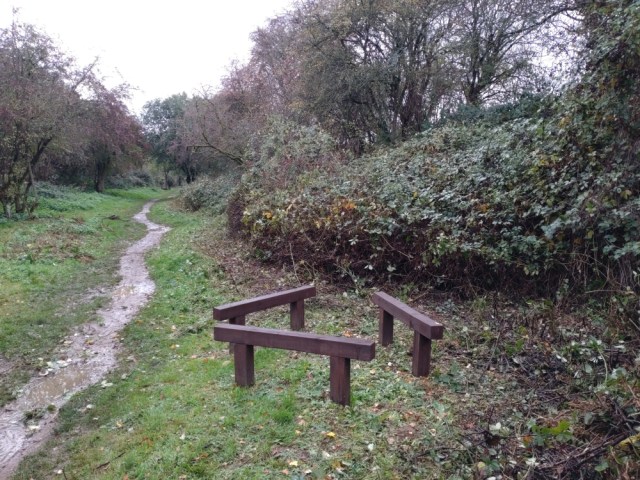
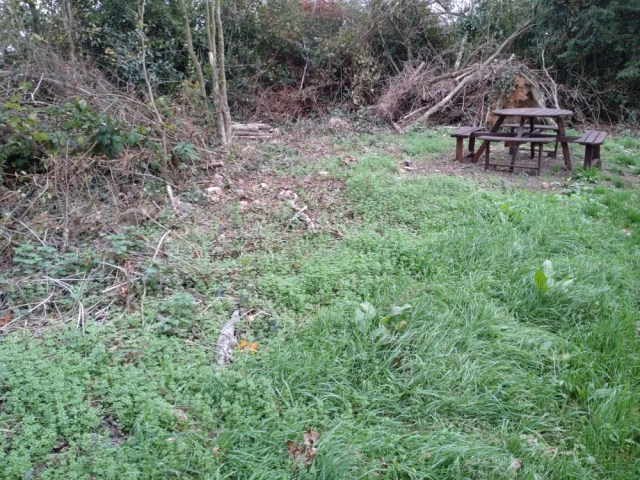
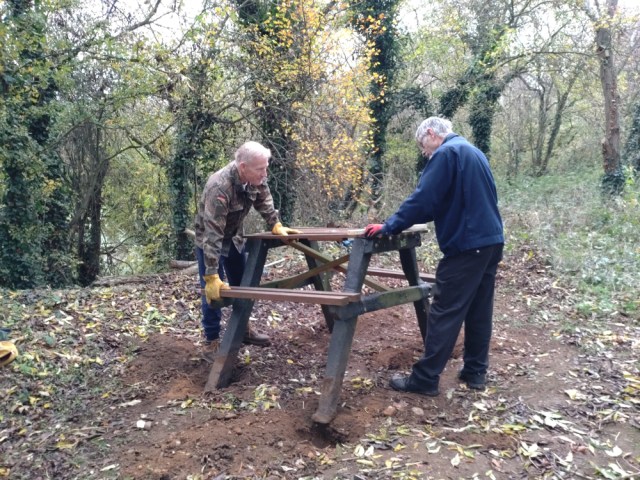
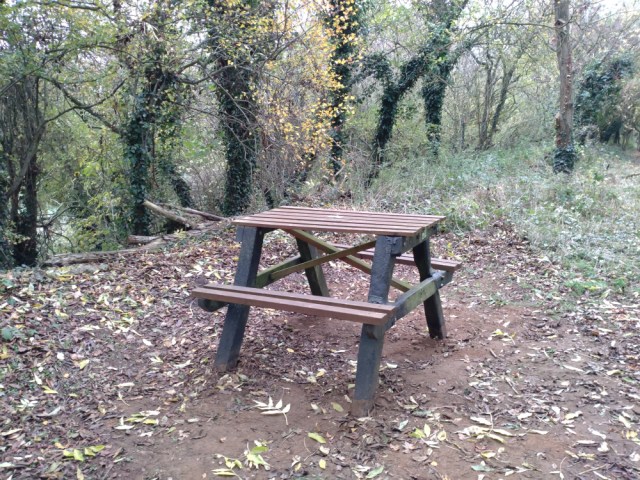
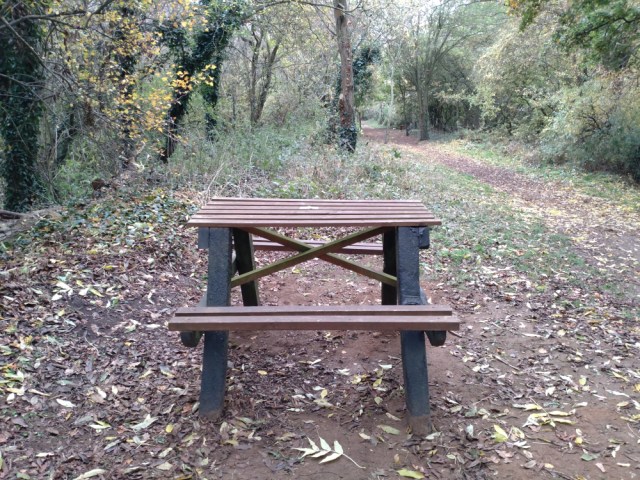
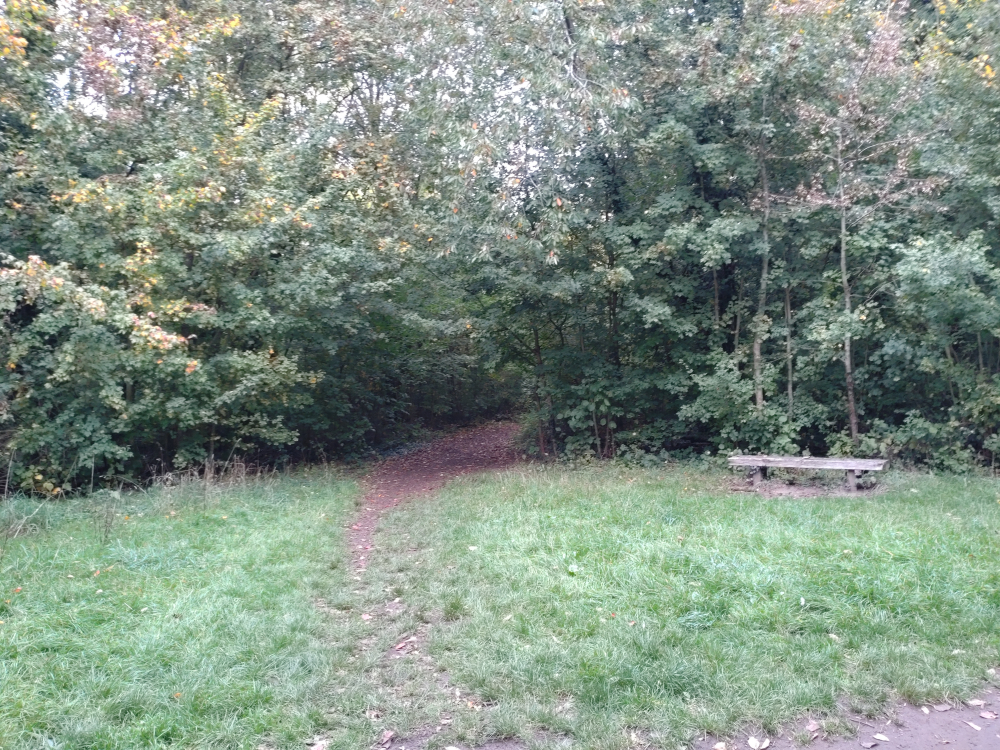
All the benches were pretty wet, so nobody fancied a sit-down and a soggy bottom.

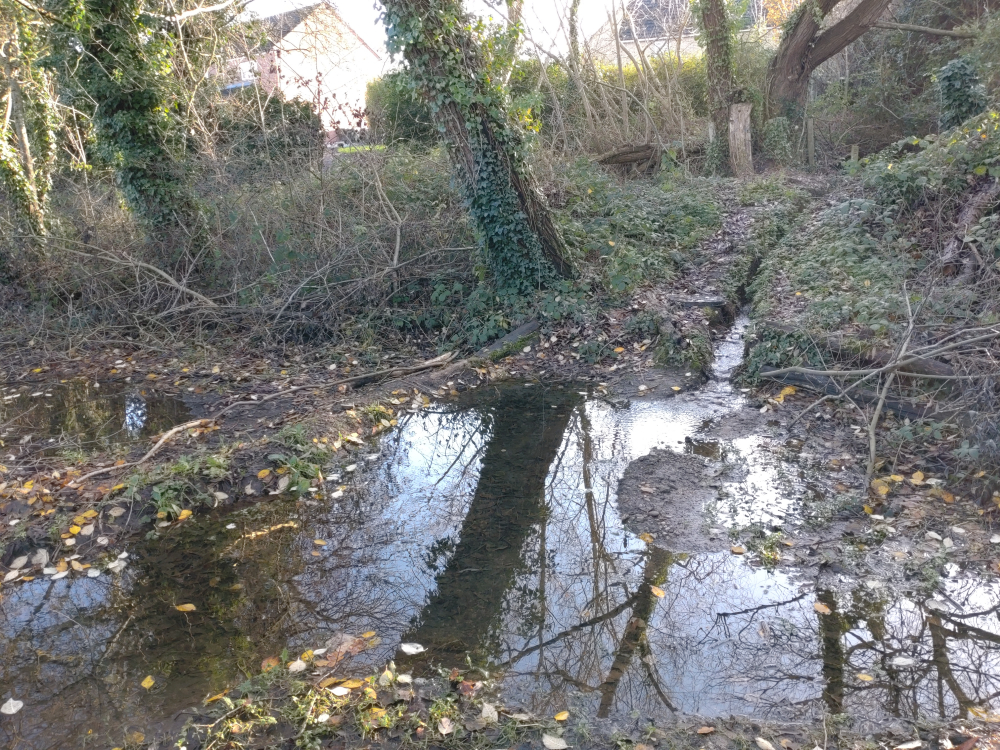
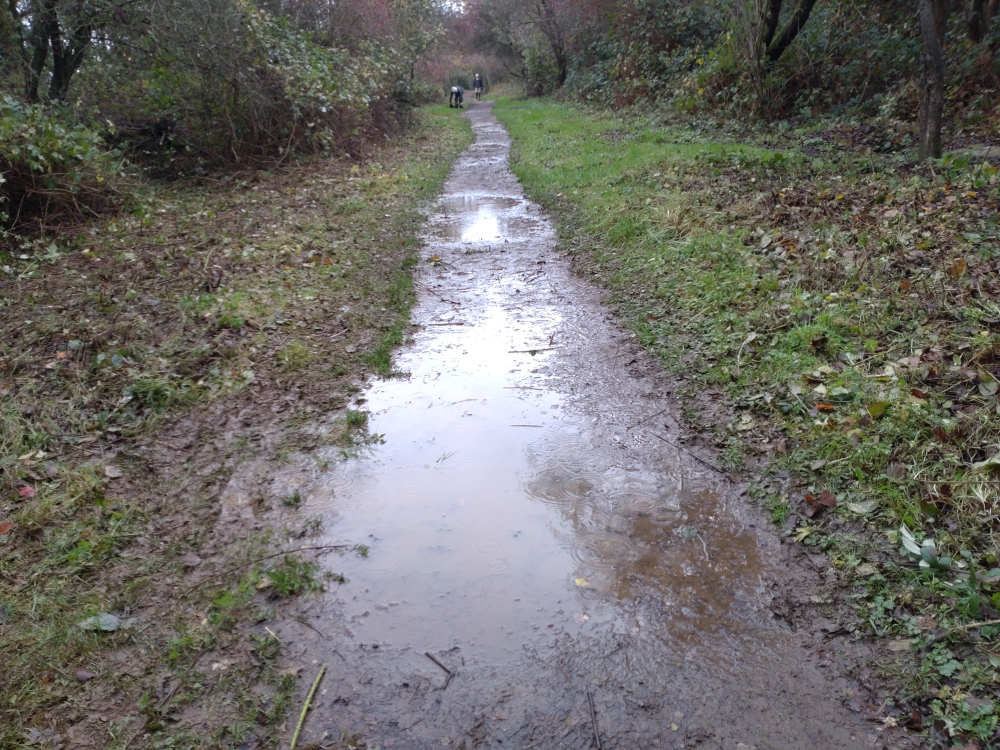
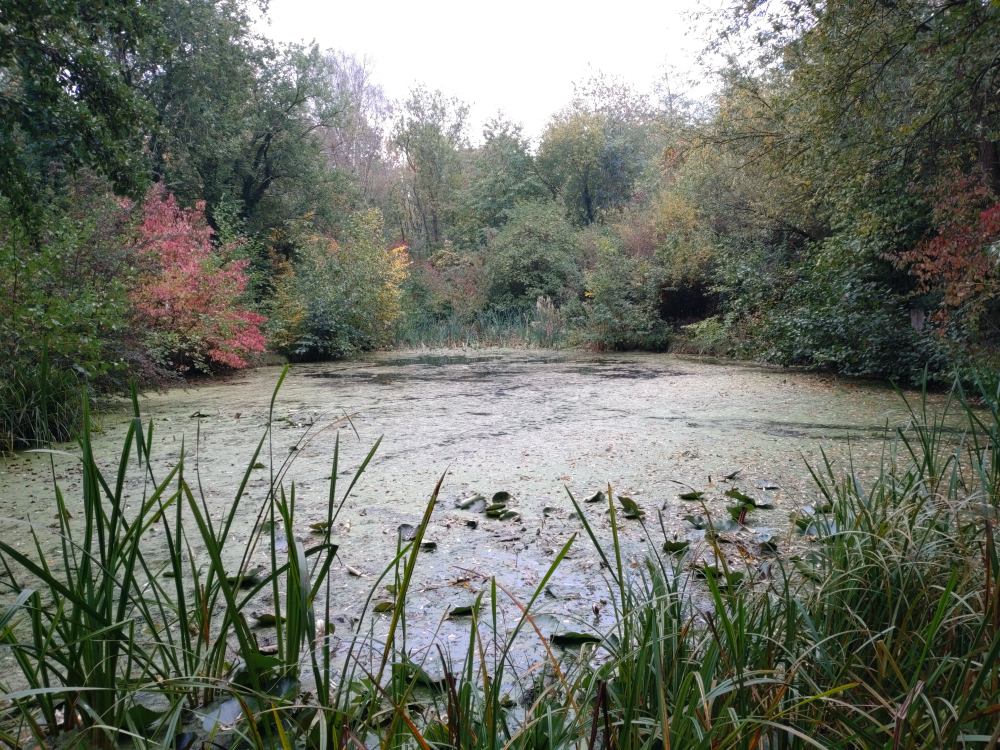
Lastly, we pushed a rod through our drainage pipes to clear debris and get the pond flowing across the path and not down it.
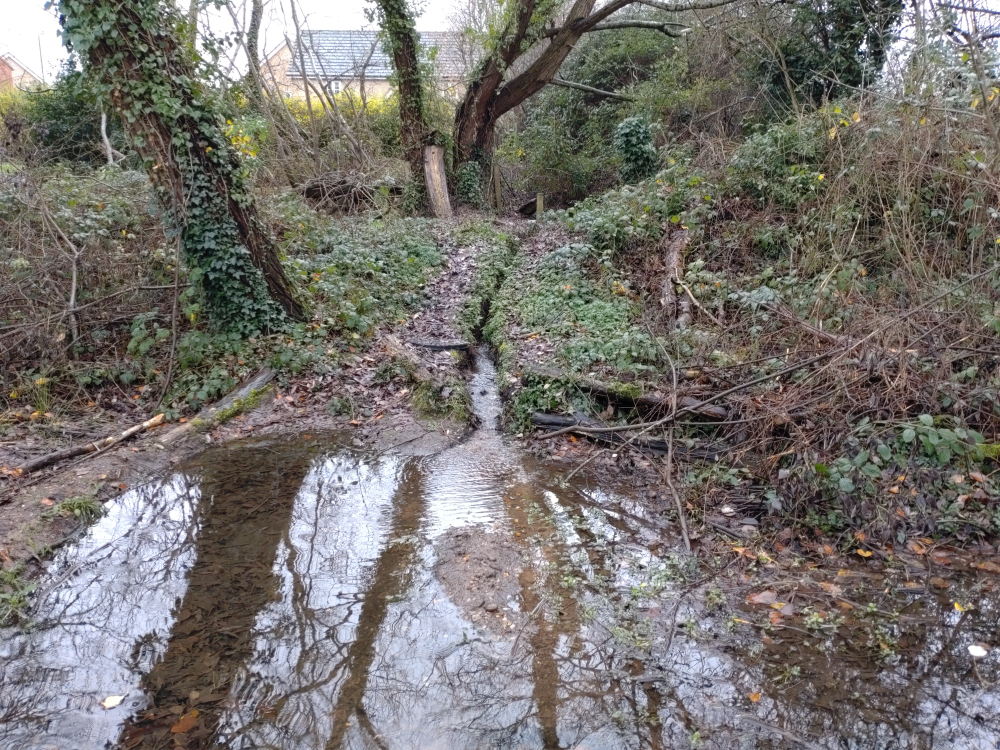
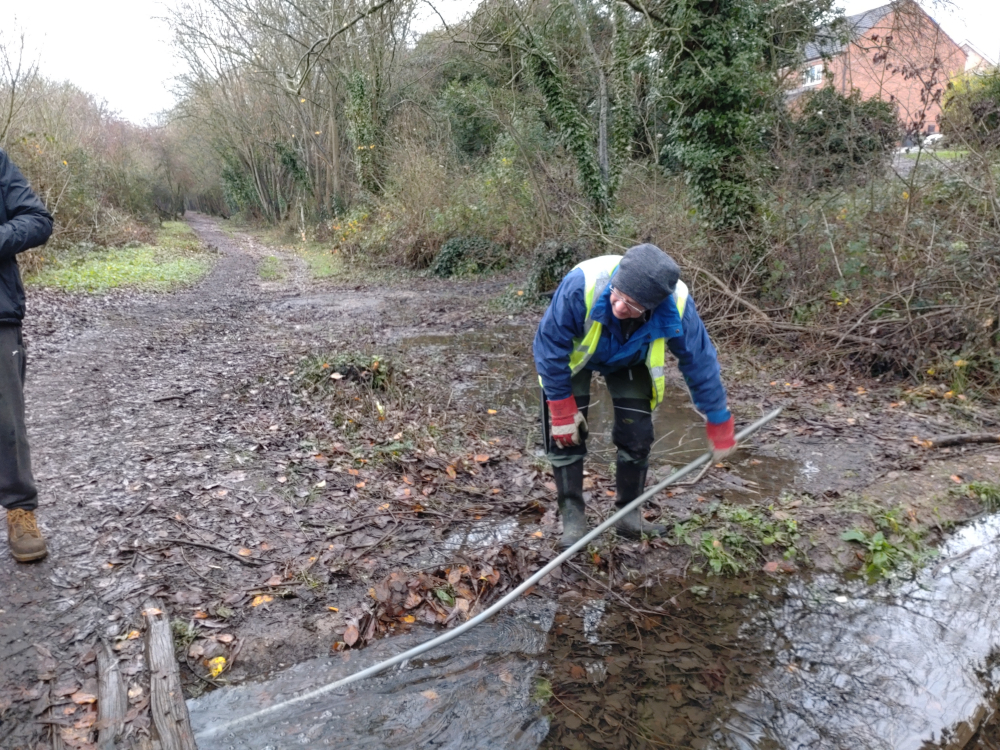
It worked, and the levels dropped as the flow increased.

Once we get this section sorted, it is then just a case of keeping on top of it.
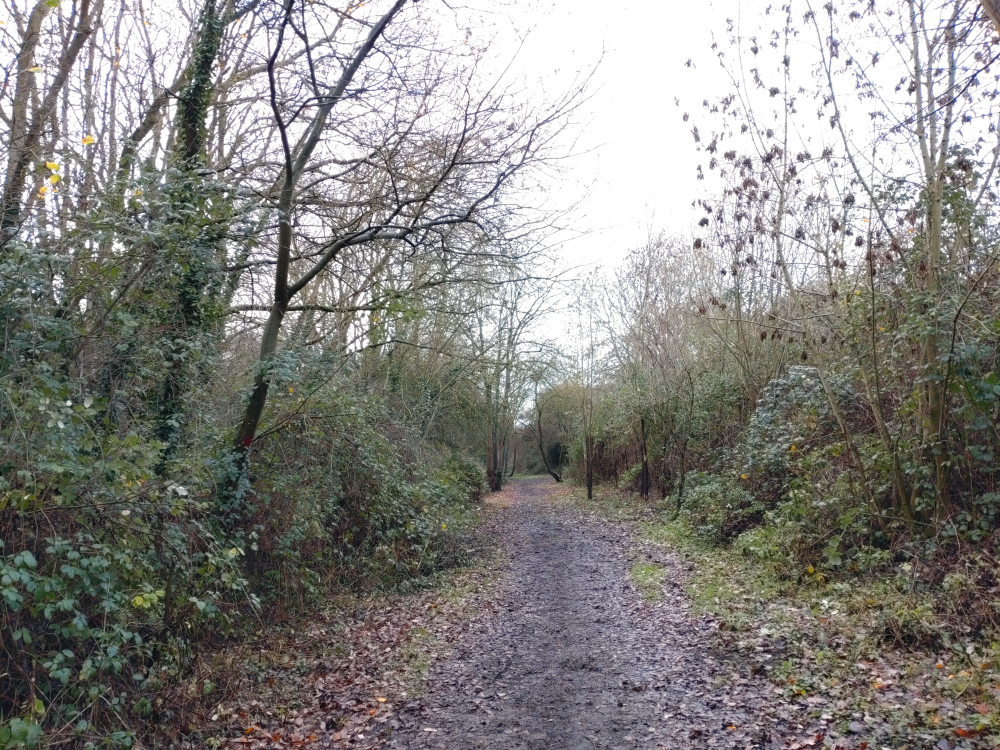
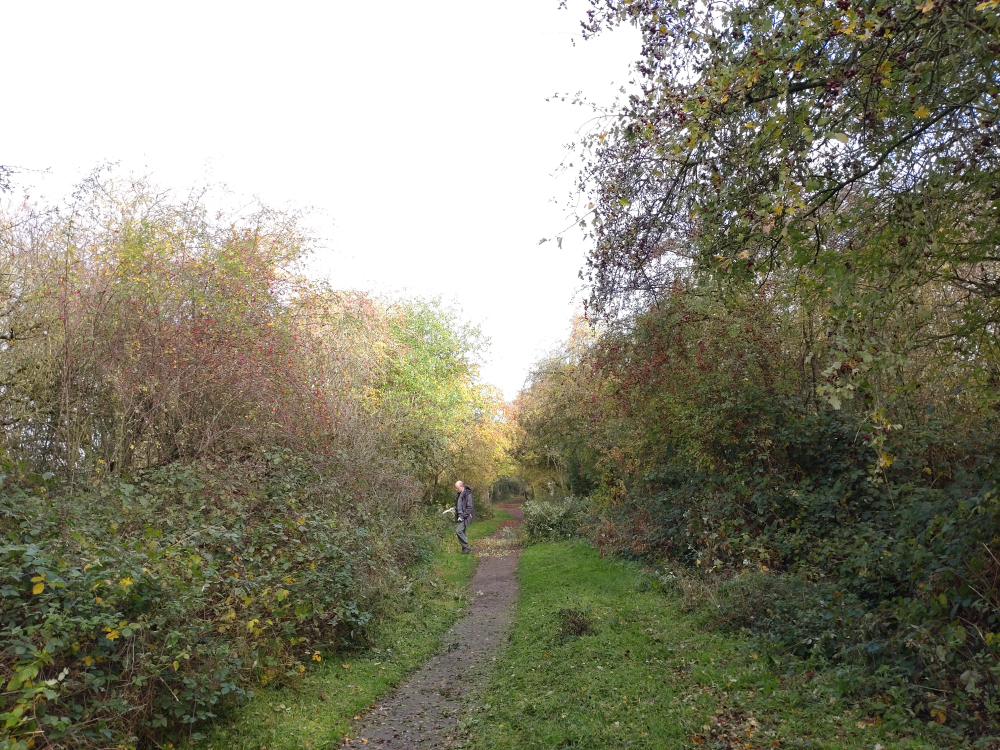
We’re pretty happy with it so far, and have one more workday on it (31st December), so it should look good in the spring and summer of 2026.

Dunchurch Bridleway

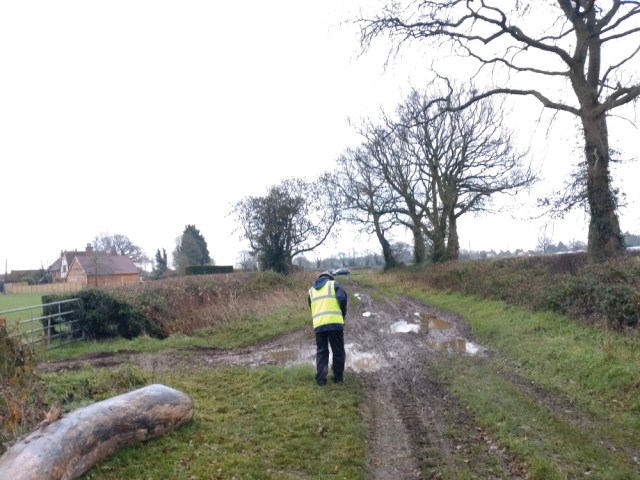
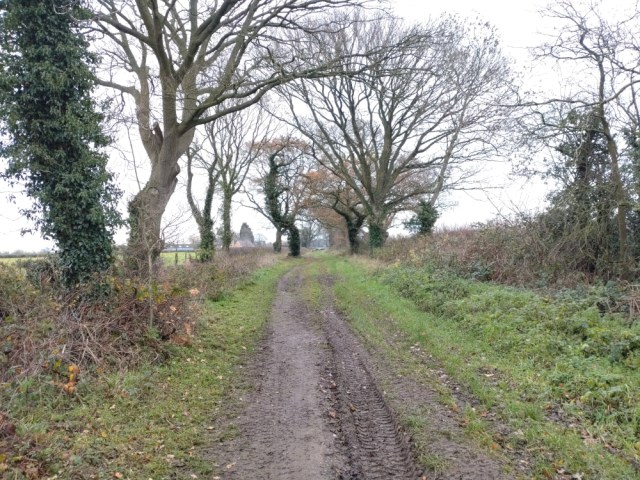
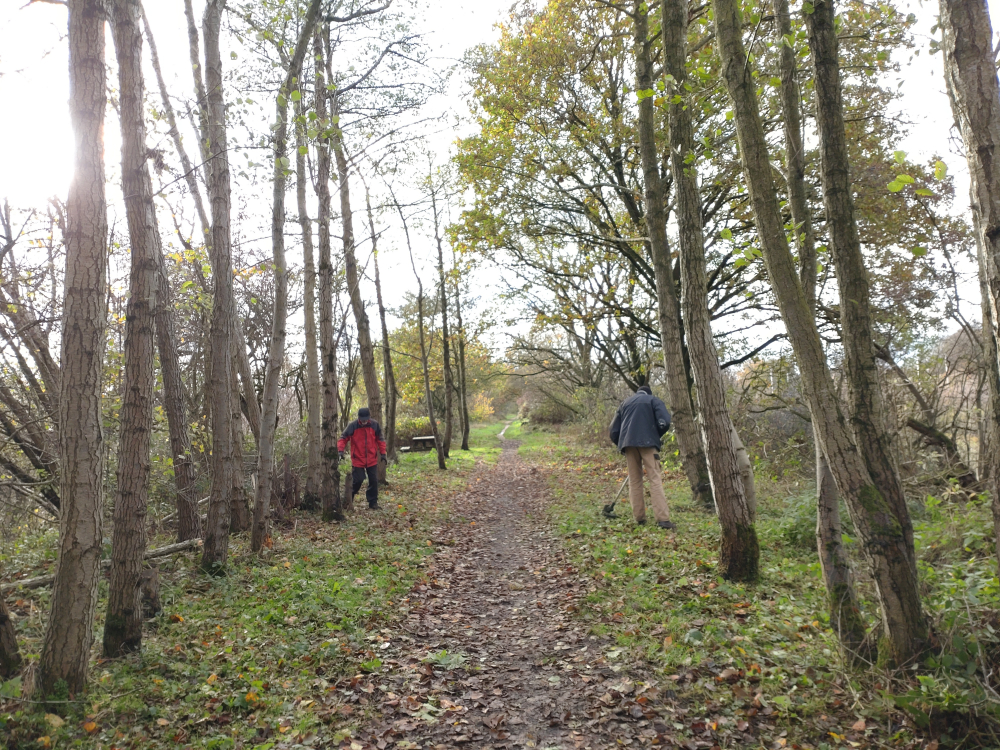
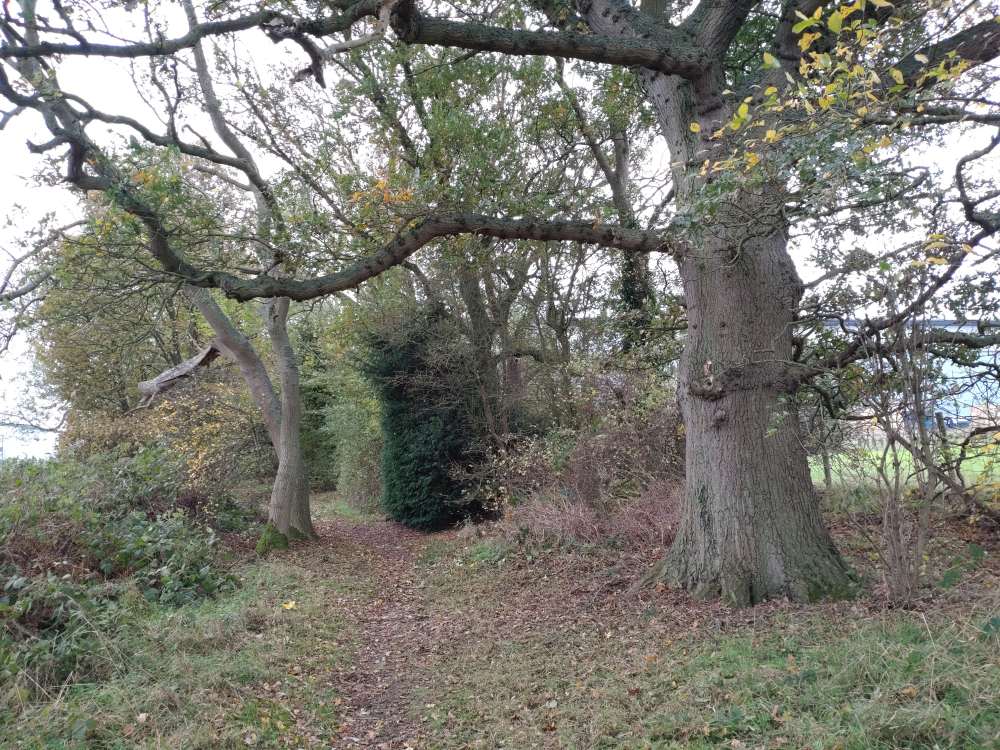
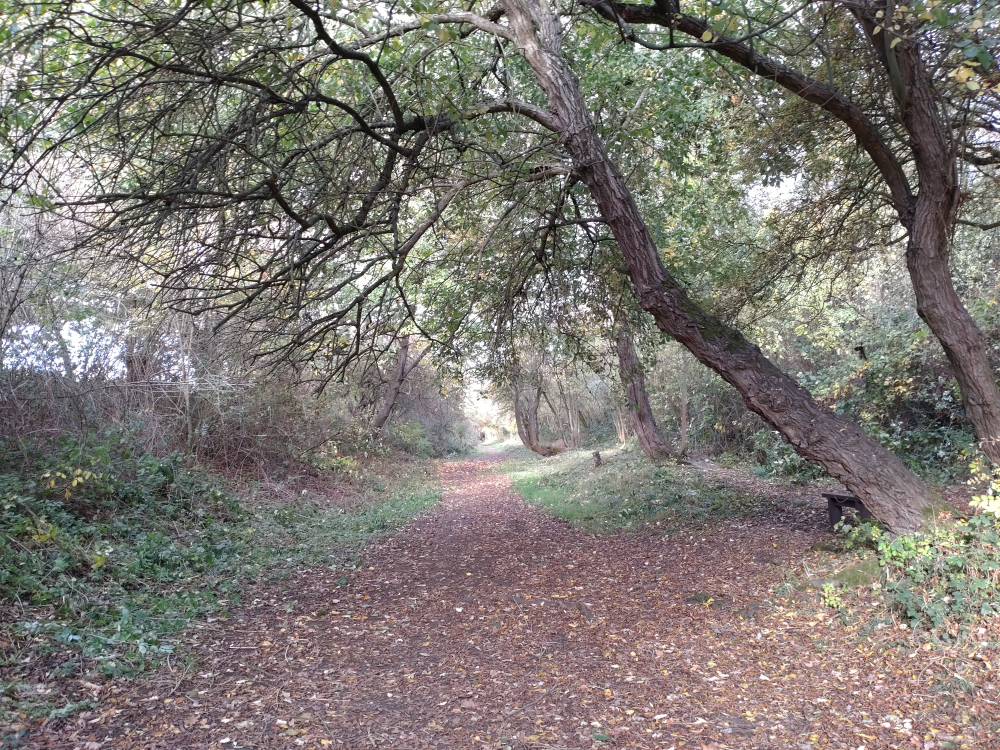
Three of us made it for the last workday before Christmas on this Dunchurch trail. Actually, it’s the last workday of 2025 on this bit.

It was back to the start, and it would be nice if we could do the whole length again before the bird nesting season starts on March 1st next year.

For context, we did 330 metres, and the path is 1.5 km (1,500 metres) long. We have four more workdays, 300 metres per session should get us to the end.
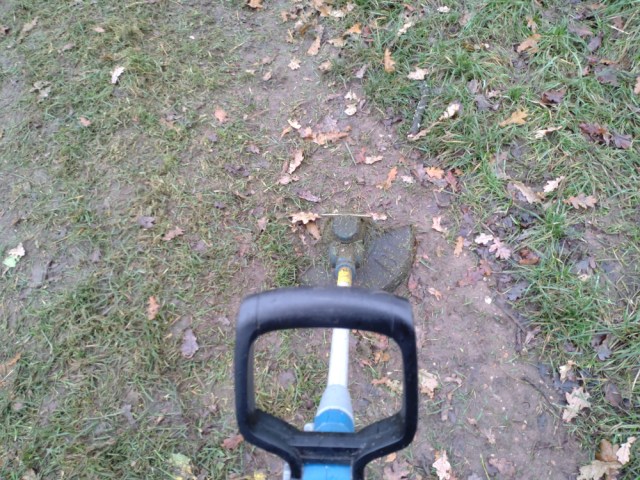
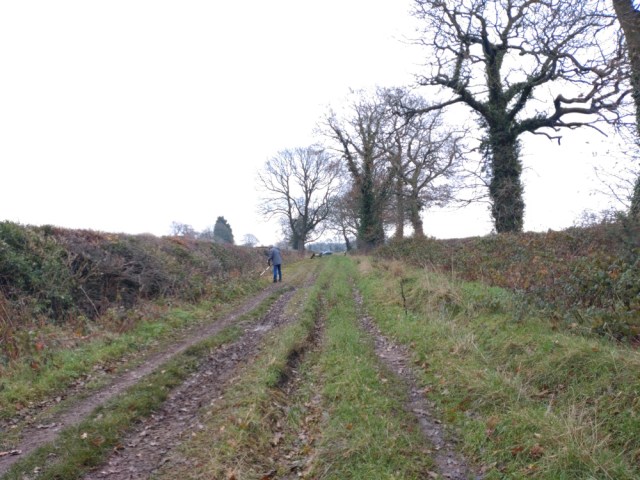
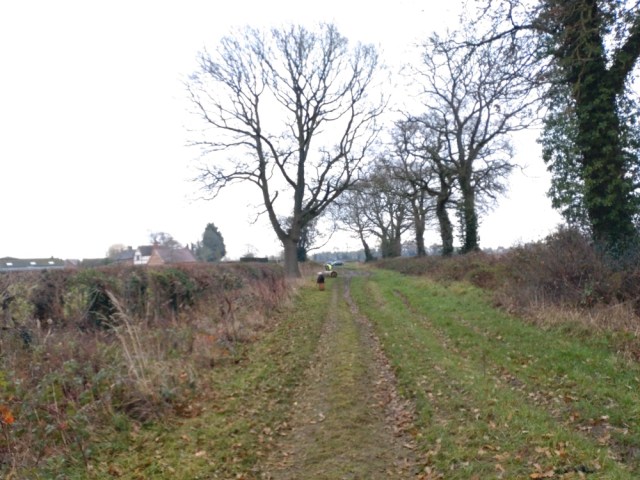
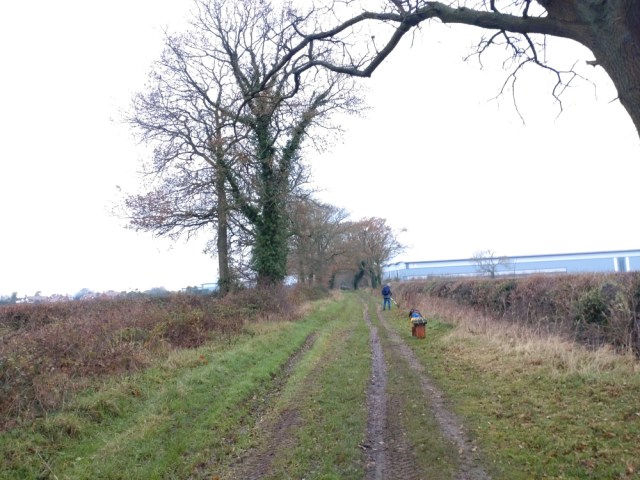
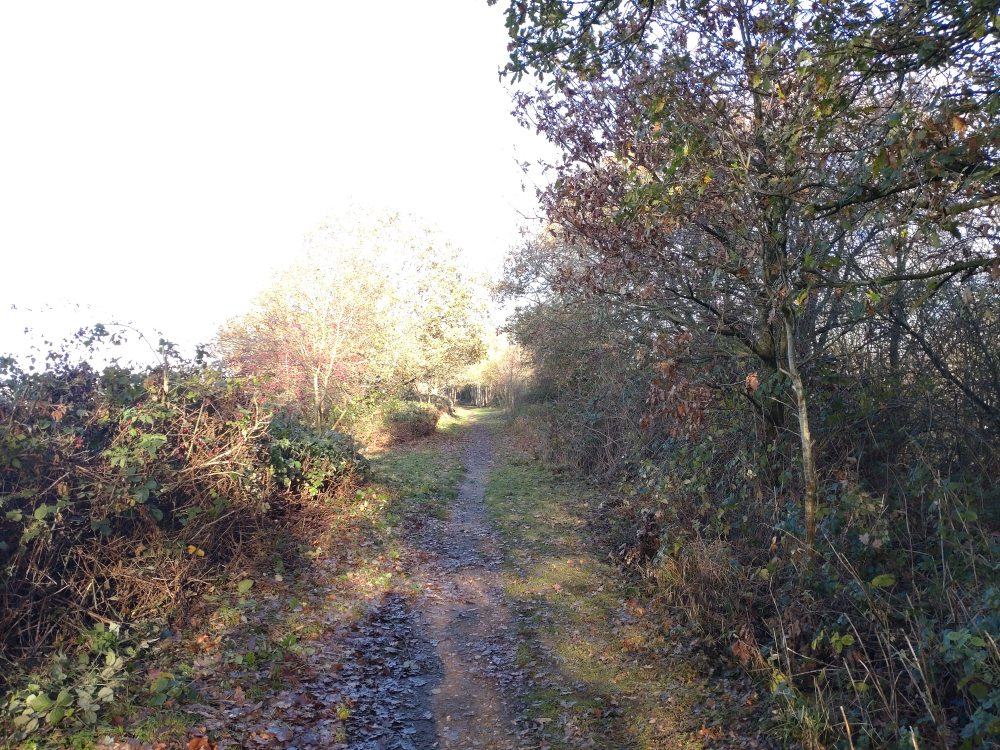
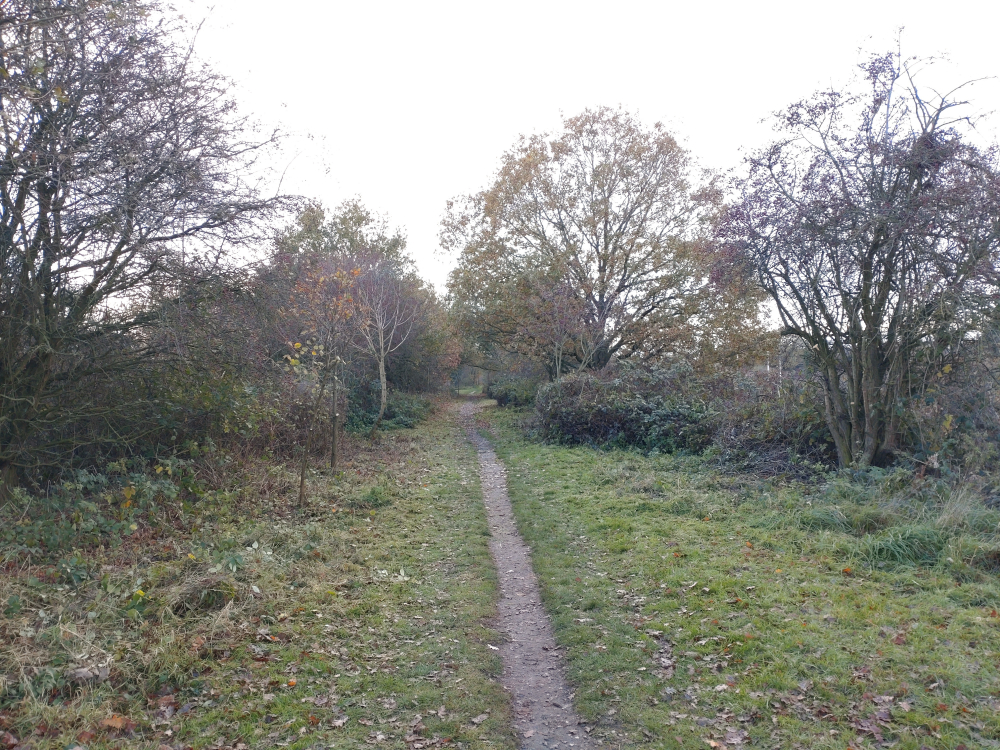
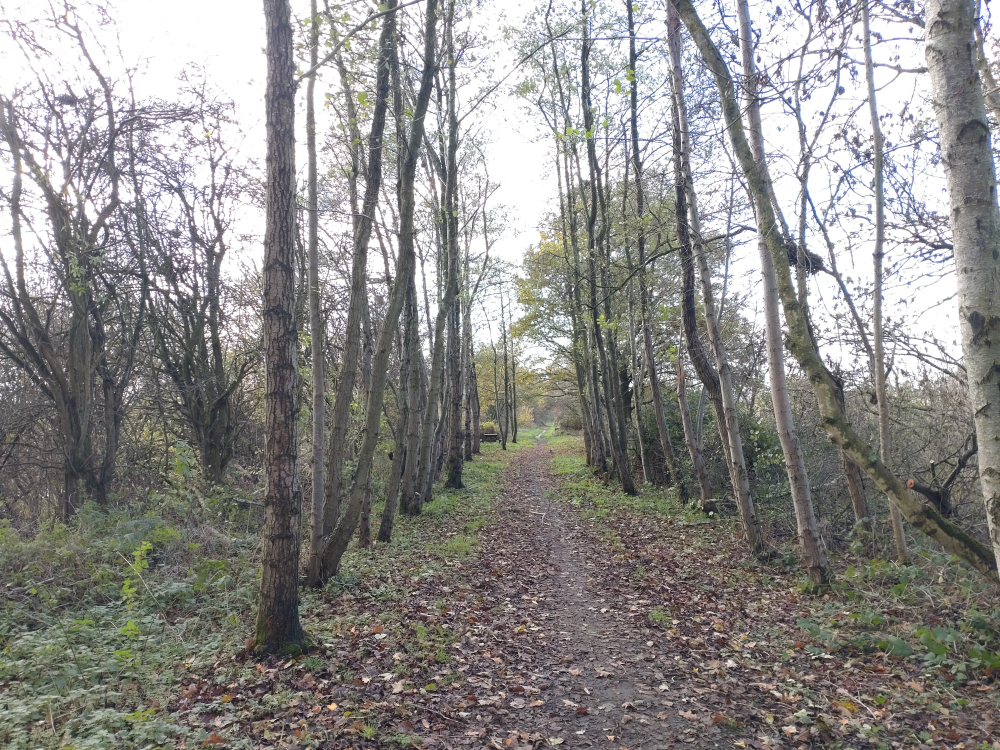
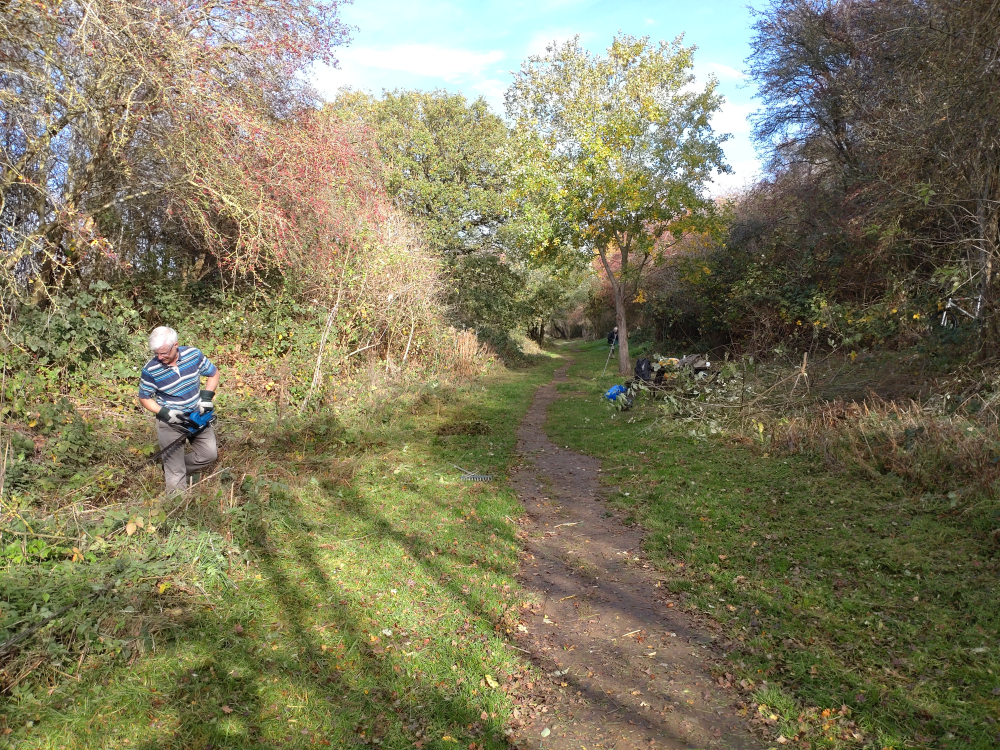
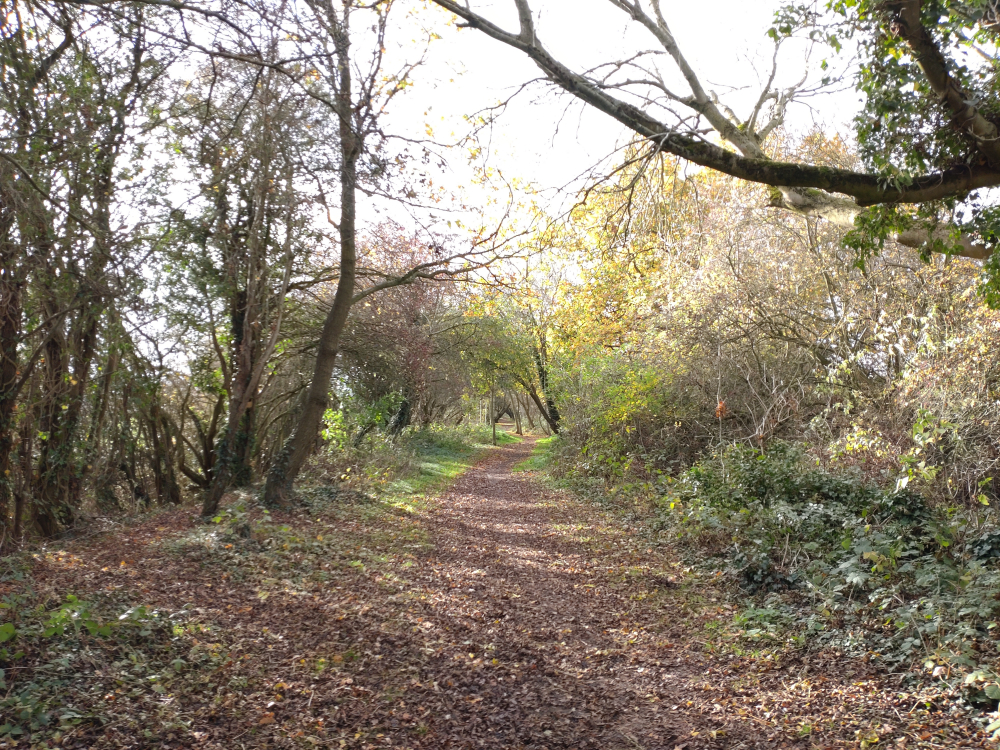
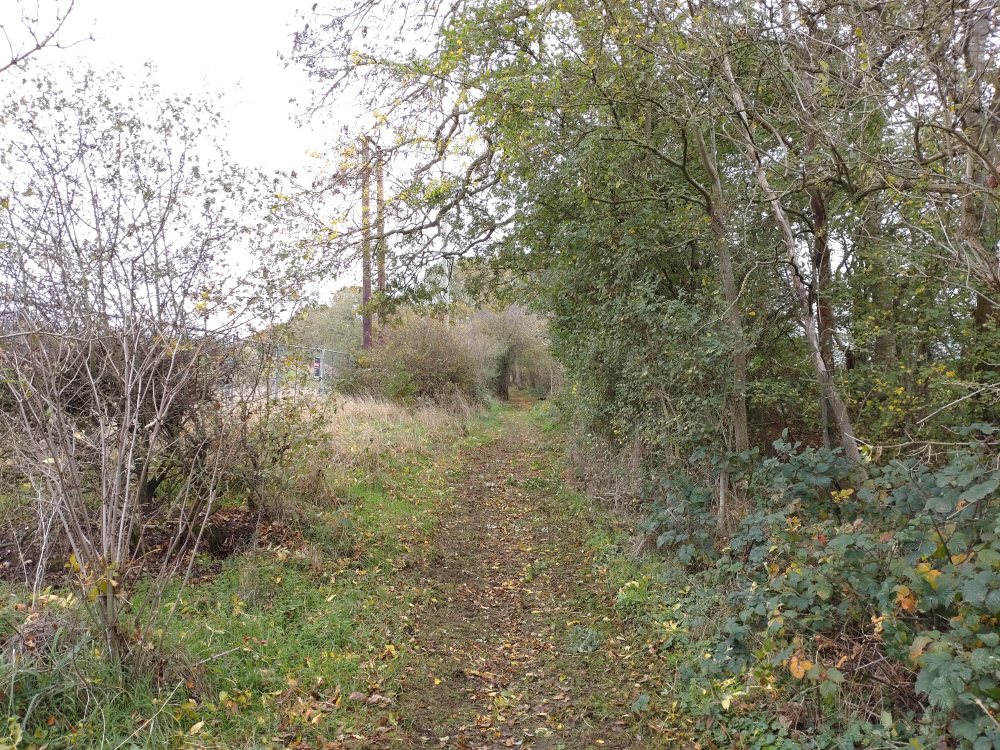
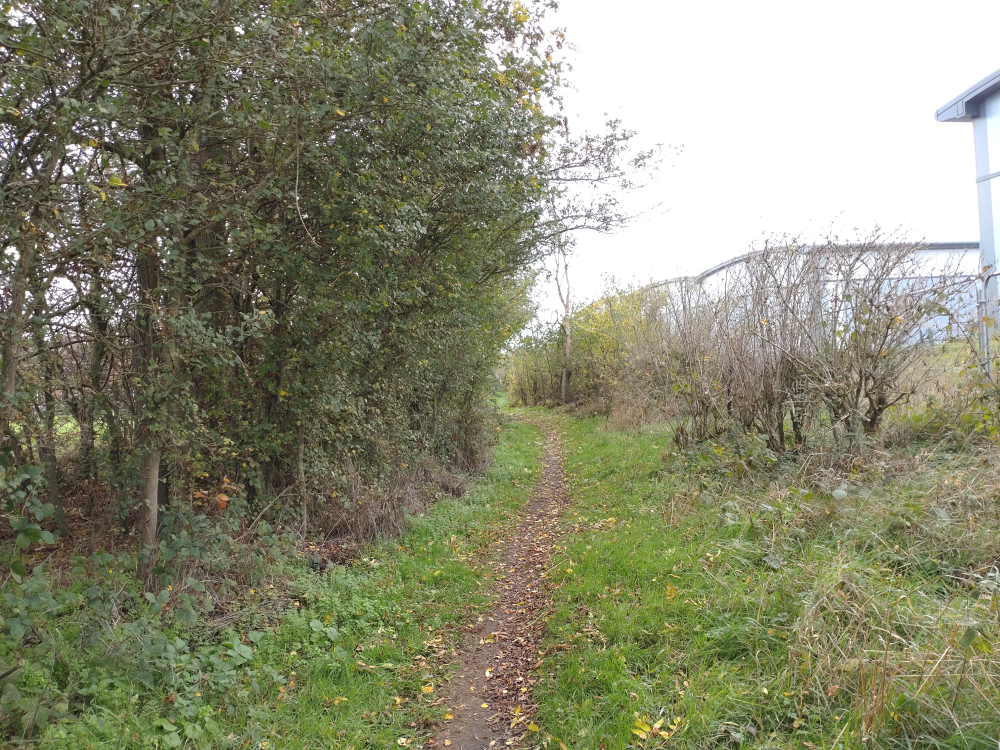
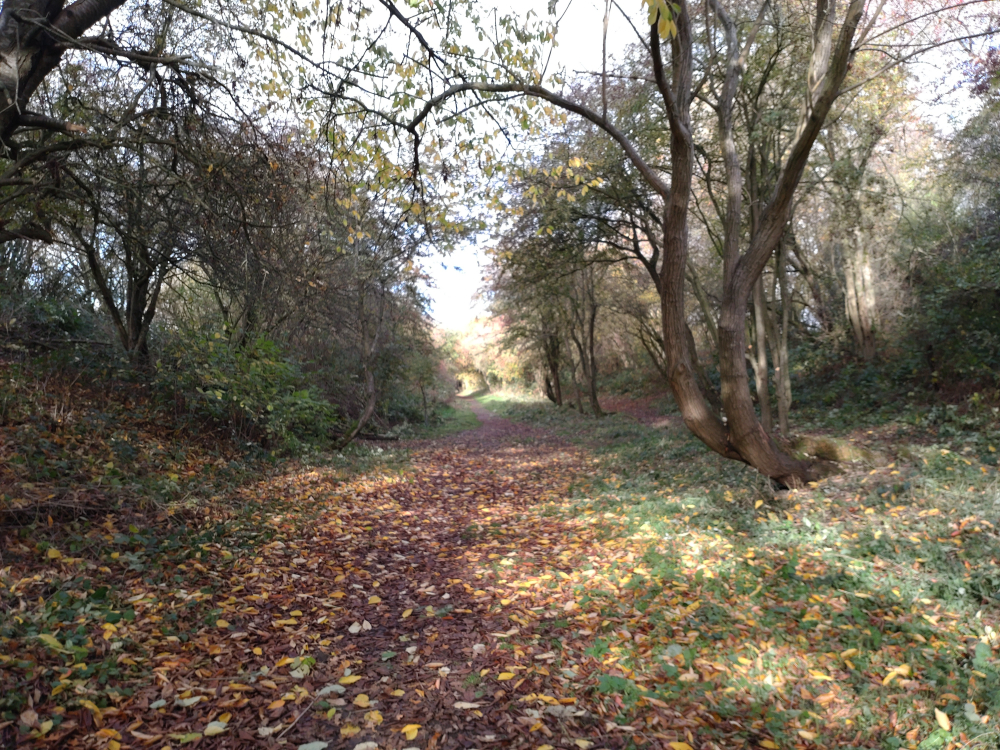
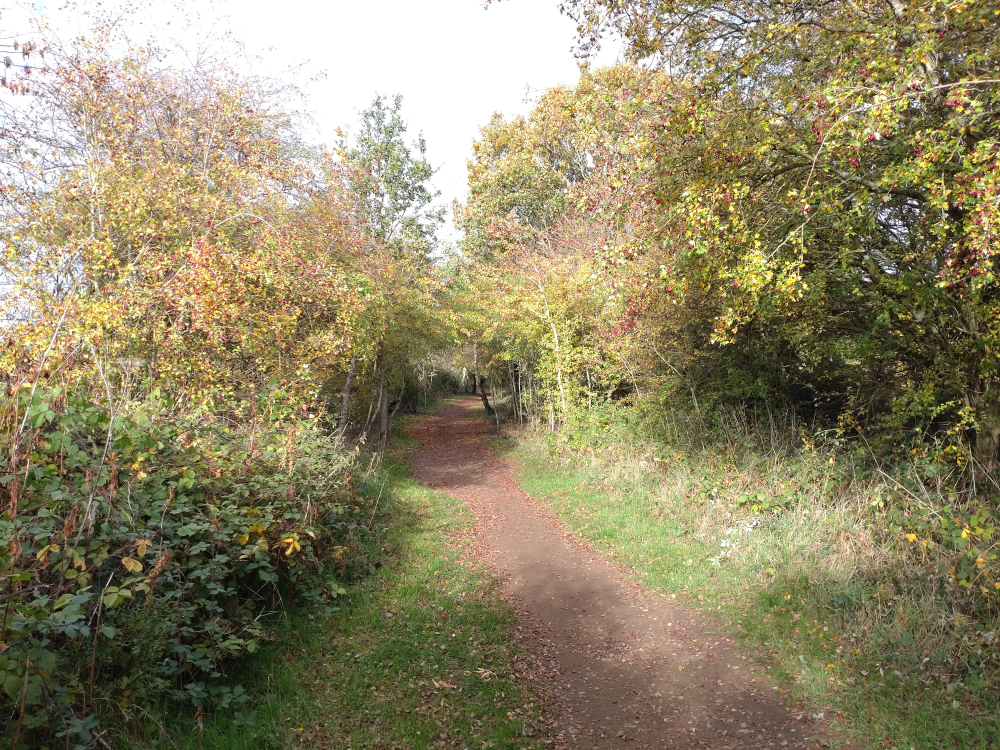
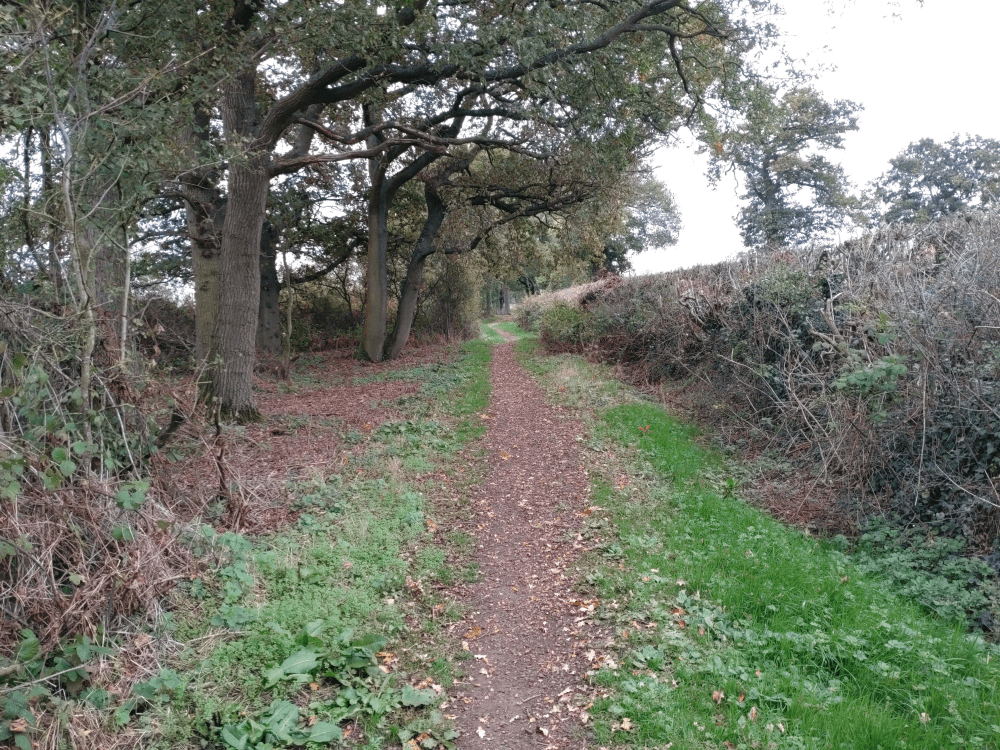
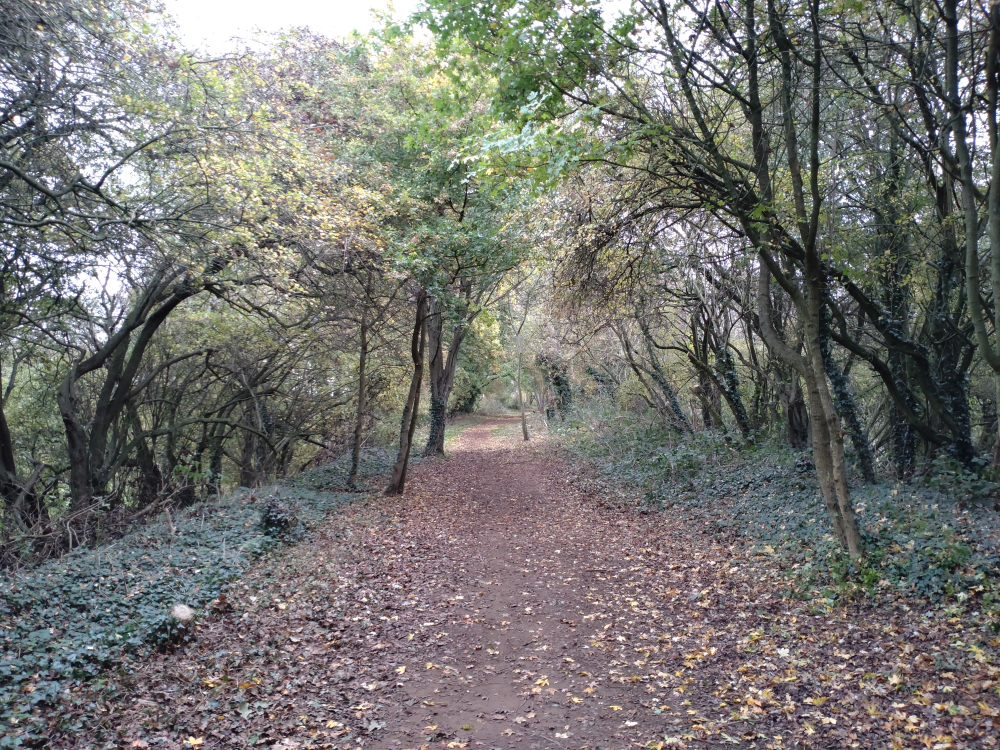
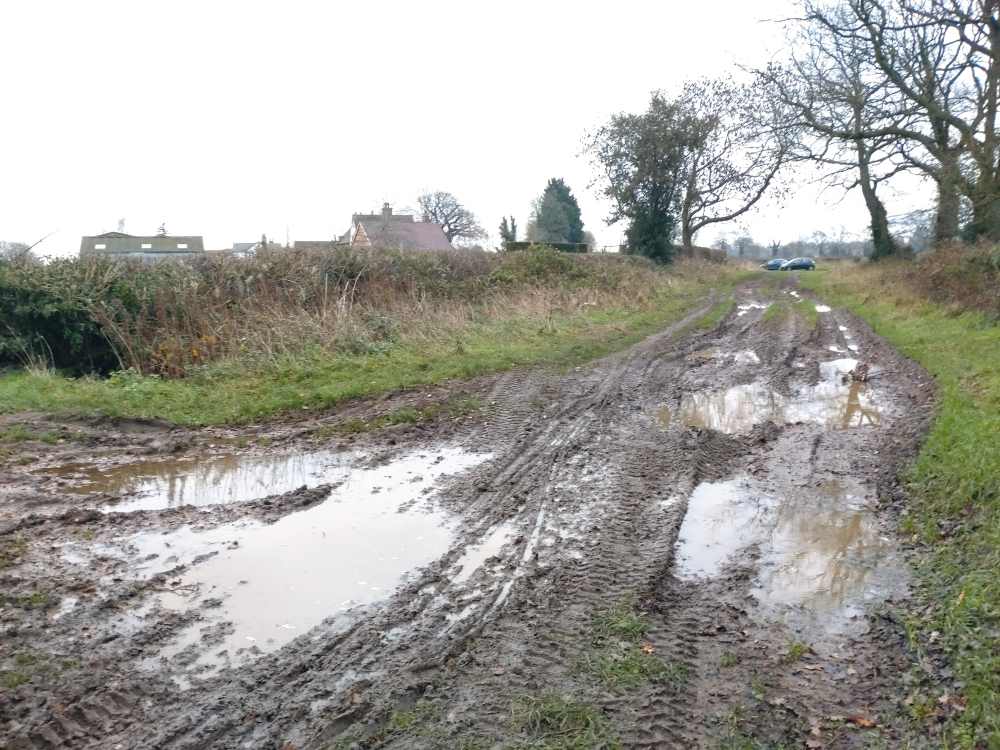
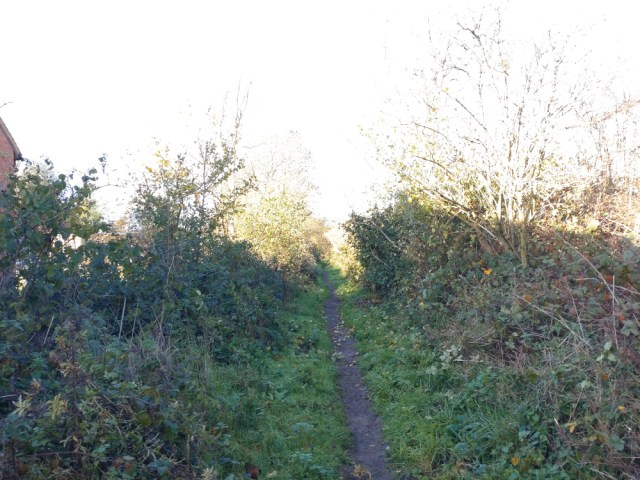
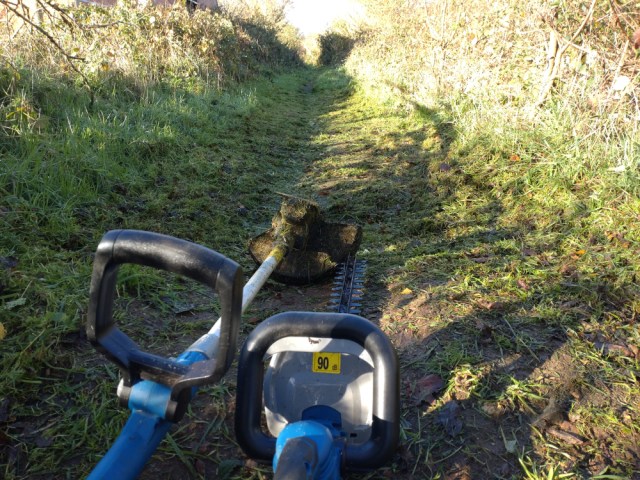
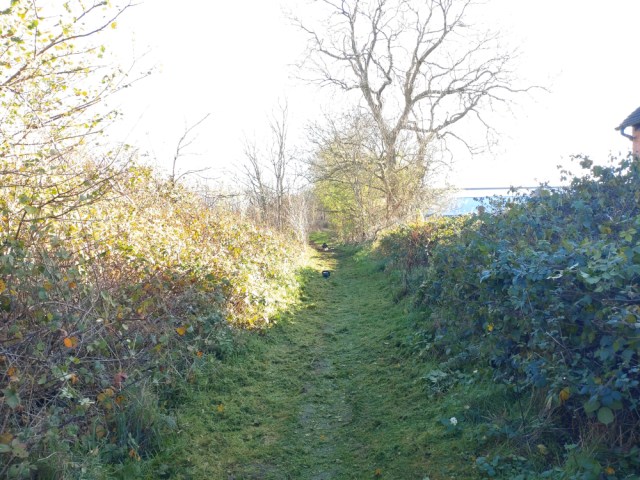
This first section of the bridleway is used by the farmer to access his fields, hence the ruts. We just want to keep a metre or so wide of short grass for walkers and cyclists. If we leave it, the grass becomes horribly coarse and hard to strim back next year.

It will also be full of insects. We would rather they stay in their lane, and we stay in ours.
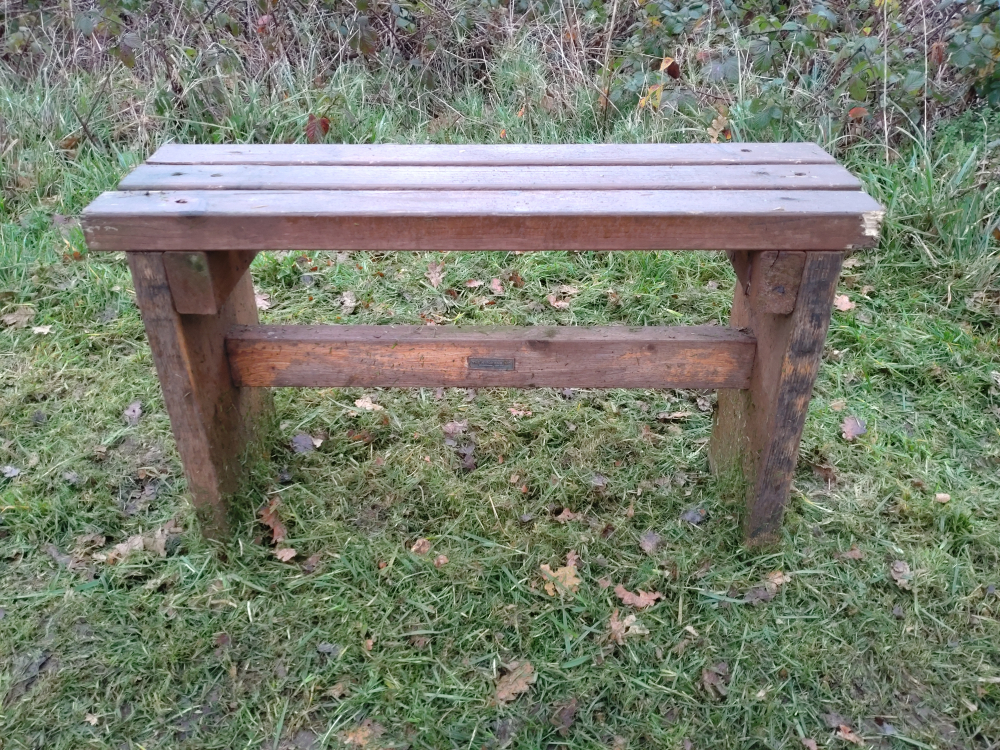
Strimming around the benches also keeps the insect life away from our ankles and shins.

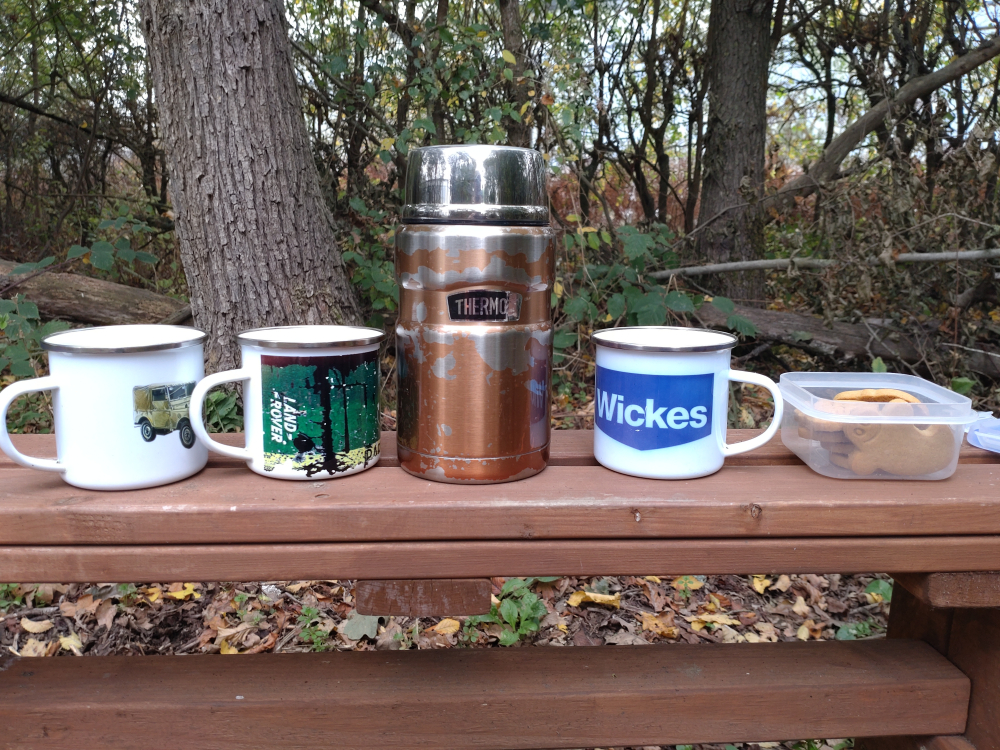
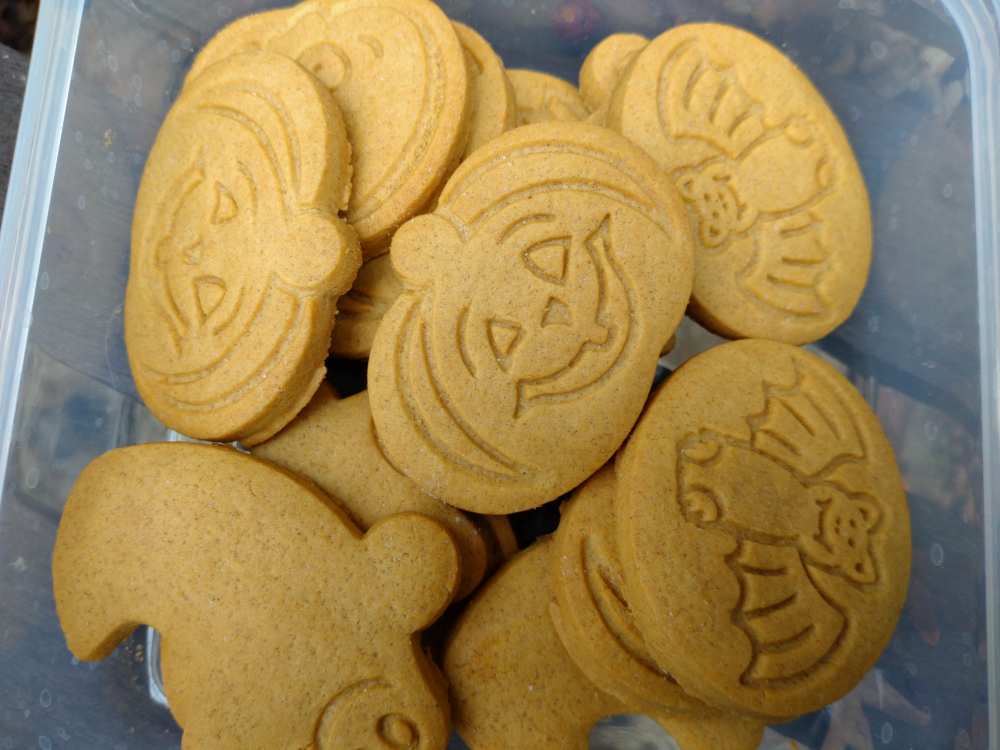
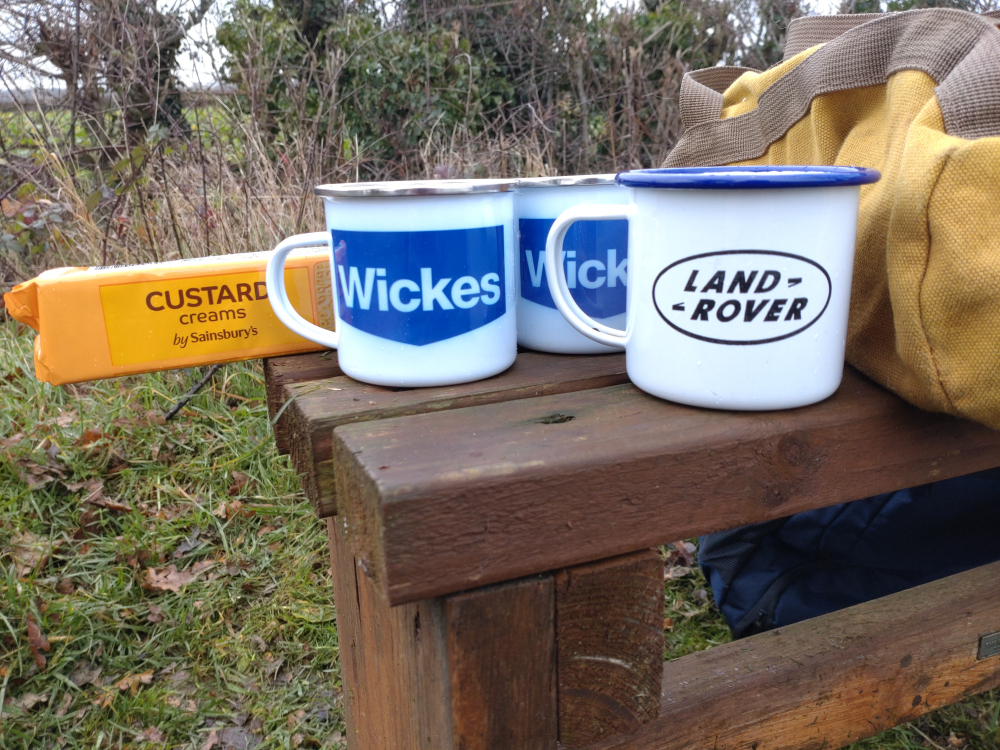
We broke for coffee and custard cream biscuits at half-time and wondered why the lake that we drained last year had reappeared.
Yet another job to go on the “to-do” list…

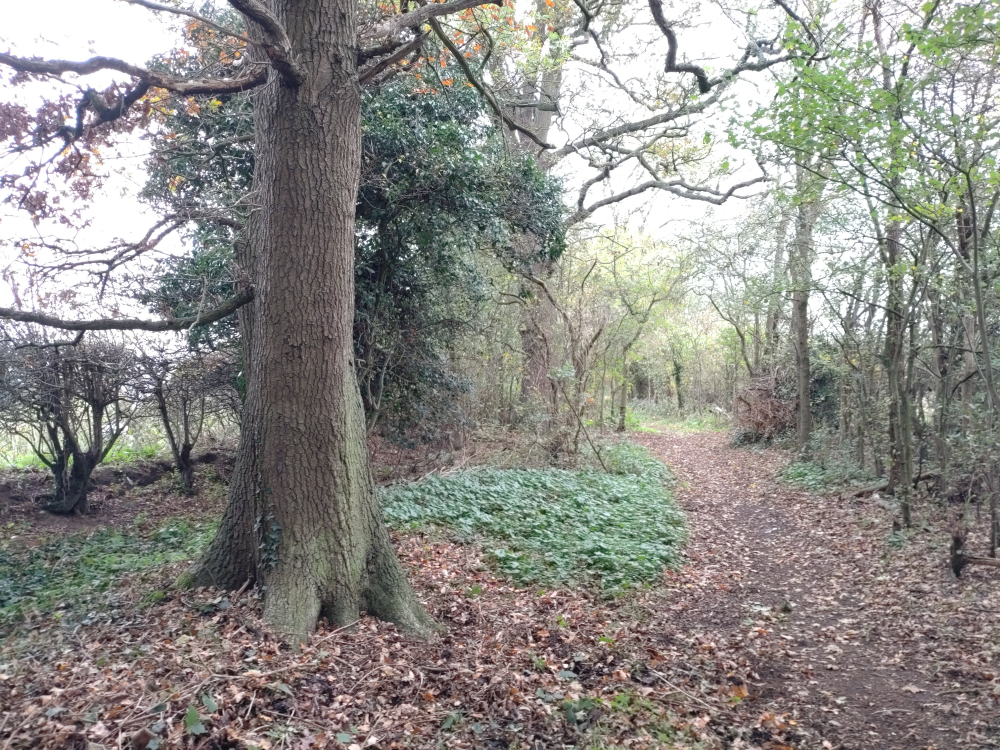
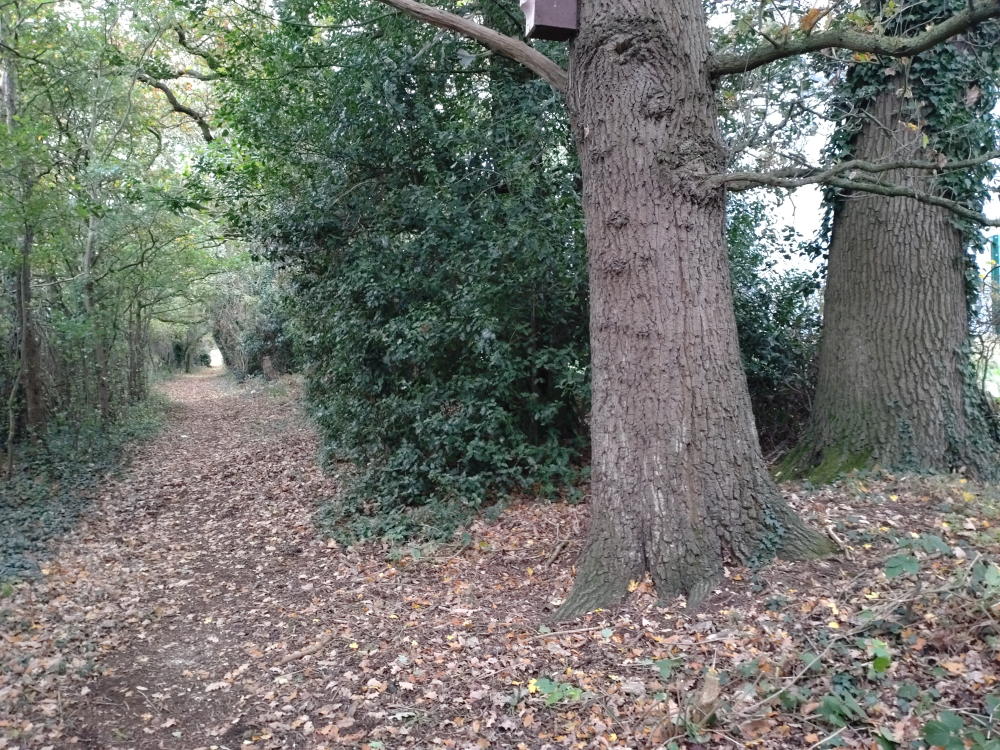
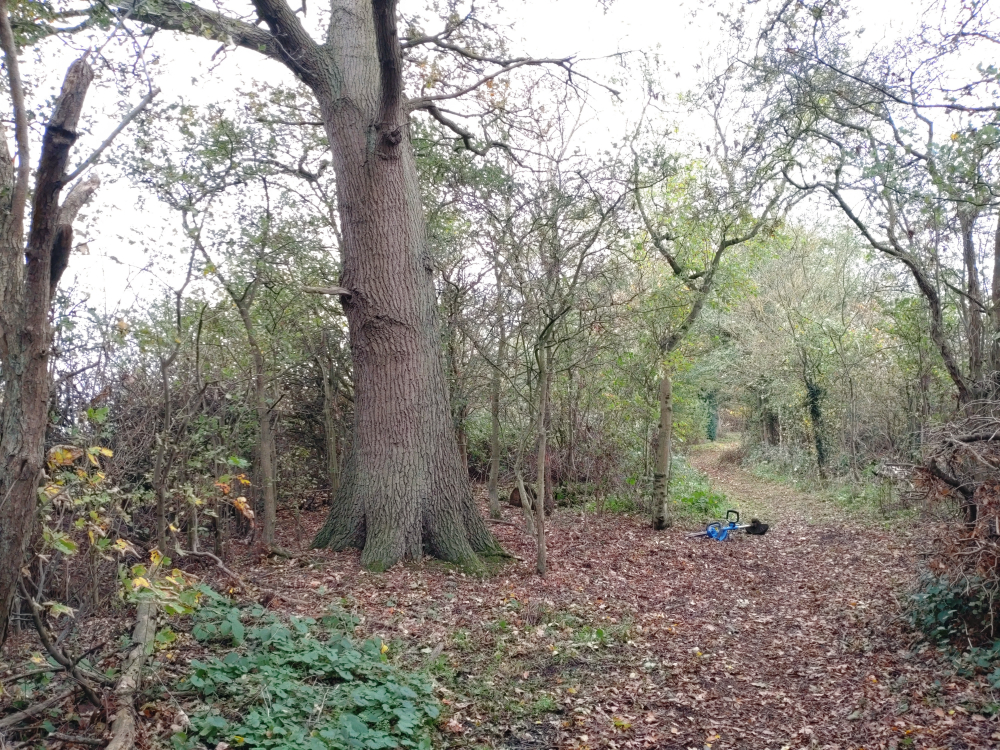
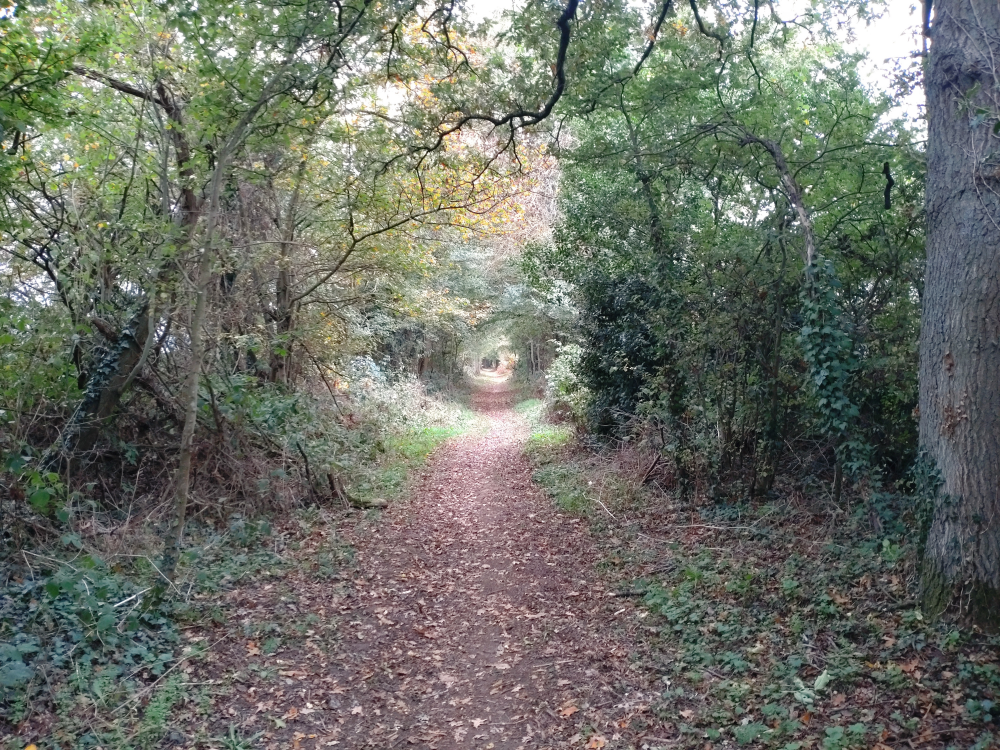
The rest of our time will be spent releasing the veteran trees from the scrub, so that they can stand tall and proud and generally be a feature of the trail.

Well, that’s about it for this week. Next time we will have moved through the Winter Solstice, so the nights will start to draw out again; however, we will be fully into the Winter season, so expect some chilly updates.

Here is wishing all of our followers, and the team, a decent Christmas break, and we will see you on New Year’s Eve.

Paul
Posted in Newsreel | Tagged , , , , , , , , , | Leave a comment

Shall I Let Them Have Christmas Off?

If you found me via the WordPress Reader, click on Cawston Greenway for the full blog experience.

The weather continues to yo-yo between heavy rain and super-bright sunshine, which is great, but the sun is so low in the sky that we have to imagine where it might be in the spring and summer, after being blinded by it every time we look up!!

Luckily for us, today was a sunny day, although very wet underfoot, and nine woodlanders came out of the woodwork for a busy morning.

Matt, David, Steve, Marcus, Reece, Mark, Andrew, Dave, and Paul braved the cold and chopped back the second 150 metre length of this section.
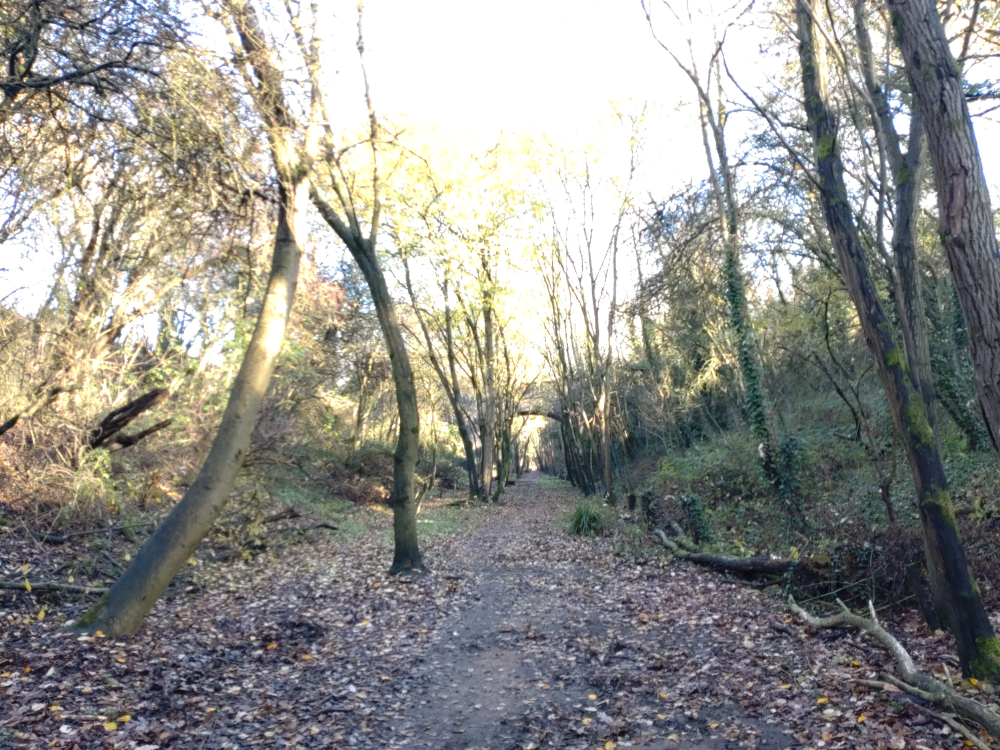
It seems a bit brutal, but these trees are growing horribly crooked and are stopping the path floor from getting a decent hit of sunshine.

In a paragraph or two, I will show you what happens when trees are given the room to grow naturally, but before then, we had to squeeze in a coffee and flapjack break.

The thorny subject of a workday on the Wednesday before Christmas came up, which is Christmas Eve.

Shall I let them have a day off???

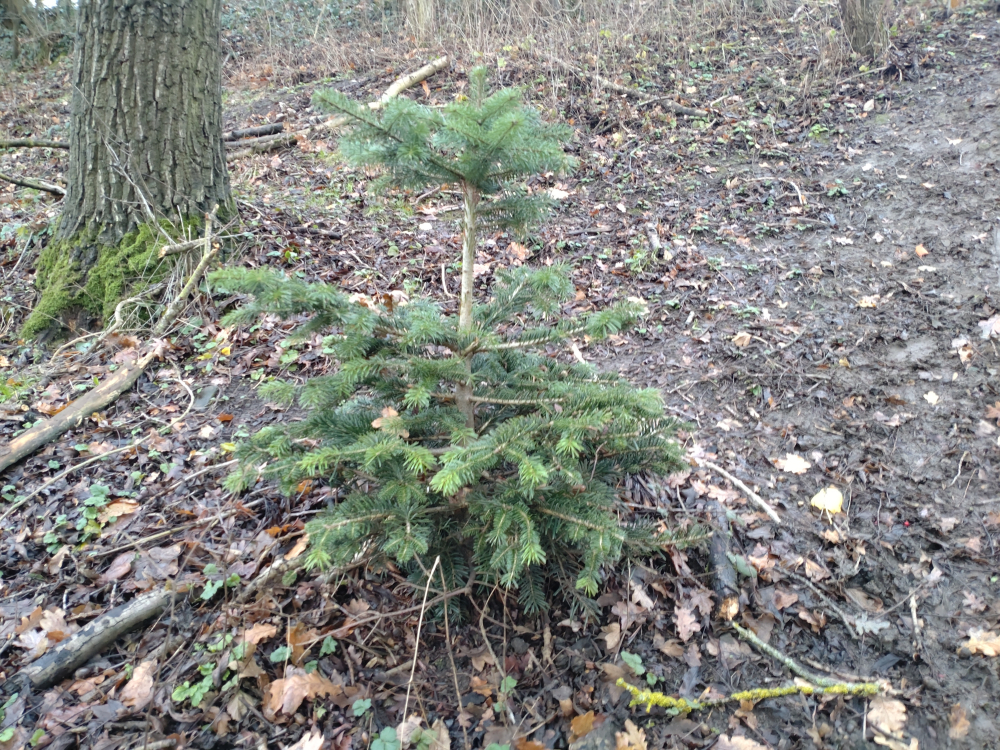
I had to have a conversation with Dougie, our Douglas Fir Christmas tree, to find the answer.

Sadly for me, I slipped over and slid 10 metres down the bank on my backside. Not happy and left me feeling even less charitable!!

Anyhow, we finished this part of the section, and it looked pretty good.

This is going to look awesome in the spring and summer.

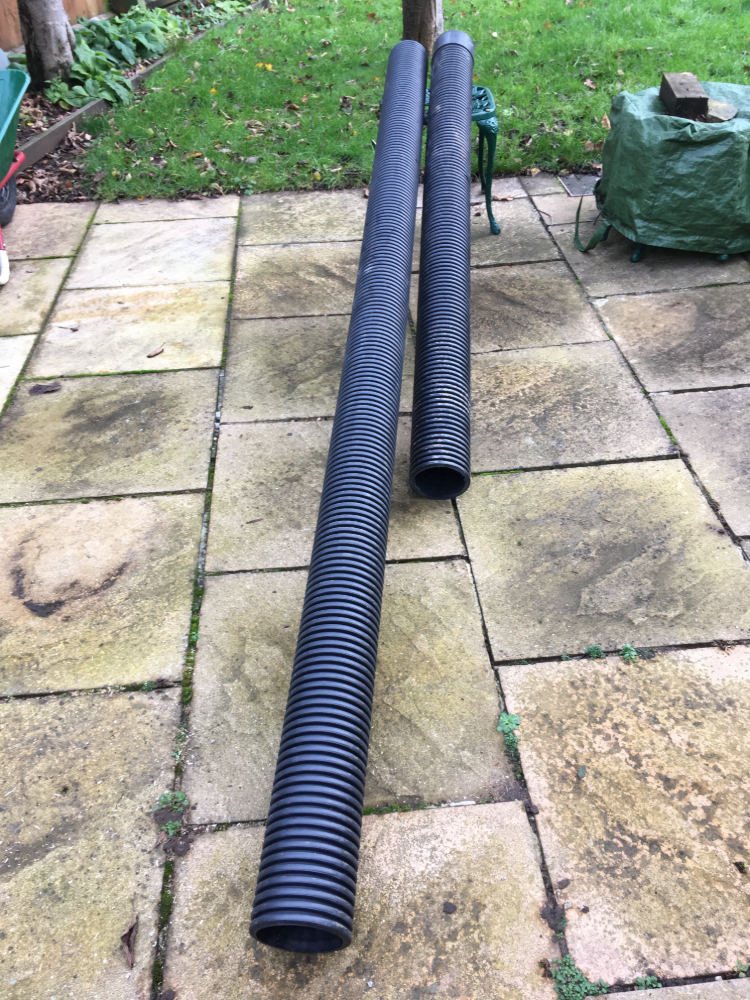
We have some drainage pipes that we can install under Berrybanks and get this area dry again.

A big thank-you to the kind person who salvaged them for us. A job for the summer, me thinks.

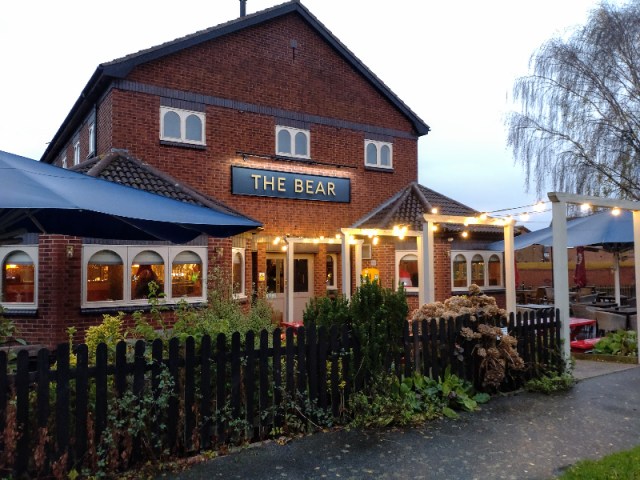
We enjoyed our Christmas Lunch at the Bear Pub after the workday. Thanks, Steve, for organising.

Heavenly food and just nice to chat and chill, away from the actual path for a bit.

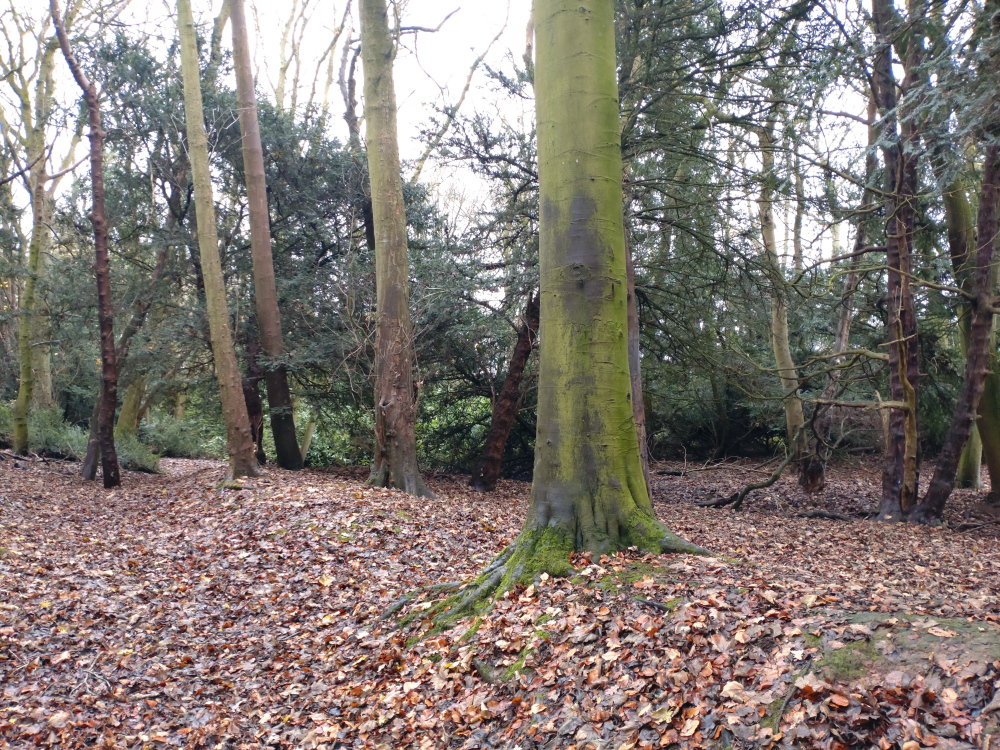
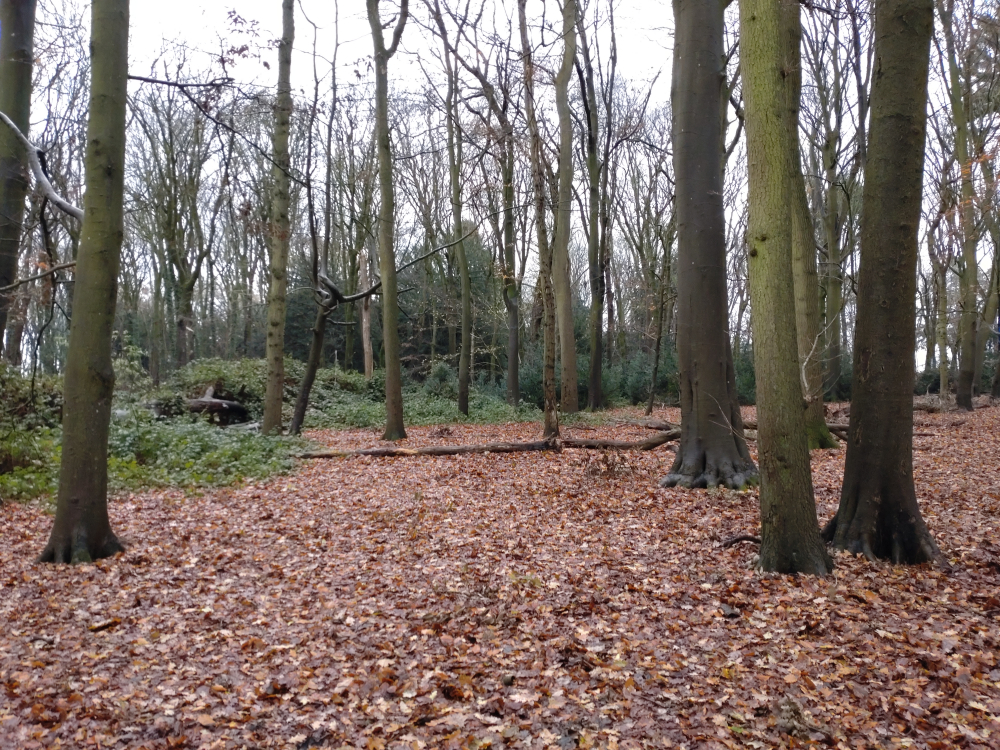
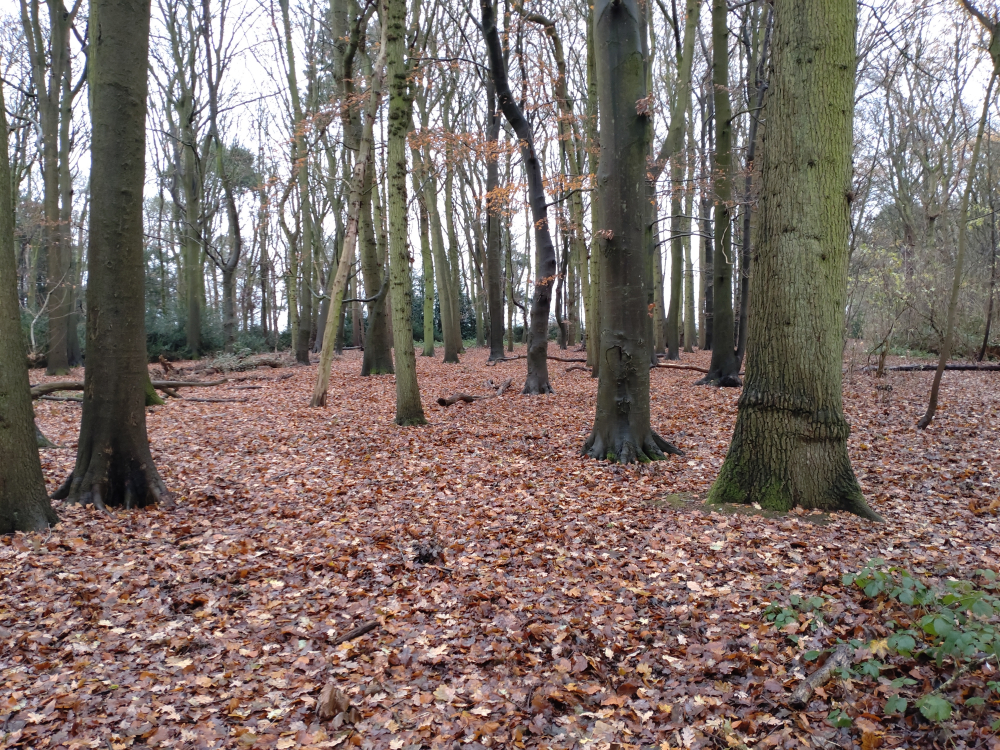
So, what happens if trees are allowed the space to grow?

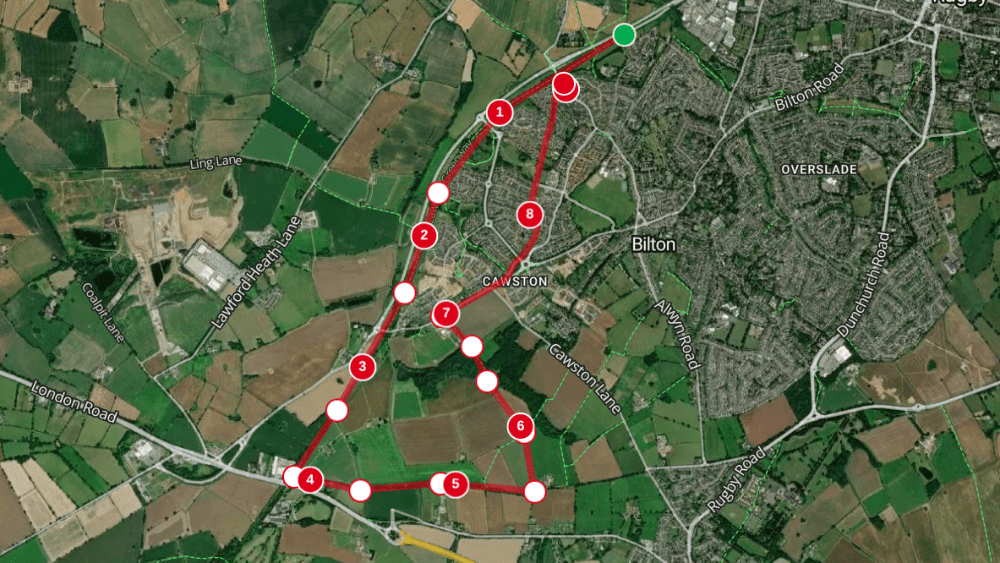
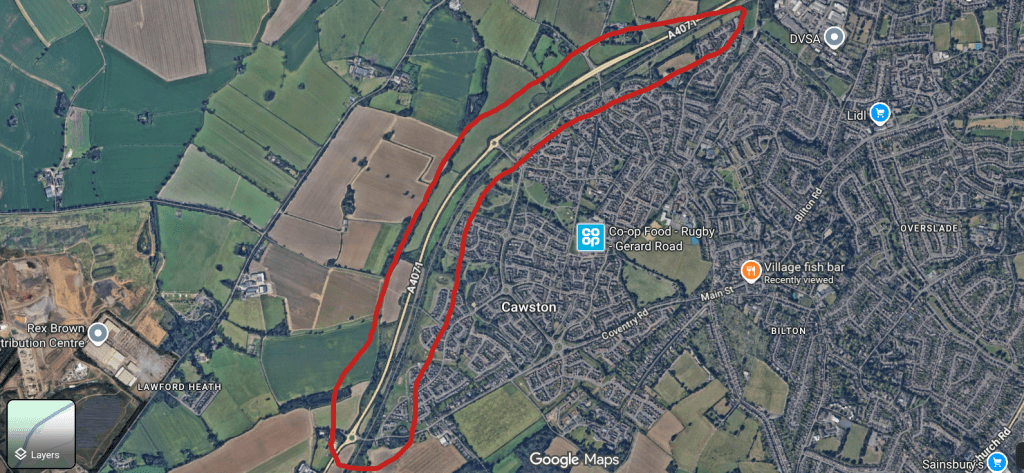
If you remember, the path is part of a circular walk incorporating Cawston Greenway, Dunchurch Bridleway, and Cawston Spinney.

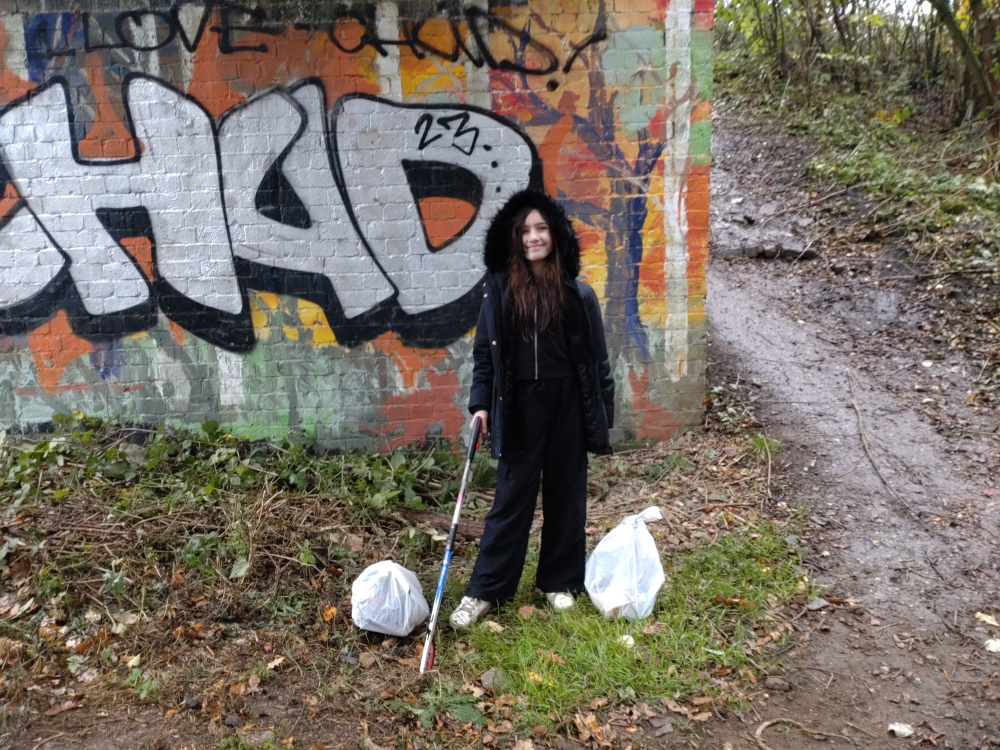
I spent some time with a group on Sunday doing a litter pick on the spinney part, and couldn’t help but notice the tree spacing.

Look at these beauties… Worth all the effort on the greenway path, don’t you think?

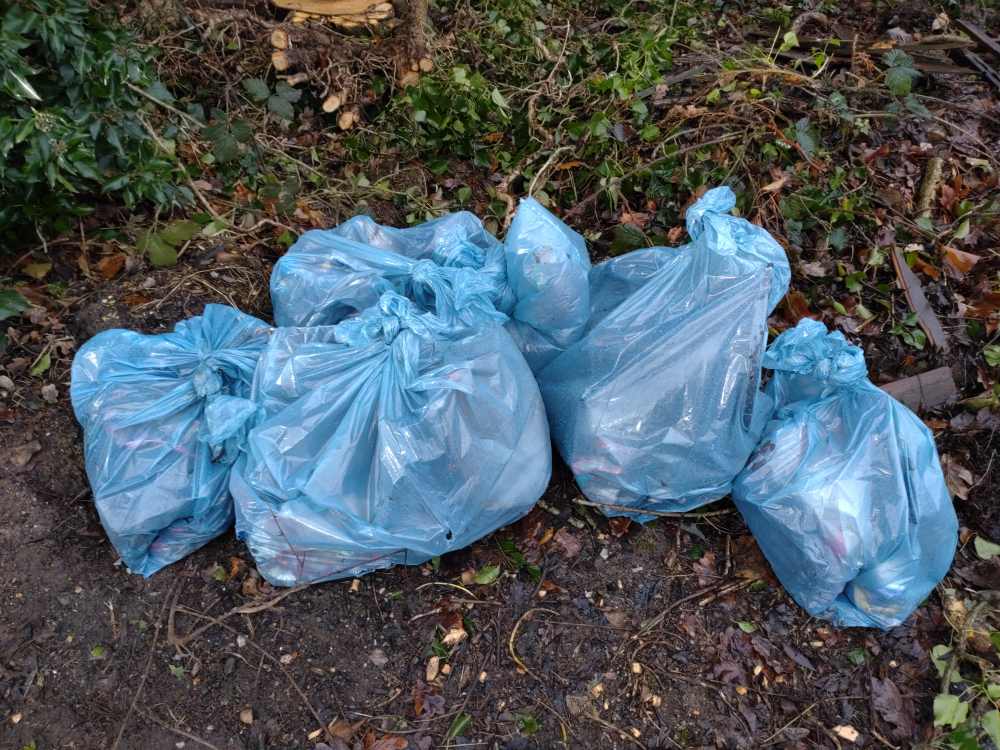
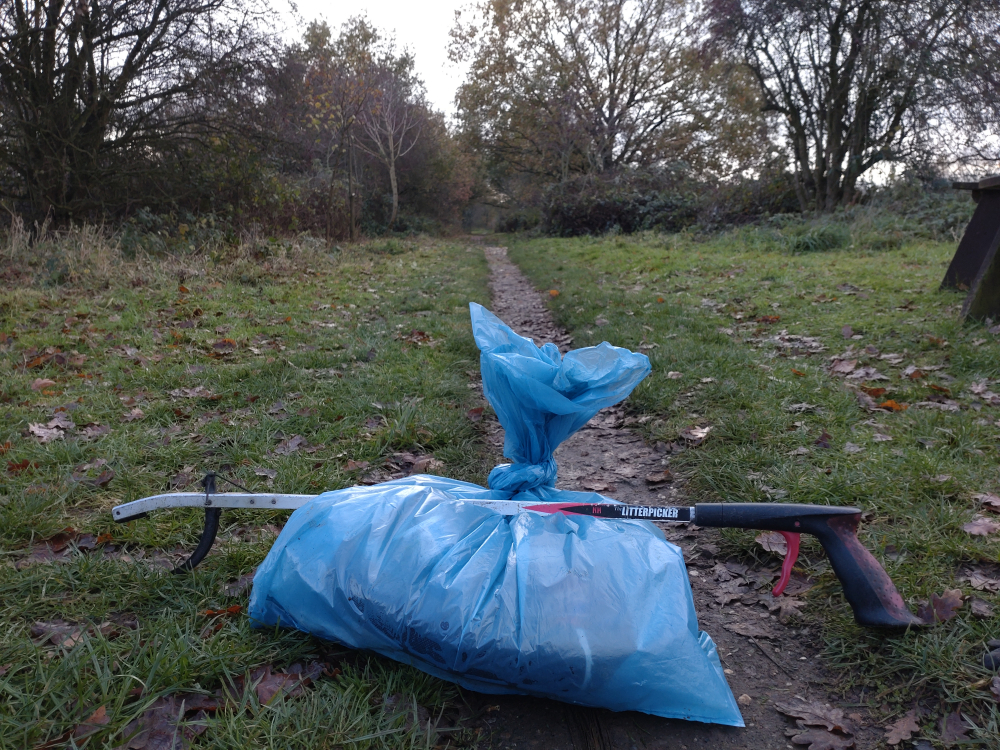
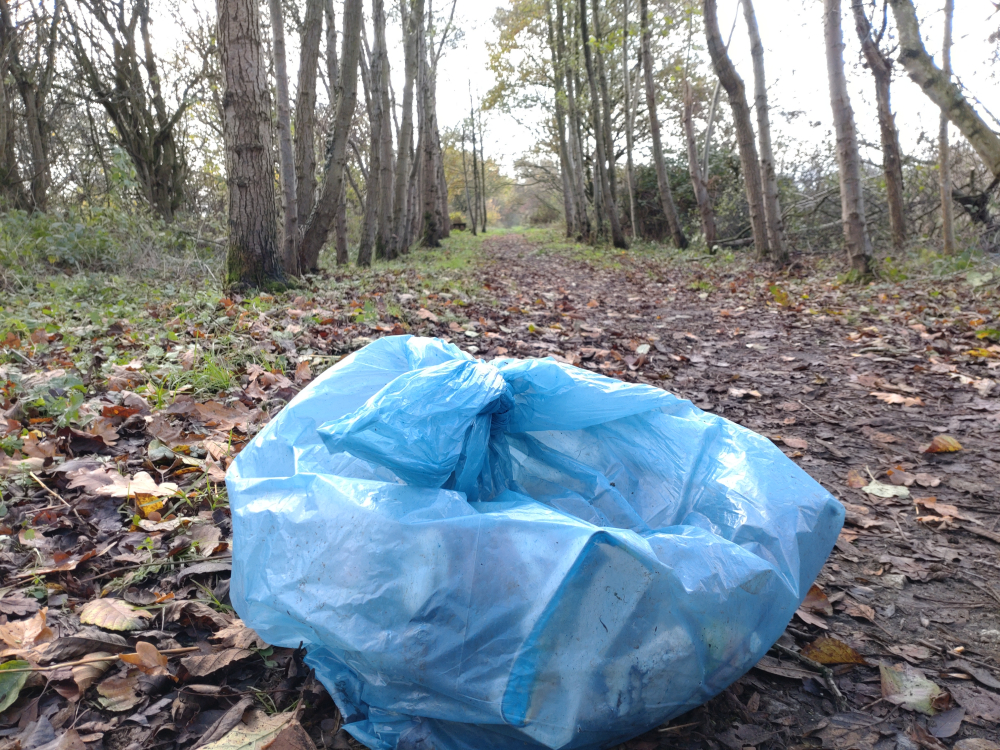
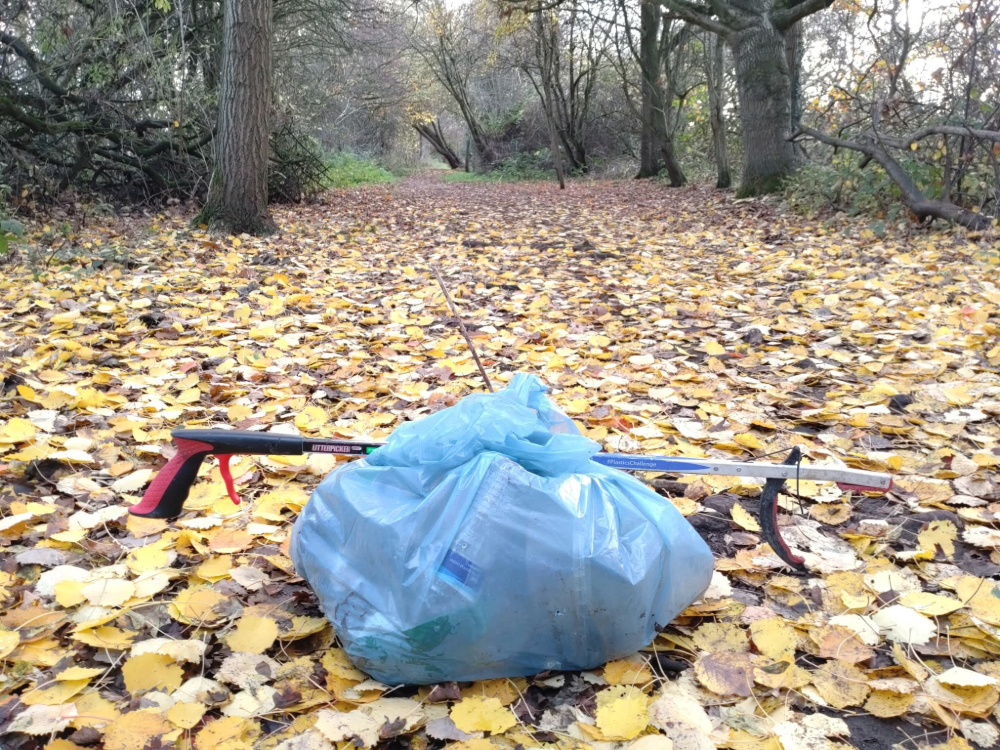
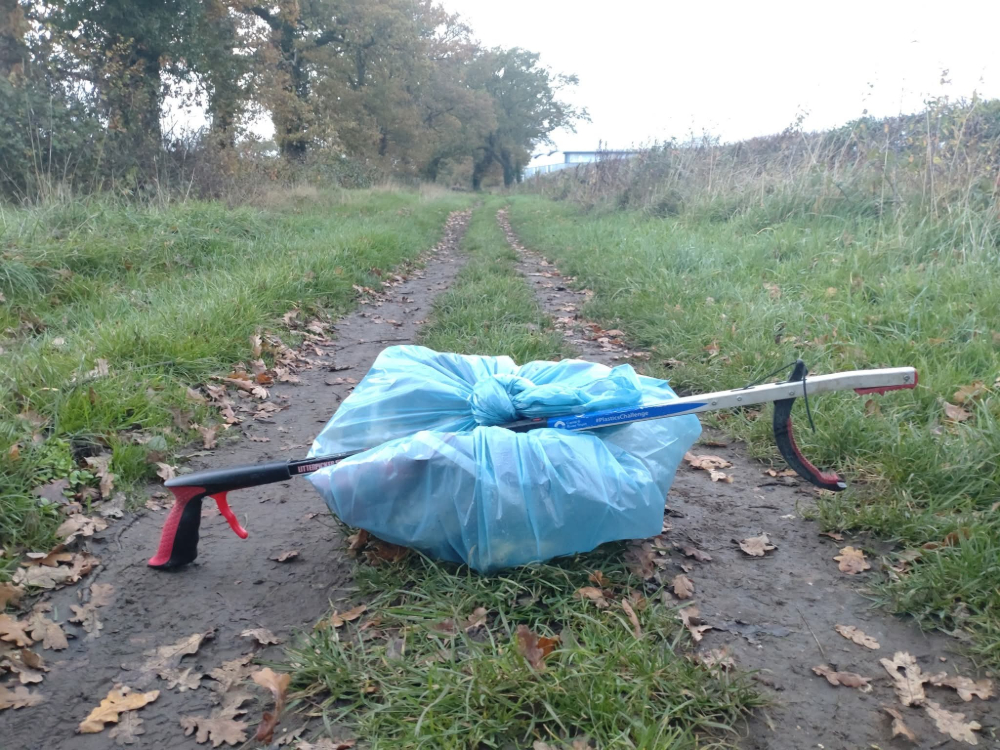
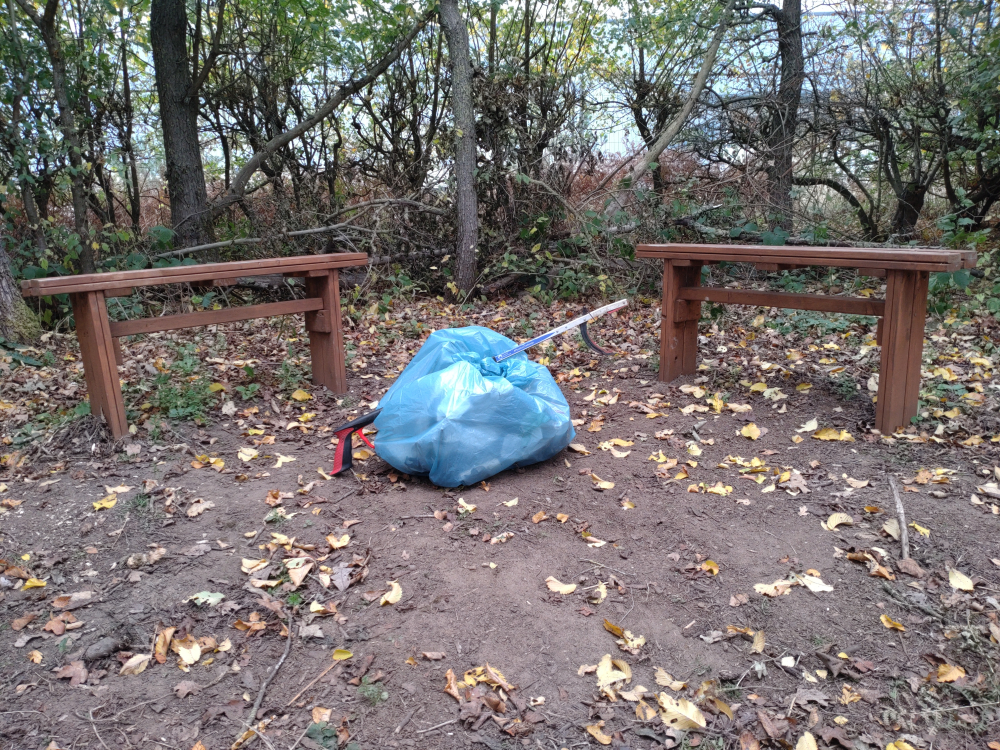
And a good haul of litter, too.

I also spent some time with another volunteer group further towards Leamington Spa, but on the same disused railway line. Lots of stuff newly learnt and ready to share, but that will have to be for another day.

Fungi Feature

Today is our last fungus, but oh boy is it a corker!

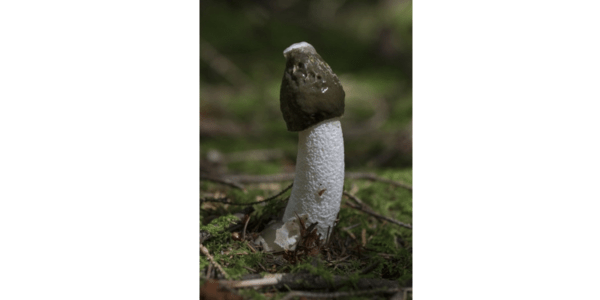
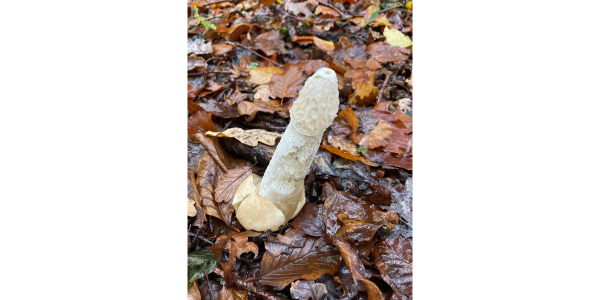
The stinkhorn is a phallus-shaped fungus that emerges from an egg-shaped base. It has an unmistakable and intense stench that has been likened to rotting meat. It can be found in woods and gardens, and is associated with rotting wood.

We found one in Cawston Spinney, and it don’t half pong…

Scientific name: Phallus impudicus

How to identify: It has a white stem-like structure that erupts from an ‘egg’, topped with a bell-shaped, olive-brown and slimy head. It has an offensive smell.

Where to spot: Woodland and gardens

When to spot: June to October

Did you know? The spores of the stinkhorn are contained within the slime that covers its cap. Flies are attracted to the offensive-smelling slime, in turn, scattering the spores.

I think that’s about it for this week. Thanks for reading, supporting, and otherwise just being on our side. Next one is in Dunchurch this Friday, which we still have space for anyone who would like to join in.

Until next time!

Paul
Posted in Newsreel | 6 Comments

New Month – New Section

Seven woodland wonderheroes made it out today. Ian, Reece, Steve, Andrew, Matt, Martin, and Paul. The mission was to start at The Bear Bridge and push southwards by about 150 metres.

What we are trying to do is thin out the trees so that we have a good mix of mature upright specimens with nothing competing around them. We also want to get rid of the overhang so that sunlight can hit the ground and encourage wildflowers to grow.

This is what we started with.

It’s all way too dense, and this is why the trees are thin and growing at funny angles as they all fight for the light.

We need the trees to be about 3 metres apart so that they can grow slowly and upright, and put on a decent load of girth.

And don’t get me started on the stumps. They should be in a hedge.

We set about trying to chop and thin with our Zubat saws.

It really feels no different until you go back a day or so later, and you then notice how much more airy it seems.

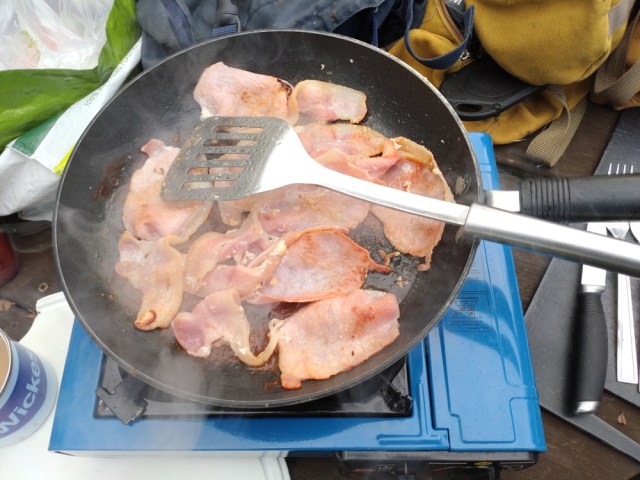
At half-time, we broke for hot coffee and bacon batches.

It was just what we needed, after having to warm up the butane gas canister for ten minutes before it would work. I had the thing under my armpit, between my legs and any other warm place until it finally burst into life to cook the bacon.

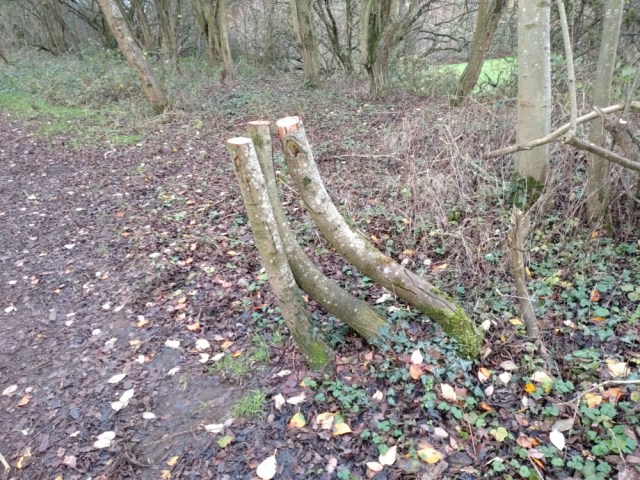
The high stumps had to go. I know that they are left like that so as not to be a trip hazard, but aesthetically, they just don’t work. Especially when they start sprouting new shoots.

Next week, we can drill a load of holes into the fresh cuts, and hopefully, rainwater and insects burrowing inwards will help the things to rot down.

As we worked away today, I was wondering if this was the first week of Winter? Or is it the Winter Solstice (21st December) that signifies the start of the Winter season?

Personally, I prefer going for the later date. Saying that Spring starts on the 1st March is obviously the construct of man, not nature, and nothing really starts growing until April, anyway.

One last thing to mention. We are now pretty much at capacity as a group. The last “slot” has been taken, although that person has not yet started with us quite yet. The reason that we kinda have to have a limit is that there will not be enough tools to go around, which means people will be fighting over what we have, or standing around with nothing to do.

Dunchurch Bridleway

It was just Dave and me this week, and we got to the end. Bang on target.

We’ve had to be super-sensitive on this 80-metre section. There’s a house adjacent to the path, although quite away from it, and we don’t want to upset anyone by spoiling the view at the bottom of their garden. We will just maintain the path width and not worry too much about the height of the scrub to the sides.

We broke for coffee and biscuits.

My most favourite biscuits in the world, so a real treat for me!

Next time we are back at the start, trying to release more of the veteran trees as we push through for a second time.

Remember that these two paths are connected and become part of a lovely circular walk that takes in Cawston Spinney.

Fungi Feature

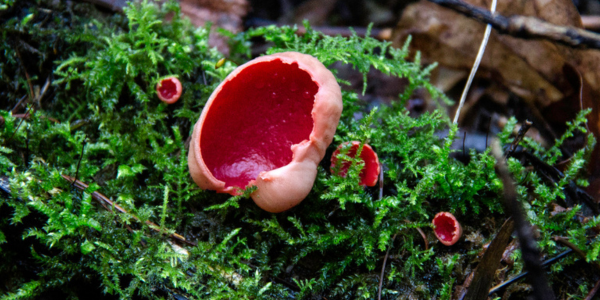
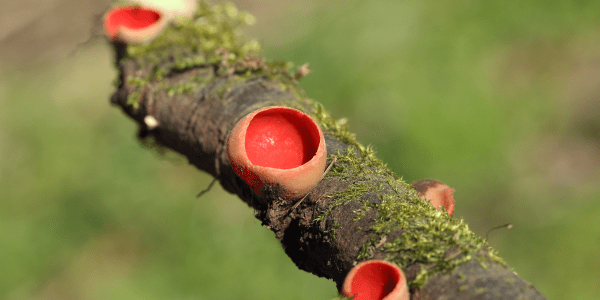
Today we are looking at scarlet elfcup. As its name suggests it is a bright red, cup-shaped fungus. It can be seen in late winter and early spring in damp shady areas on fallen twigs or branches – often hazel, elm or willow.

It isn’t a very common fungus – so an exciting one if you spot it (hint – just south of The Bear Bridge).

Scientific name: Sarcoscypha austriaca

How to identify: Rounded, regular-shaped fruiting bodies that look like cups; they have a bright scarlet and smooth inner surface. The outer surface is pale pink and covered in tiny hairs. The cup has a very short stem.

Where to spot: Woodland

When to spot: January to April

Did you know? The ruby elfcup is very similar in appearance to the scarlet elfcup. There’s no physical difference. You can only tell them apart by microscopy (tiny fine hairs are the difference).

Well, that’s about it for this week. Thanks for reading if you got this far. Next week is pretty much the same as we try to tame this really gnarly and unloved 300 metres of the path; however, we do have our Christmas lunch at The Bear Pub afterwards, so we are all looking forward to that.

Until next time!

Paul
Posted in Newsreel | Tagged , , , , , , | 3 Comments

The End of Another Month…

And the end of another section.

(If you found me via the WordPress Reader, click on cawstongreenway.co.uk for the full blog experience.)

It was bitey cold this morning with a good frost, and the sun sitting low in the sky like a search light at the Stalag Luft III camp from WW2.

But the cold didn’t deter seven of us superheroes. Mark, Andrew, Martin, Ian, Dave, Reece, and Paul, and we had but one job…

We needed to get to the Potford Dam bridge, which is the end of this section. The plan, which is in the September Jobs tab above, shows that we are right where we need to be, and we still have the spare month of February for any over-run, or a final sweep through, before the bird nesting season starts in March 2026.

This last 150 metres or so has been a bit neglected in previous years, really due to a lack of manpower. However, last year we made some decent scallops in the scrub and had varying success with wildflowers.

Today, we pushed it out a bit further and got rid of the overhanging tree branches.

We also tried to trim the top of the scrubby bramble off so that we have a clear view of Lawford Heath to the sides. The further people can see ahead of, and around themselves, the more relaxing the trail becomes.

This thing when fully extended is an absolute beast!! It helps you to discover muscles that you never knew existed…

At half-time, we broke for a much-needed slurp of hot coffee and a festive mince pie.

Possibly breaking out a little too early with the Christmas cheer, but they were just on their sell-by date, so I felt that my hand was forced somewhat.

Well, that’s my excuse, and I’m sticking to it!

The end result…

Lastly, we litter-picked the whole southern section.

Not bad for a mile of path, and a lot of the litter is stuff we are uncovering as we push the scrub back.

Next week we start on the worst bit. The Bear Bridge to the Underpass. Lots of overhang and deep in cutting, I’m sure we will smash it with the current momentum that we have.

Fungi Feature

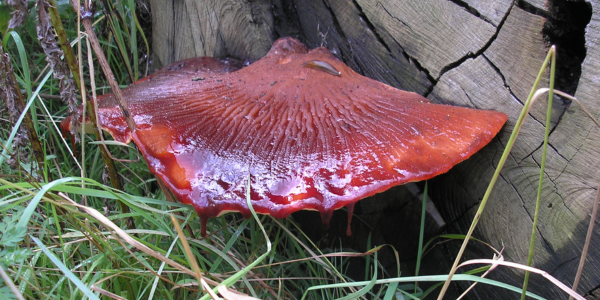
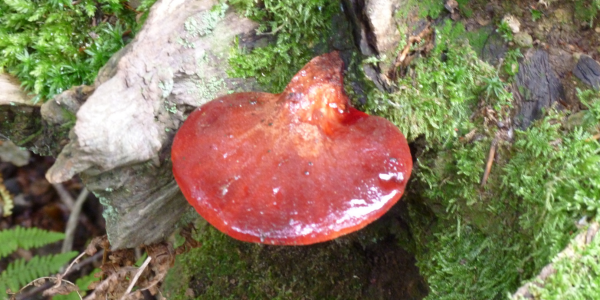
As its name suggests, the beefsteak fungus looks just like raw meat! When it is young, it looks like a tongue poking out of a tree stump, but as it matures it starts to resemble a raw steak. It grows on oak and sweet chestnut.

Scientific name: Fistulina hepatica

How to identify: A red semi-circular bracket fungus with an inflated edge that flattens as it matures. To the touch it is moist or sticky.

Where to spot: Woodland

When to spot: Late summer to autumn

Did you know? This fungus can cause a rot inside the tree it grows on, turning the wood dark brown.

Next one is this Friday on the Dunchurch Bridleway trail, and then it’s chocks away as we sledge fully into the Christmas season.

Until next time!

Paul
Posted in Newsreel | Tagged , , , , , , , , , , | 11 Comments
Coldest Day So Far

If you found me via the WordPress Reader, click on cawstongreenway.co.uk for the full blog experience.

We knew that it was going to be colder this week, but 2 degrees C (35.6 F) and the needle not budging all morning kept us busy, even if it was just to stay warm.

Amazingly, nine of us turned out. Marcus, Steve, Matt, Reece, Mark, Ian, Dave, Martin, and Paul, with the continued aim of removing some of the hawthorn tree overhang and pushing the scrub back.

Despite the gloomy weather forecast, we actually had periods of lovely crisp sunshine.

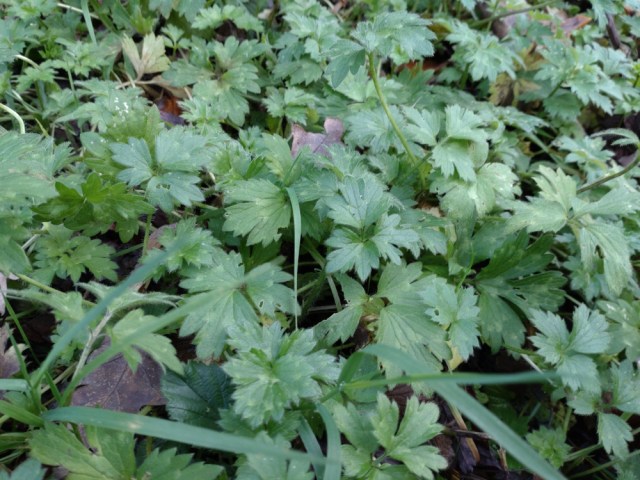
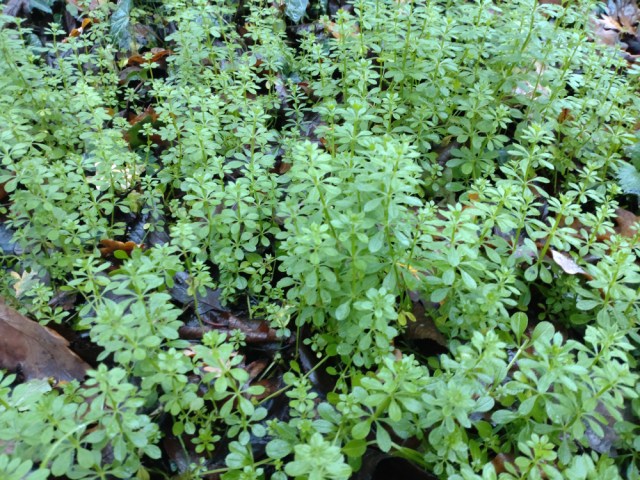
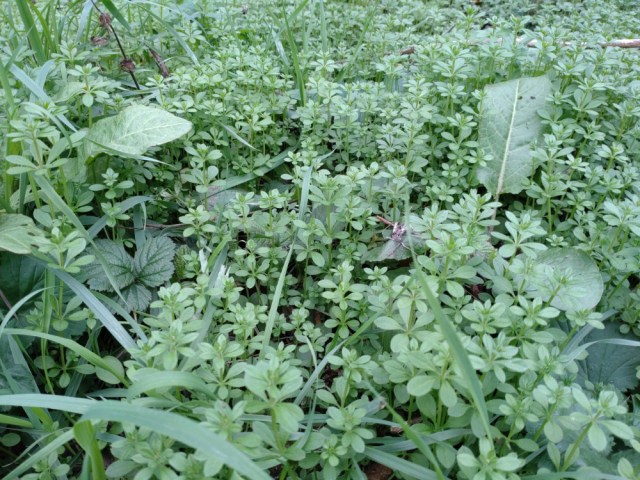
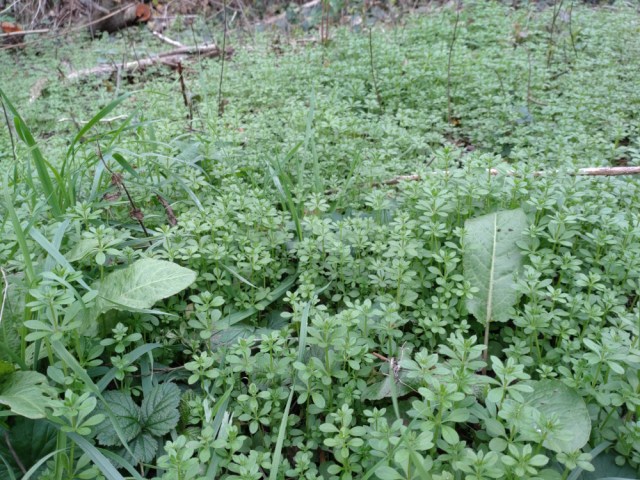
The more we push back the scrub, the more we are seeing wildflowers start to pop up in the newly cleared areas.

According to the ID app on my phone, the first photo is Creeping Buttercup and, sorry to go all lavatorial on you, the second photo is Sticky Willy.

There is loads and loads of it. I’m not sure if it will all get wiped out when we start to get frosts. I guess it wouldn’t have come up if it relied on spring weather? Whatever happens, it’s nice to see the rewards of pushing the scrub back. We just have to remember not to strim it all off as we try to keep the path width.

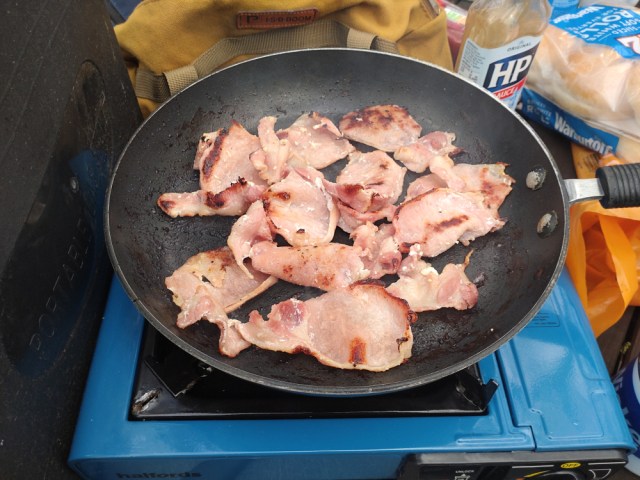
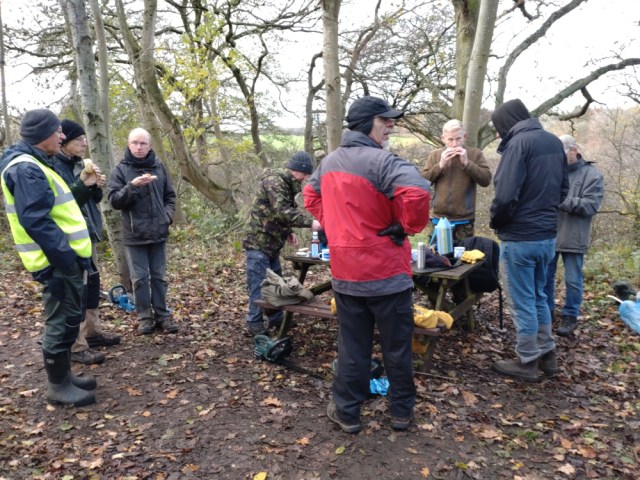
At half-time, I decided that we could do with some hot food to go with our hot coffee.

The bacon seemed to take ages to cook, and I remembered that butane gas is not so good in cold weather. Luckily, I had a spare canister, so I put it under my armpit for ten minutes to warm it up, and then switched them over. Before long, we were back on track and stuffing our faces…

After the break, we made brash piles and Ian did a litter pick.

The more we push the scrub back, the more we are finding old bits of litter.

We also chopped down a load of stumps that I felt were a bit high.

There were loads of them, and there is an argument that they are less of a trip hazard if left high, but when they start to re-shoot, they look really odd and very unnatural.

Matt made a secret doorway to a hidden world.

Again, it’s just trying to make the trail as interesting and enjoyable for everyone, including children.

And the end result…

I think we did about 200 metres or so today, and probably just 100 metres left until we get to the end next week, so we are very much on track.

Next month, we are working on the section from The Bear Bridge to the Underpass. Quite handy because we will be popping into The Bear for our Christmas lunch at some point in December.

Dunchurch Bridleway

Just me and Ian this week, and everything was very wet due to the torrential rain at the back end of the week.

We pushed on, but it was hard going.

Looking forward to the task ahead, my weapons of choice, and looking back. It needs to be a lot wider, but there is always a trade-off between distance and width.

We broke for coffee and some rather nice chocolate-covered ginger biscuits.

And then litter picked and called it a day.

There are just 250 metres to get to the end, and then we rotate back to the start, so we are bang on target. With the second pass, we will be pushing the width out a bit more.

Fungi Feature

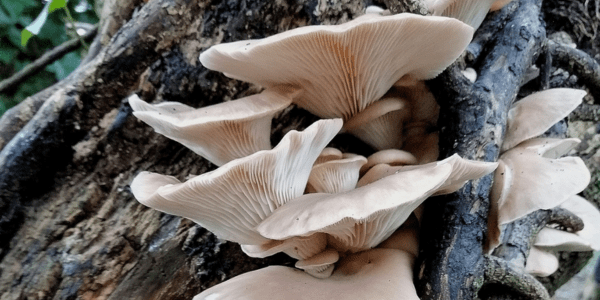
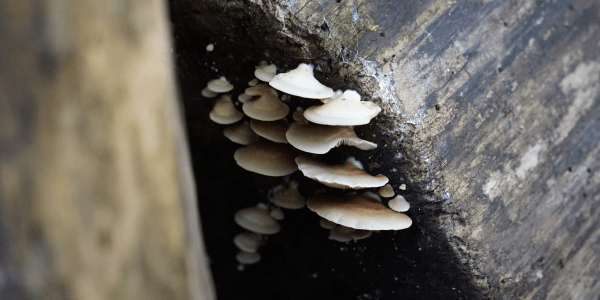
Today we are looking at the beautiful oyster mushroom. These shell-shaped fungi grow horizontally in tiers or fabulous clusters on dead or dying wood of deciduous trees, especially beech. Unlike many fungi, these mushrooms are not seasonal and can be found all year round, especially after a cold snap which can trigger the fungus into fruiting.

Oyster mushrooms are a saprobe, which means they live off decaying organic matter, and are specialists in breaking down some of nature’s toughest materials – cellulose and lignin. In the process, they release vital nutrients back into the ecosystem.

Scientific name: Pleurotus ostreatus

How to identify: This fungus starts out a beautiful grey-blue colour with a cap edge that rolls slightly inward, gradually opening out turning grey brown and wavy with age. Look underneath, and you’ll find they have crowded whitish gills that are decurrent – meaning they run right from the cap edge and down the stem. In this case, the stem is rudimentary, a short (often fluffy) number that’s only a few centimetres long.

A handful of other oyster mushrooms exist, but are often much paler in colour. If they’re much smaller, they’re likely to be the oysterling family. A similar, all white version known as angel’s wings is a great find as it’s quite rare, but be warned, it’s poisonous!

Where to spot: Woodlands, towns, parks and gardens

When to spot: All year round

Did you know? These mushrooms are carnivores! In order to obtain the nitrogen they need, oyster mushrooms secrete a powerful toxin that stuns passing microscopic nematode worms, whereupon their sprawling fibres will seek out and enter their mouths and suck out their guts!

And on that delightful note, that’s about it for this week.

Until next time!

Paul
Posted in Newsreel | Tagged , , , , , , , , , | 15 Comments

We Missed A Bit

What a day today. It has literally not stopped raining all week, proper raining cats-and-dogs weather.

It was so bad first thing, that I was forced to make the executive decision to meet under the Cawston Bridleway bridge, which would provide us with a bit of cover. However, the rain stopped at about 9:55am and started again at about 12:15pm.

How unbelievably amazing is that!

What is even more amazing is that six of us trail-warriors turned out for the workday. Reece, Martin, Andrew, Mark, Ian, and Paul.

We had skipped a bit northbound from this point a couple of weeks ago, and pushed southwards, again because of the rain, so I was quite happy to go back and just kinda get it done.

I don’t know if it’s just me, but that missed bit just plays on my mind, kind of like we’re a bit out of sequence.

You can see how wet it is from these photos.

Not a good day to realise that my shoes are no longer waterproof!

We stacked up the brash and made more habitat piles.

Loads of little nooks and crannies for insects and things to crawl about in. But the main objective is to push the scrub back to allow wildflowers to grow.

At half-time, we had a welcome coffee and ginger crunch biscuits.

Apparently, this is the last week of it being reasonably warm. 13 degrees C, or 55 degrees F. Reece was saying that next week temperatures will drop to low single digits…

The end result looks like this.

That transition from path to scrub is the absolute “hot zone” for wildlife next spring and summer. What we need to do is not strim right up to the scrub edge, which is quite difficult because it seems like the natural thing to do.

Next week, we have to move southwards, so the canopy will have to come out if the rain persists.

Lastly, I litterpicked the whole of this trail and the Dunchurch trail over the weekend.

Well done to everyone who has made it over these last few weeks. I really expect to turn up and be on my own when it is so wet. I’m absolutely bowled over by you guys.

Fungi Feature

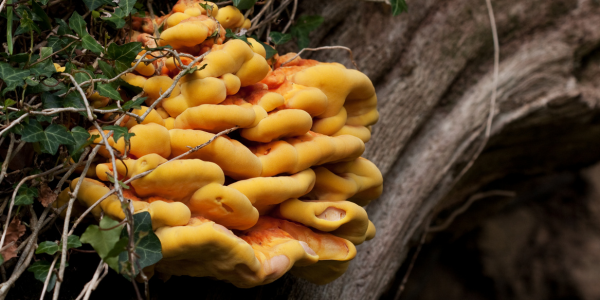
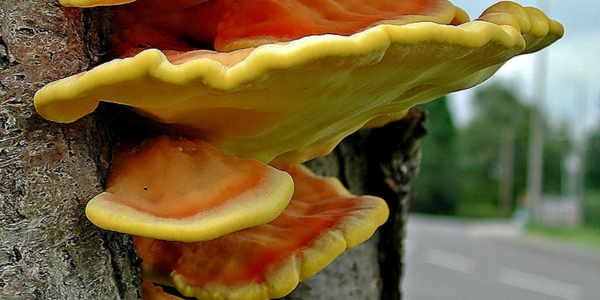
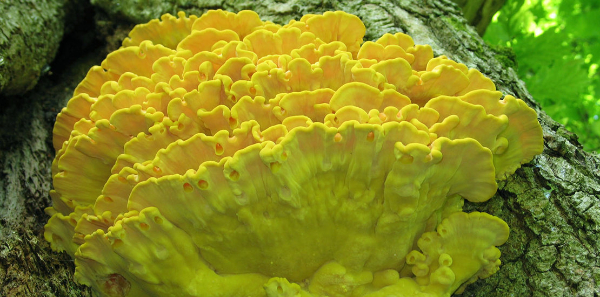
Chicken of the woods is an easy-to-spot bracket fungus due to its distinctive sulphur-yellow colour. It grows high up on the trunks of standing deciduous trees, such as oak but can also be found on beech, chestnut, cherry and even yew. It can often be found growing in tiered clusters in woods, parks and gardens.

Scientific name: Laetiporus sulphureus

How to identify: It is a bright sulphur-yellow fungus comprising several thick, overlapping brackets. The individual brackets are soft and spongy when young and exude a yellow liquid if squeezed. They are fan-shaped with an undulating margin. The upper surface is velvety and yellow-orange with a zoned margin, while the underside is yellow and covered with pores.

Where to spot: Woodlands, towns, parks and gardens

When to spot: June to November

Did you know? It gets its name from the texture of its flesh, which is said to resemble cooked chicken!

That’s about it for this week. Great progress, and everything that we do now is for next spring and summer, so we have to have a huge amount of vision to make it worthwhile turning out in the weather like we are having.

Thanks for reading if you got this far.

Until next time!

Paul
Posted in Newsreel | Tagged , , , , , , , , , , | 6 Comments

Back To Dodging The Rain

Seven of us made it this week. Matt, Marcus, Martin, Mark, Andrew, Dave, and Paul, and it was more about going sideways, as well as covering some distance.

The bit that we are working on is our very first wildflower glade, which we made many, many years ago.

Everything needs to go back to ground level so wildflowers won’t be smothered by rampant bramble scrub next spring.

It was remarkably warm at about 16 degrees, and whilst it felt like it was about to rain, the sun shone between the gathering dark clouds. Apparently, it’s going to be even warmer tomorrow, according to my neighbour, Craig. We’ll all be in shorts by the weekend.

We added all the cuttings to the brash pile.

As this slowly rots down, it will generate a little bit of warmth, which will be so welcome for small mammals when the cold finally gets here.

It’s interesting to see the holes appear as wildlife are creating new nests in the pile.

This is the end result.

Personally, I love it. Everything can breathe, including the people who use the path.

We broke for (drum roll….) bacon batches and a slurp of hot coffee.

Everyone likes their bacon crispy, which is a good job, because the cooking stove seems to have two settings. Full on and off!

I was so busy stuffing my face that I forgot to get the usual group photo.

A bloke (that is such an English word) walked past, and he reckoned that he could smell the bacon cooking from about 100 metres away.

Next, we pushed on southward.

Just more of the same, really. Path width and overhang removal to let the sunshine hit the woodland floor.

Everyone can see way ahead of themselves as they use the path, which helps with mental health and anxiety, and also stops any accidents between cyclists and pedestrians.

Dunchurch Bridleway

I desperately needed some time by myself at the back end of last week, just to churn through a head full of thoughts, and kinda catch up with myself.

Today was the moment that delivered those couple of hours of “me-time”.

I managed to cover 280 metres, so good progress. I forgot my saw, so I will have to go back and cut away tree saplings and low branches (edit: I did this on the weekend), but I’ve pushed us on.

We’re trying to get the path to splay out around the big old trees and bring them into play. If I were a kid, I would want to run behind the trees, and that would make the trail more exciting for me.

Looking back, and looking forward. It gets a bit narrow on the next bit, so I decided to pack up here.

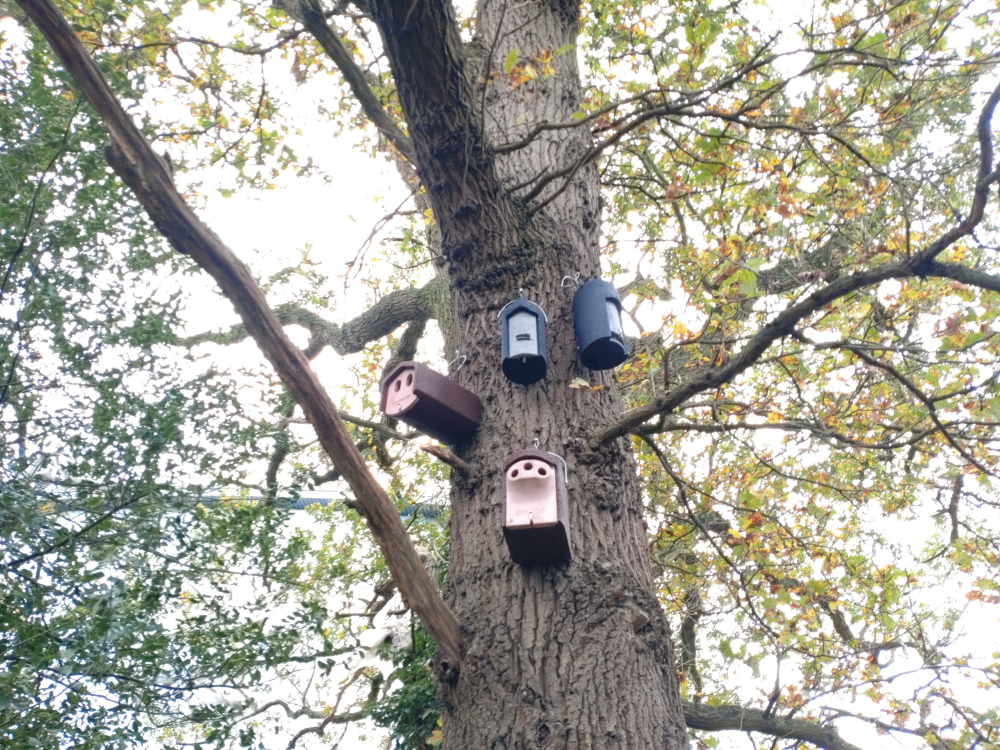
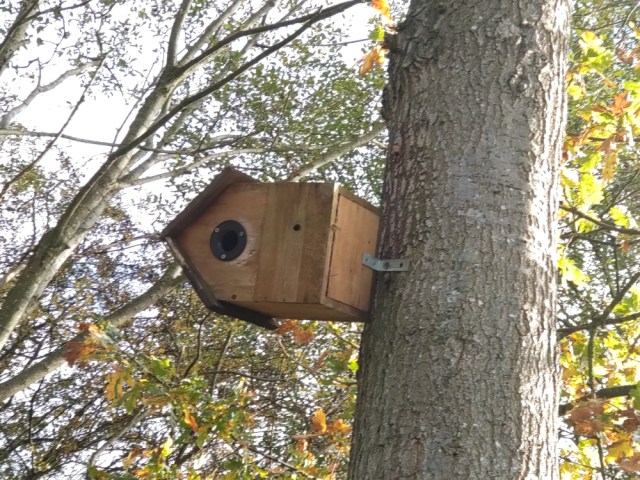
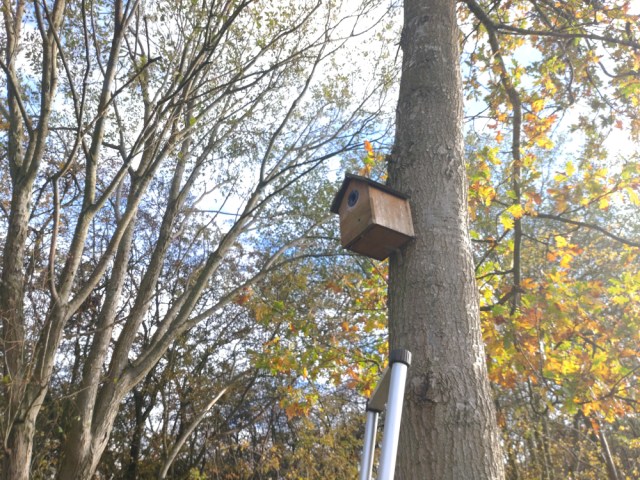
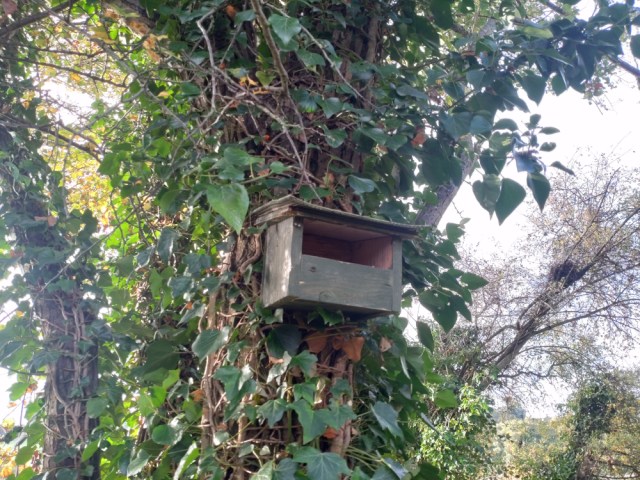
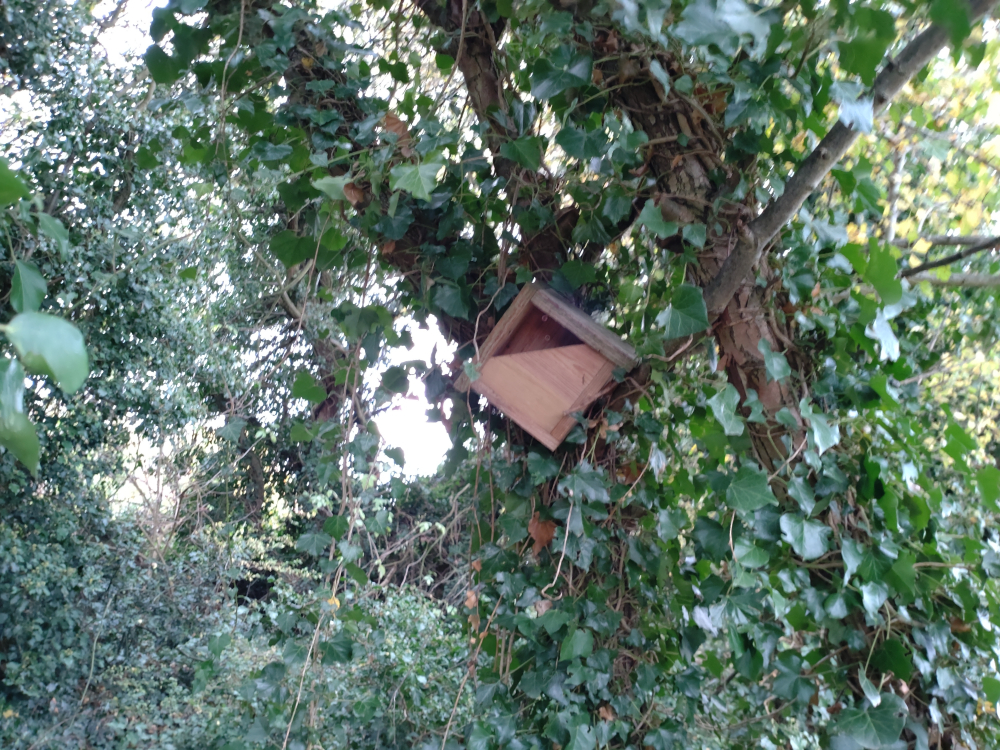
Someone has gone to the trouble of putting up a load of nesting boxes on a tree.

Never seen them like this before.

And lastly, I enjoyed a cuppa and ginger bickies at halftime.

Deliciously fiery ginger biscuits, oh yes…

Just 340 metres to go until we get to the end, and then it’s back to the start.

The painting of the Forth Bridge comes to mind…

Fungi Feature

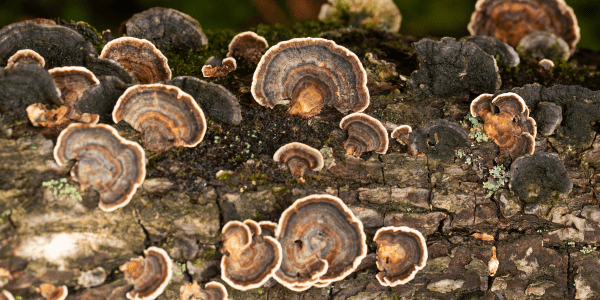
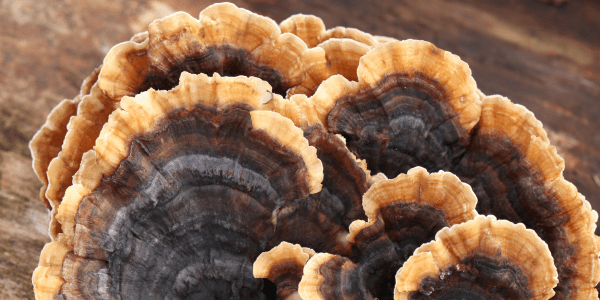
Today we are looking at turkeytail – a very colourful bracket fungus. Its circular caps can be seen growing in tiers on trees and dead wood – mainly hardwood such as beech or oak. It is a very common fungus that grows throughout the year, but is at its best in autumn.

Scientific name: Trametes versicolor

How to identify: A bracket fungus that forms semi-circular caps around tree trunks. The caps are thin and tough, with very clear, velvety, concentric rings of colour. Colours are variable mixes of brown, yellow, grey, purple, green and black, but the outer margin is always pale – either cream or white. The caps are often layered together, forming tiers.

Where to spot: Woodland

When to spot: All year

Did you know? This colourful fungus was once popular as a table decoration; at one time, it was even used to decorate hats!

And that is it for this week.

Thanks for reading, and well done if you got this far.

Until next time!

Paul
Posted in Newsreel | Tagged , , , , , , , , , , | 11 Comments

The Rain Finally Got Us

We normally have the luck of the Irish when it comes to rain. Even when it’s forecast, we seem to find ourselves in a little dry micro-climate. Today, that luck well and truly ran out…

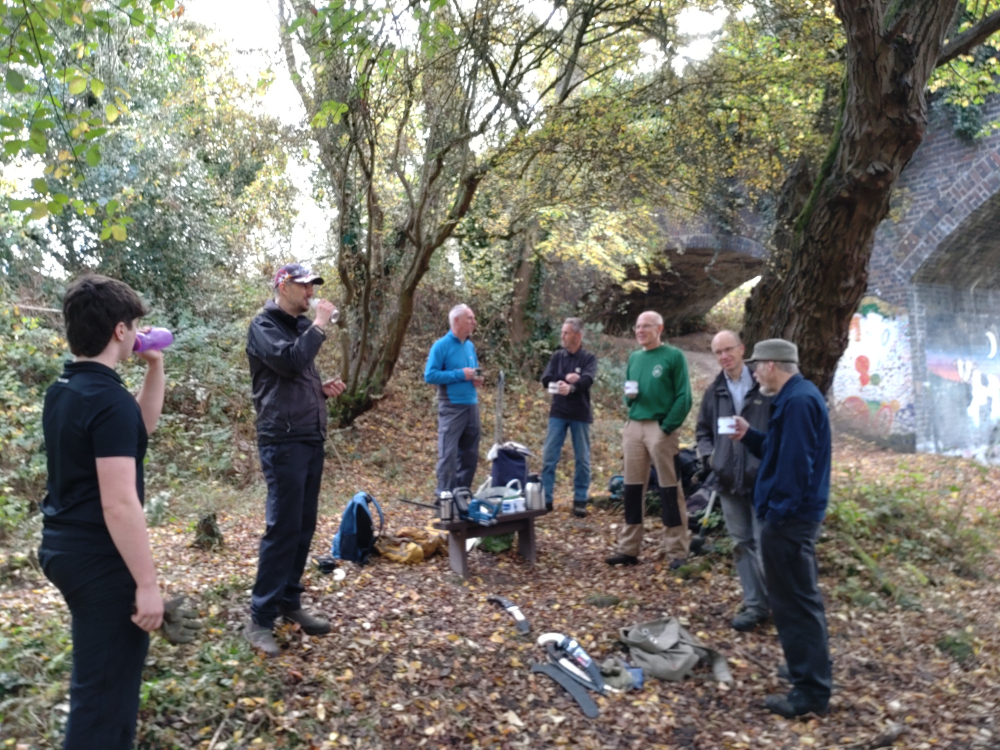
I half expected nobody to turn up and thought that I would be having a lazy day watching raindrops snaking down my kitchen windows. But no, seven of us decided that rain was a feeble excuse to stay in the comfort of a warm house, and we cracked on.

Ruby, Mark, Steve, Dave, Andrew, David, and Paul battled with the scrub.
Another big tick in the diversity checkbox, thank you very much!!

We switched next week’s workday with this week’s, so we had the bridge for cover, but before long, we were so far down the track that it really didn’t make any difference.

We’re pushing the scrub back so that we have a wildflower-rich grassy margin between the path and where the scrub starts. The challenge that we have is that the trail swings round to an almost north-to-south axis.
This means that one side of the path is in full sun in the morning, and the other side is in full sun in the afternoon. If it went east-to-west, then one side of the path would be in full sun all day long. We can create a wavy, scalloped edge that has little south-facing micro-habitats, but that sort of detail is for another day.

Insects that love full sun will have to move to the other side as the day progresses. Sorry, but that’s life!

What we’re trying to do at the moment is get rid of the dead zones, where no sun is reaching the woodland floor, and get the tree spacing sorted so that everything is growing vertically, rather than diagonally or even horizontally. This will help nature and people to flourish together, and the mental health benefits of sunshine and open green space will really kick in.

Ruby and me set off to litter pick the path to our most southerly point, and then northwards to Berrybanks and back. Not a huge amount, thankfully, because I had run out of the usual blue litter sacks.

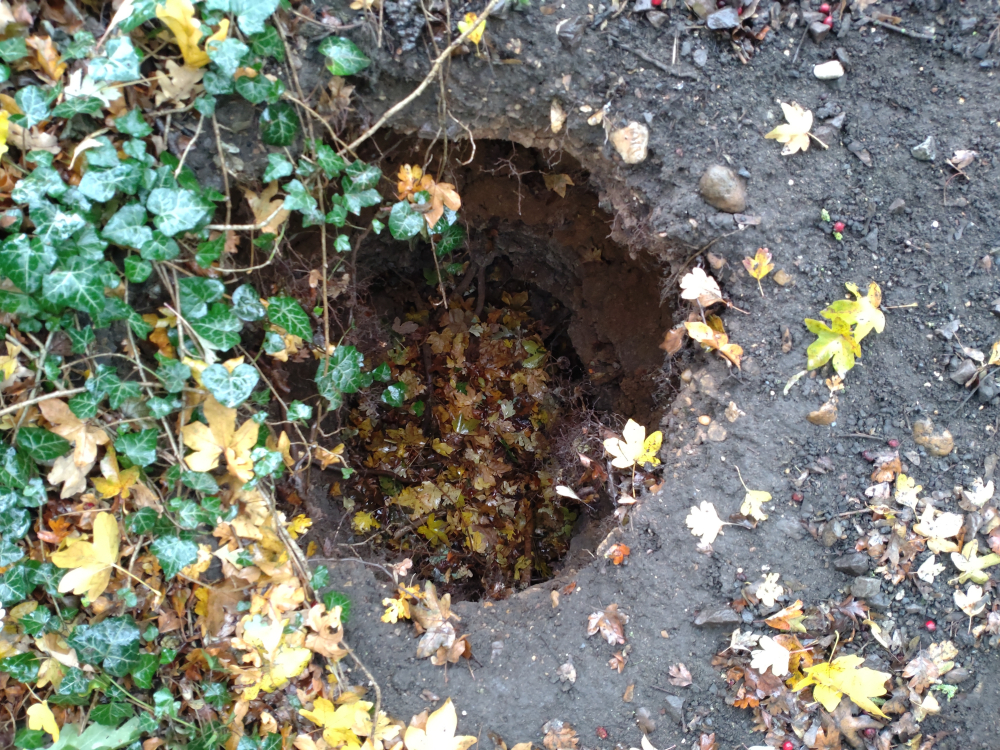
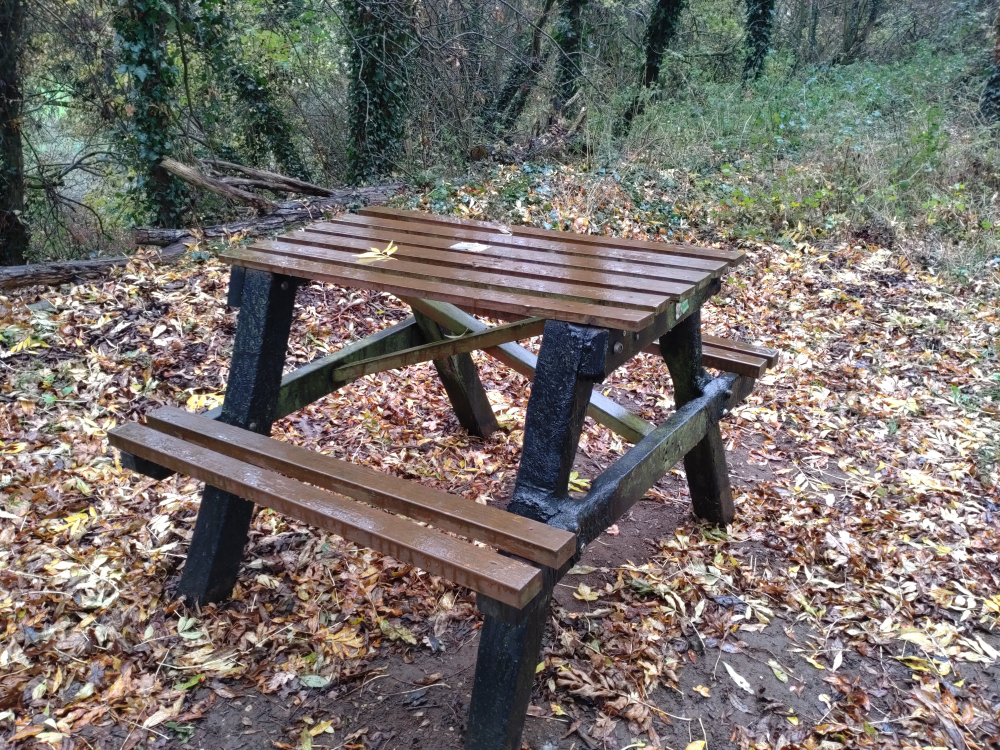
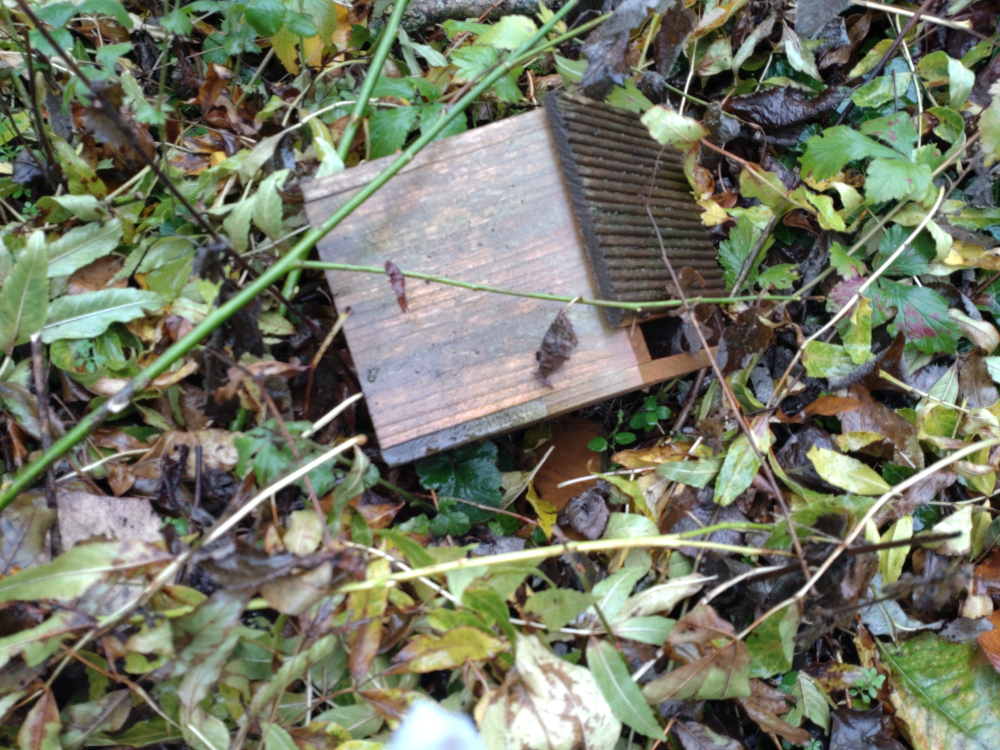
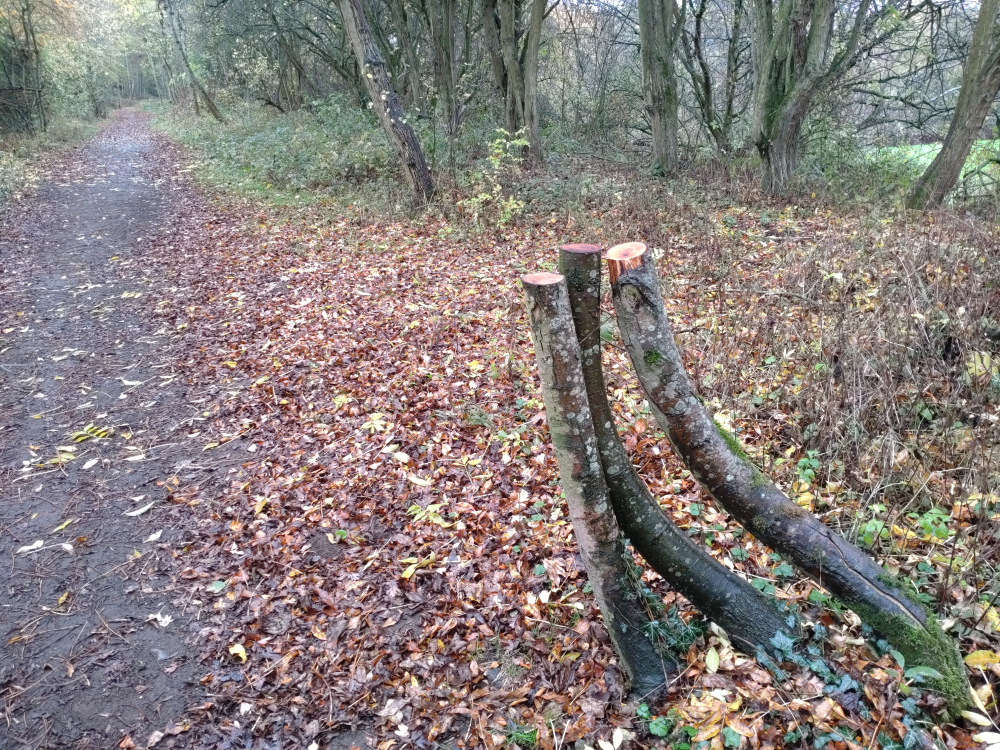
But we did notice a few things that need attention at some point, like a huge hole?? A few stumps that need cutting to ground level, benches that need wood stain, and a fallen nesting box.

And someone was asking me last week if there is enough work to keep us all busy!!

The end result made me think that it was worth the effort today.

This is the width that allows everything to work together: nature, humans, cyclists, and walkers.

And lastly, we made a huge brash pile that will slowly rot down over the winter and provide warmth and habitat for a great many visitors.

We are now well into the fungi season, so I thought I might feature a fungus every week. Every day’s an opportunity to learn something new.

Fungi Feature

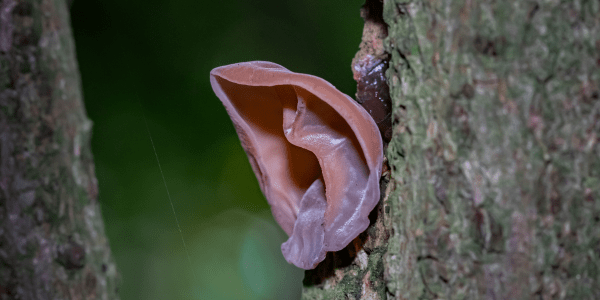
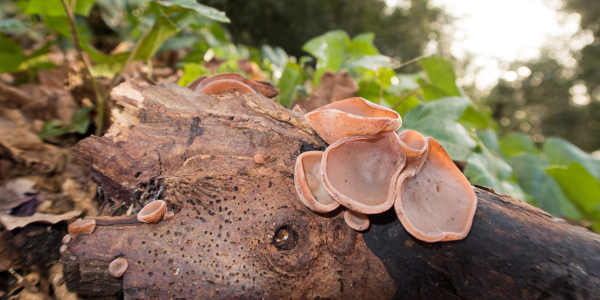
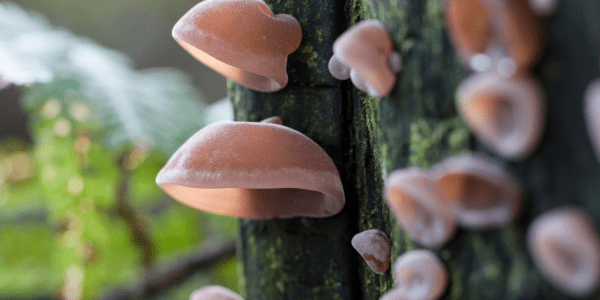
Our first fungus is jelly ear, which as the name suggests, looks uncannily like an ear! ​​It grows on dead and dying branches and is most often found on elder trees, but can sometimes be encountered on other species such as ash, beech and sycamore. It favours damp, shady spots and often grows in clusters.

Scientific name: Auricularia auricula-judae

How to identify: A gelatinous purplish-brown fungus that grows in cups on branches. As the cups age, they develop lobes and can look like a human ear growing from the wood. The inner surface of the cups is smooth and shiny, whilst the outside is velvety.

Where to spot: Woodland

When to spot: All year

Did you know? Jelly ear can survive freezing weather, thawing out afterwards and continuing to grow!

That’s it for this week.

I have updated the workdays for the next month and a bit, which is somewhere on the right-hand side of the blog, with the bacon batch days highlighted, so come along if you need feeding up. There is always plenty to go around.

Give yourself a pat on the back if you made it this far into my ramblings.

Until next time!

Paul

Posted in Newsreel | Tagged , , , , , , , , , , | 9 Comments

Can We Tick The Diversity Box?

Eight of us wildlife heroes made it this morning. Matt, Steve, Mark, Ian, Martin, Reece, George, and Paul.

It was especially nice to see George, who is off school with it being half-term. Whilst George does a super job with us, his presence also helps with the group diversity, or rather, the extremely obvious lack of diversity.

So thanks, George, in more ways than one.

We carried on with the thinning of the trees. You will see why this is important later on, so just bear with us, and also bear in mind that I spend what seems like all of my awake time studying stuff like this.

139 pages of bedtime reading…

We really don’t want all these whips to come up, and then all start fighting for light and nutrition. It seems harsh, but only the strongest can survive.

This is how it looked afterwards.

Pools of sunlight, decent forward vision (40+ metres is the recommended minimum, so people don’t feel anxious), and the tree canopy broken up.

We have one more week on this section, and hopefully, we can push the scrub out a bit to allow a wildflower-rich grassy margin to grow.

We also did a bit of bird nesting-box maintenance.

The open robin box had come away completely, and the closed box was hanging on for dear life!

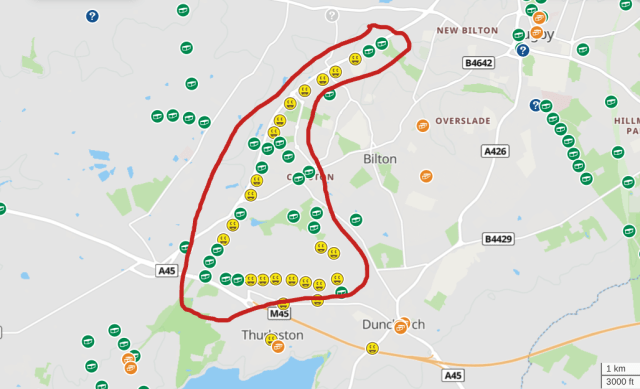
With Andrew joining us recently, I wanted to give a shout-out for the fantastic geocaching trail that he has put together for us.

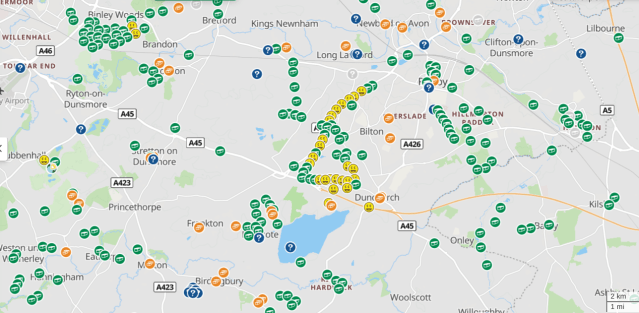
The triangle is the creation of Andrew and is a good 7-mile walk, so hours of fun searching for the treasures. The yellow faces are the ones that I have found. The zoomed-out picture shows how popular geocaching is in the wider area. It is like this on a worldwide basis and is incredibly addictive.

Go to geocaching.com and give it a go!

A quick YouTube to try and share the vision.

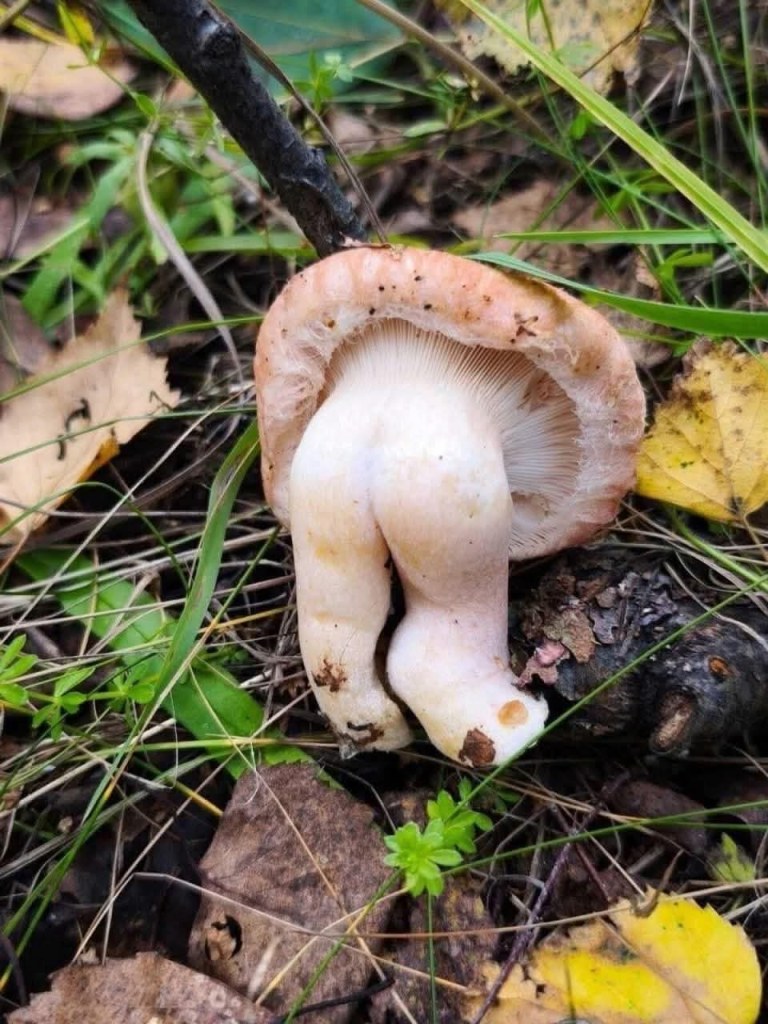
And lastly, a naughty fungi photo to make you smile.

Dunchurch Bridleway

Three of us turned out last Friday morning. Ian, Dave, and Paul, and we got the first 1,000 metres finished.

The trees here are ancient because the bridleway has probably existed for centuries. What we are trying to do is ease the scrub back and make it so that the path sort of splays to bring the trees into the trail.

For me, I want the trees to stand majestic and proud, and for kids and dogs to investigate behind them to make walking or cycling on the trail more interesting.

This is why we are thinning the trees so much on the Cawston bit. If we can get big trees down there, it just makes it so much more interesting.

We broke for coffee and Halloween biscuits…

I’m such a big kid.

And then I noticed all the wildflowers coming up in the area where we ripped out the scrub a few weeks ago.

This is going to be such a nice place to sit and just relax with a coffee and a bit of a pack-up. It’s south-facing, so it will do really well, and it looked really messy a few weeks ago. Give nature a chance and look what happens.

Lastly, the usual litter pick.

And that is it.

Until next time!

Paul

Posted in Newsreel | Tagged , , , , , , , , | 6 Comments

Record Numbers

We almost had the perfect storm today, where nearly everyone on the team was available.

Eleven superheroes turned out this morning, and the autumnal season is really starting to kick in. There was a definite mild chill to the air, and the leaves are turning beautiful golden yellows, browns, ochres, and reds.

Steve, Marcus, Mark, Dave, Ian, Reece, David, Matt, Martin, Andrew, and Paul gathered to work on this difficult bit, due to it being so close to local housing.

The tasks today were to keep the path 3+ metres wide, remove some of the overhanging branches to allow sunlight to get onto the trail and into the understory, and move a bench.

We have a load of self-seeded trees growing on the left-hand side, and we will need to thin out as the stronger ones are allowed to get established. A dense mesh of straggly trunks is not what we want. Thick trunks that can absorb noise from the road, and grow to a decent height, is what we are looking for.

After everyone had chosen their weapon of choice and made their way up to where we got to last week, a few of us tackled the bench move.

Somebody rather rudely made off with the bench that was here previously, so we pulled this one back 100 metres to replace it. I don’t think anyone will want to take this one; however, it does hold huge sentimental value to me personally, and I guess to the members of the team who have rebuilt it so many times over.

A lot of the work today was with pole saws. That is a saw on the end of a pole, and it makes you discover muscles that you never knew you had, and not in a good way.

We also strimmed the grass margin to the sides of the path. The three metre width is the absolute minimum for a mixed-use path and allows everyone, such as walkers, cyclists, mobility scooters, and pushchairs, to get past each other without any problem.

We covered about 500 metres strimming and about 400 metres in overhang removal, so about 300 metres left and two workdays to do it. Super progress.

This is how it now looks.

Loads more light is working its way in and getting rid of the tunnel feeling. People need to be able to see a good 40 metres ahead of themselves to not feel anxious when walking on trails. I think we have got this about right.

Still a bit of scrubby stuff to tidy up on some of the edges, but the main path is kinda there. This scrub removal will become the wildflower-rich grassy strip that we want.

A quick YouTube to show it in real-time.

I had to take this numerous times because of the sheer volume of people walking up and down the trail. They must have thought that I was mad, walking with my phone held out in front of me!!

We strimmed a section of ivy to see if anything else starts to grow. We have way too much of the stuff, and it is suffocating the wildflowers.

Remember, it’s all about balance and biodiversity, and not having a few dominant species take over.

We broke for coffee and flapjack at half-time.

A super team with no big egos and everyone just getting on. Perfect!

We tracked back to the section where we were a couple of weeks ago and dealt with a tree that had tilted onto the path

I don’t really understand how this happened because the prevailing wind comes from the opposite direction, but sorted and cleared.

We also did the usual litter pick.

This is the whole two miles of the trail, there and back.

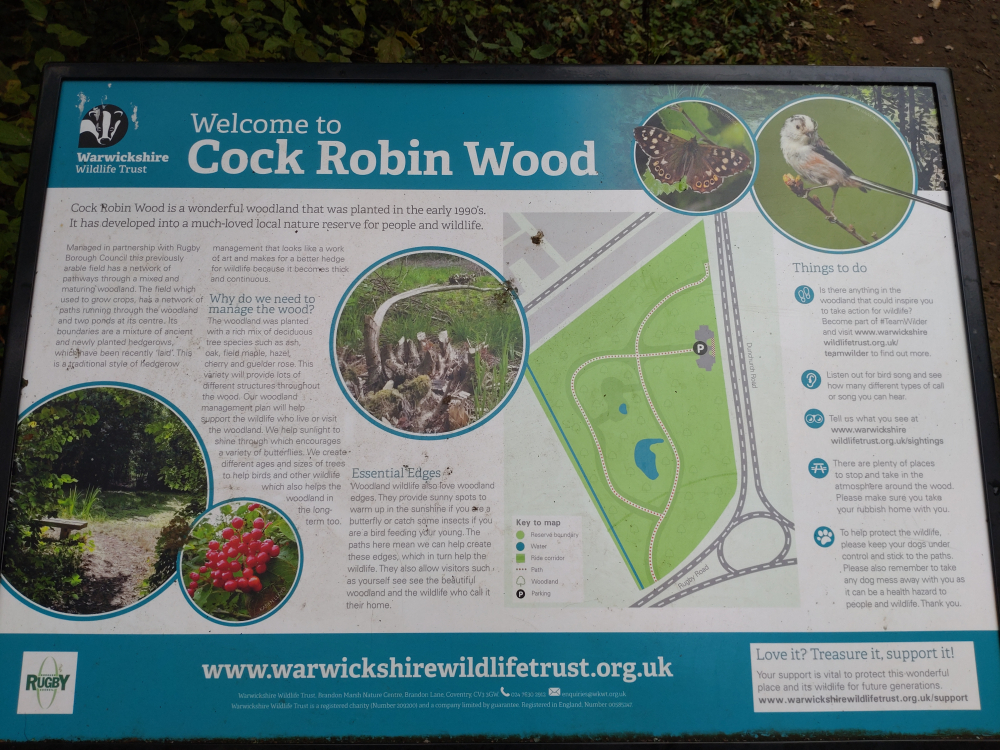
Lastly, I visited a wood just 2 minutes from where I live, and managed by Warwickshire Wildlife Trust. The experts are saying that in a woodland, trees need to be 2.5 to 3 metres spaced, and be at different ages and types, so that there is not just a huge block of canopy and no sunlight and wildlife underneath.

I’m pretty comfortable that we are on the right path.

We are on the Dunchurch Bridleway this Friday, and pushing further onwards next week.

Until then!

Paul

Posted in Newsreel | Tagged , , , , | 7 Comments